
 E-Paper



Monday Musings: The political economy of farm loan waivers in Maharashtra
In Maharashtra, loan waivers offer temporary relief to farmers but fail to address deeper agrarian issues, with ongoing distress and high suicide rates.

 Prefer HTon Google


In Maharashtra’s political vocabulary, few phrases have travelled as widely as “farm loan waiver”. From Vidarbha to western Maharashtra, from election campaigns to budget speeches, the promise of wiping out farm debt has become a recurring feature of the state’s agrarian politics. Yet, nearly two decades after loan waivers became a central policy tool, the question remains: do they actually ease farm distress in a lasting way?
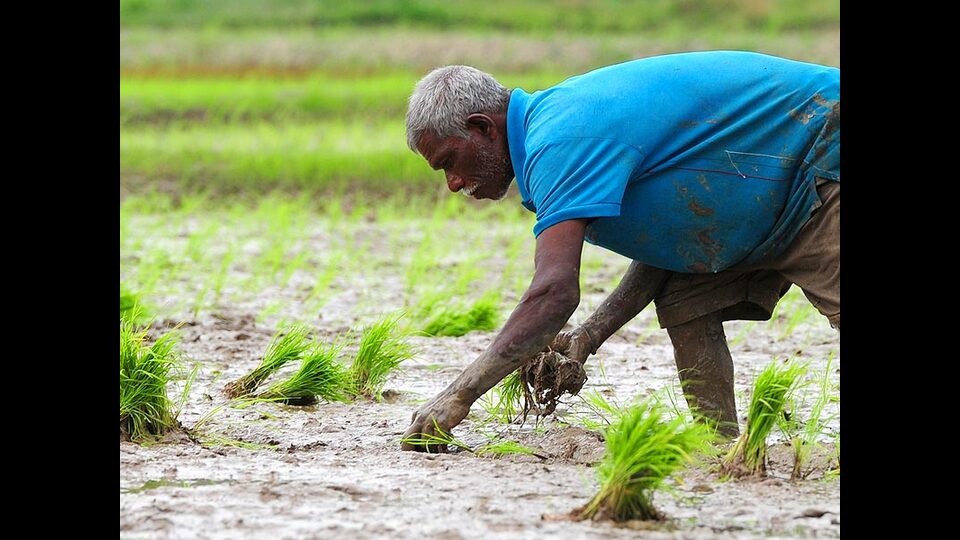
Maharashtra’s agrarian economy sits at the intersection of climate uncertainty, volatile markets and fragmented landholdings. Regions such as Vidarbha and Marathwada have long reported the highest levels of agrarian distress. The tragic indicator of that distress has been farmer suicides. Between October 2014 and August 2019 alone, 14,591 farmers in the state ended their lives, according to data placed in the legislature.
Against this background, loan waivers have repeatedly emerged as the most visible policy response.
One of the largest in recent memory was the 2017 Chhatrapati Shivaji Maharaj Shetkari Sanman Yojana, announced by the government led by Devendra Fadnavis. The scheme aimed to waive loans worth around ₹35,000 crore for nearly 89 lakh farmers.
The politics behind the move was unmistakable. It followed widespread farmer protests across the state and reflected pressure on governments to deliver immediate relief. The idea was simple: if farm households were trapped in a cycle of debt, removing that burden could restore financial stability and enable them to begin again.
But the story did not end there.
Two years later, after a change in government, the administration led by then Chief Minister Uddhav Thackeray launched another programme — the Mahatma Jyotirao Phule Shetkari Karjmukti Yojana. The scheme targeted over 32 lakh farmers, and by official estimates, more than 32.3 lakh beneficiaries eventually received debt relief.
Last week, the state again announced a fresh waiver — the Punyashlok Ahilyadevi Holkar Farmers Loan Waiver Scheme, offering relief of up to ₹2 lakh for eligible farmers with overdue crop loans.
Seen over time, the pattern is unmistakable. Governments change, but loan waivers remain politically attractive. They offer quick, visible relief, resonate strongly with a large rural electorate, and help translate into votes.
However, the economic effects are less straightforward.
Despite successive waivers, farmer suicides have continued to occur at worrying levels. For instance, Maharashtra recorded 3,927 farm-sector suicides in 2019, the highest in the country that year. Even in recent years, distress has not disappeared. Between January and September 2025, the state reported 781 farmer suicides, many linked to crop failure, debt and extreme weather.
These numbers do not automatically mean that loan waivers fail. In fact, they do provide immediate relief to indebted farmers, especially those struggling to repay institutional loans. For many families, a waiver can prevent the immediate threat of bank recovery and restore access to formal credit.
Yet the limits of the policy are also evident.
Loan waivers typically cover only institutional borrowing from banks and cooperative societies. A significant portion of rural credit, particularly in distressed regions, still comes from informal lenders. When that debt remains outside the waiver net, financial stress may continue.
There are also administrative challenges. Even years after the 2017 scheme, several lakh farmers were still awaiting benefits due to verification and eligibility issues. Such delays dilute the immediate relief that waivers are meant to provide.
Another dimension is fiscal. Large waivers impose a heavy burden on state finances. Each announcement involves tens of thousands of crores of rupees — funds that could otherwise be used for irrigation, crop insurance, or rural infrastructure. Yet politically, these long-term investments rarely generate the same electoral resonance as a loan waiver.
This tension between economics and politics is perhaps the defining feature of Maharashtra’s agrarian policy.
From a political economy perspective, loan waivers function as both welfare and signalling. They offer relief to indebted farmers but also signal that the state acknowledges agrarian distress. In a democracy where nearly half the population is linked to agriculture, that signal matters.
At the same time, structural problems persist: erratic rainfall, market volatility, rising input costs and small landholdings. These factors shape farm incomes far more than one-time debt relief.
In that sense, loan waivers are neither a complete solution nor entirely symbolic. They operate somewhere in between — as emergency relief in a sector where deeper reforms move slowly, and political pressures move quickly.
Maharashtra’s experience suggests that agrarian distress cannot be reduced to a single policy lever. Loan waivers may soften the immediate blow of debt, but the longer story of the farm economy is still being written in irrigation projects, crop diversification, market access and climate resilience.


