
 E-Paper



Monday musings: Who is responsible for the infra mess in India’s auto hub?
Chakan has projects, plus committees, and many announcements, followed by reviews. What it does not appear to have is a single authority empowered to make all these agencies work to one timetable.

 Prefer HTon Google


Pune
If Pune learnt anything from the prolonged infrastructure mess in Hinjewadi last year, it was that having too many agencies responsible for one economic hub is a recipe for nobody being accountable.
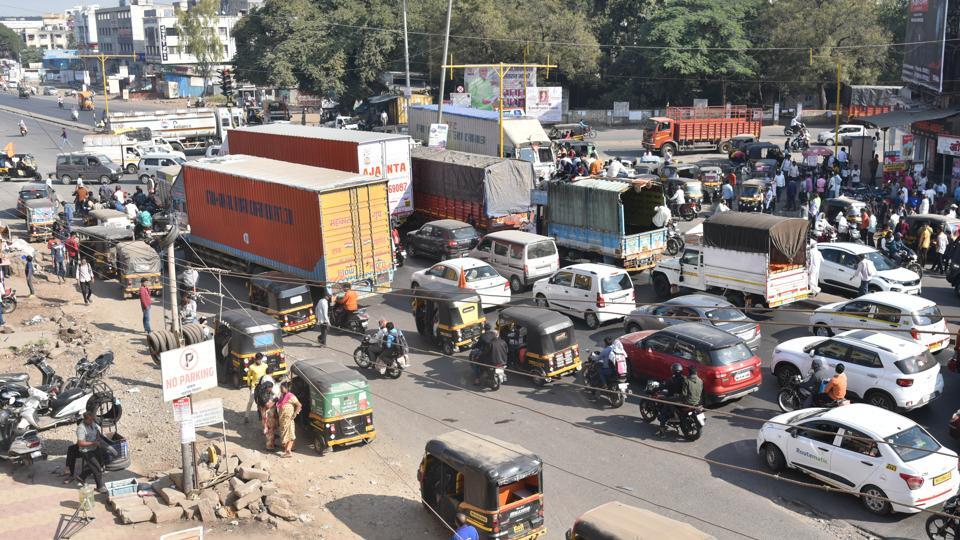
Chakan now presents an even more worrying version of the same problem where the roads are worse, traffic is crippling industrial operations, power supply has emerged as another concern, and companies are now openly considering moving out. Yet the most basic question remains unanswered: who is actually responsible for fixing Chakan?
Last year, after mounting criticism over the condition of Hinjewadi IT Park, chief minister Devendra Fadnavis stepped in and prioritised the issue. The government moved towards creating a single-point nodal authority under the Pune divisional commissioner to coordinate civic agencies and fast-track long-pending infrastructure plans. The logic was simple: an economic hub that cuts across administrative boundaries cannot be effectively managed when every agency works within its own jurisdiction. Chakan needs precisely the same approach and that too with far more urgency.
Today, the industrial belt’s infrastructure is spread across multiple authorities, with as many as six agencies involved in different aspects of Chakan’s roads, traffic and civic infrastructure. That fragmentation is at the heart of the problem. One agency controls an important road, another is responsible for another stretch, a third handles industrial infrastructure, while another has jurisdiction over internal lanes, with one more involved in traffic or the surrounding urban area. When a road remains unfinished or a bottleneck persists, responsibility simply moves from one office to another. This is not an abstract administrative problem. It is now an economic one.
Chakan is one of the country’s important manufacturing clusters, with major automobile, engineering and ancillary companies. But the infrastructure supporting this industrial powerhouse has failed to keep pace with its growth. In August, industrialists said around 20 companies were considering relocation because of the traffic and infrastructure crisis, potentially affecting about 2,000 workers. The warning could hardly be clearer.
The problem is also broader than traffic. Industrial units have recently complained of frequent power outages, adding to the existing problems of inadequate roads and connectivity. The daily movement of thousands of workers and heavy vehicles has become increasingly difficult, while bottlenecks on the Talegaon-Chakan-Shikrapur corridor have persisted for years.
There is no shortage of proposed solutions, with the state government already approving the Talegaon-Chakan-Shikrapur elevated highway, and the 53.2-km corridor is expected to provide a long-term solution to one of Maharashtra’s most congested industrial stretches. PMRDA also has several road and bypass projects in the Chakan area, with land acquisition underway for some of them.
But therein lies the irony. Chakan has projects, plus committees, and many announcements, followed by reviews. What it does not appear to have is a single authority empowered to make all these agencies work to one timetable. That is precisely where the Hinjewadi experience should inform the government’s response.
The state has already recognised that coordination is critical for an IT hub. It now needs to apply the same principle to manufacturing. The solution does not necessarily require creating another elaborate bureaucracy. The chief minister could designate one senior authority with clear responsibility for the entire Chakan-Talegaon industrial belt, backed by a time-bound action plan and the power to call all concerned agencies to the table.
Every major road project should have one deadline. Every bottleneck should have one agency responsible for its resolution. Every delay should have someone answerable for it.
The government has already begun responding to the latest crisis. Industries minister Uday Samant has sought a survey of factories, while a high-level committee has been proposed to address Chakan’s road and traffic problems. These are welcome steps. But the government should resist the temptation to create yet another layer of coordination.
What Chakan needs is the opposite: fewer layers, clearer accountability.
There is a larger lesson here for Pune. Hinjewadi and Chakan represent two very different pillars of the region’s economy: technology and manufacturing. Both generate massive employment and contribute significantly to the state’s revenues. If infrastructure is allowed to deteriorate to the point where companies begin considering relocation, the cost will not be limited to potholes and traffic jams. It will eventually be measured in lost investment, jobs and Maharashtra’s competitiveness.
The government has been given a second warning after Hinjewadi. Chakan is where it can demonstrate that it has learnt the lesson.


