
 E-Paper



New species of bamboo found in north-western ghats, named after ecologist Madhav Gadgil
PUNE A new species of bamboo, named after Prof Madhav Gadgil, an eminent Indian ecologist with a particular affection for bamboos, has been made by researchers and biologists from Pune


PUNE A new species of bamboo, named after Prof Madhav Gadgil, an eminent Indian ecologist with a particular affection for bamboos, has been made by researchers and biologists from Pune.
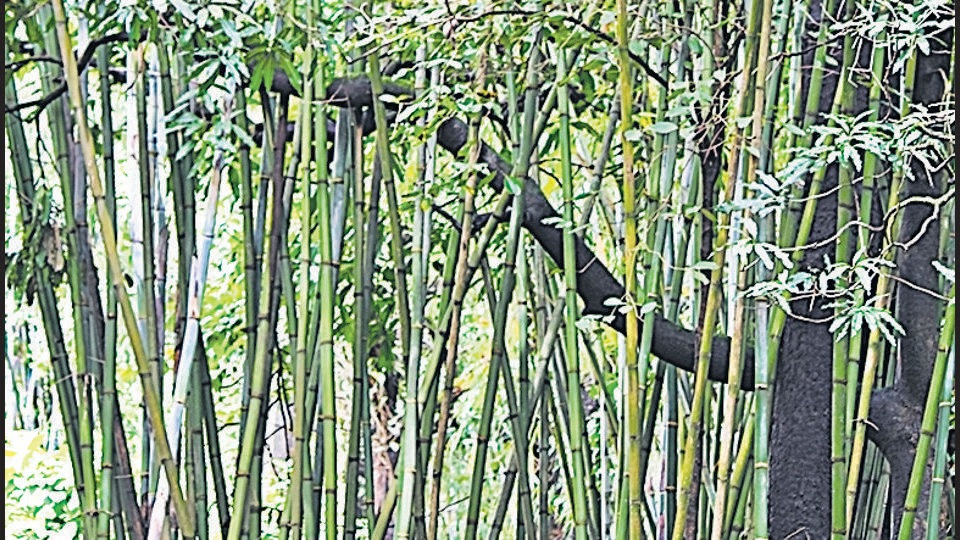
This recent discovery of the new species, Pseudoxytenanthera madhavii, was made by Dr P Tetali, Dr Sujata Tetali, Sarang Bokil, EM Muralidharan, Dr Ritesh Kumar Choudhary and D. Mandar Datar.
“The specimens were collected from the natural habitat in Shirkoli village in Pune district’s north-western ghats. Pseudoxytenanthera madhavii is a new species of bamboo, locally known as “Mes”, and traditionally utilised in the north-western ghats,” said Tetali, a senior researcher, who lead the team.
“The new species Psudoxytenanthera madhavii has been known to locals for ages and was traditionally used for construction. However, this species was not yet known botanically, as both bamboos Mes and another common bamboo in the ghats known as Manga, were treated under one botanical identity Pseudoxytenanthera stocksii. Our proposal for giving this new name was published in the recent issue of New Zealand-based journal “Phytotaxa”,” added Tetali.
This bamboo grows up to 30 to 55 feet and can can be grown in Velha, Bhor and Mulshi talukas.
“Pseudoxytenanthera madhavii is wild in moist and dry deciduous forests and has been widely cultivated in Pune and Satara. Much of this bamboo is used in construction and for shelter. However, its demand for furniture and in the housing industry is increasing due to its smooth surface, mechanical strength, better slivering and stripe-making qualities. In addition, it takes good polish,” said Tetali.
At present, there are 128 species of bamboo in India, most of which are restricted to Northeast India, with only four species found in Maharashtra.
Who is Madhav Gadgil?
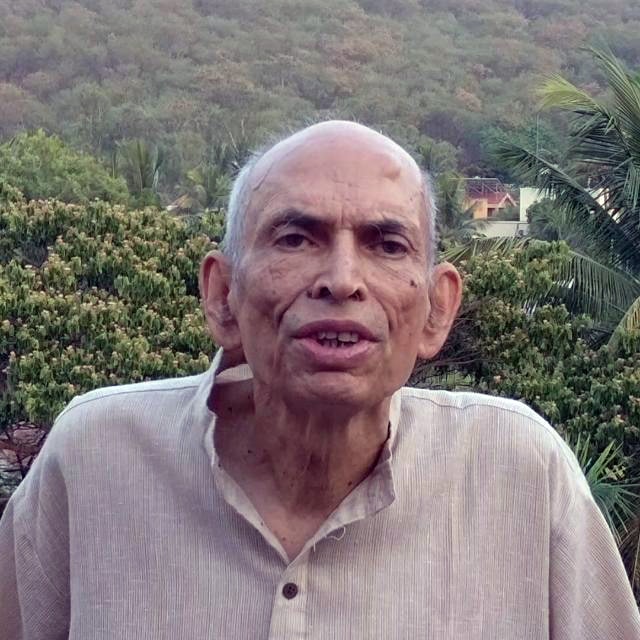
A recipient of multiple awards Madhav Gadgil studied Zoology at the universities of Pune and Bombay, before becoming the first biology student at Harvard University to receive a PhD for a thesis based on mathematical modelling. Gadgil has been largely responsible for introducing careful quantitative investigations in ecology and animal behaviour as well as viewing humans as an integral component of ecosystems to India. He is the founder of the Centre for Ecological Sciences. He was a member of the Science Advisory Council to the Prime Minister of India from 1986 – 1990. He chaired NCERT’s panel on Environmental Education and is currently a member of the National Tiger Conservation Authority.


