
 E-Paper



PMC to set up India’s first plant for extraction of green hydrogen from waste
The said company specialises in consulting, managing and executing sustainable initiatives, and is in talks with other state municipalities to set up similar plants in future

 Prefer HTon Google


Beginning the process of setting up the first plant in the country to extract clean hydrogen from biomass and municipal solid waste, the Pune Municipal Corporation (PMC) has roped in private firm, TheGreenBillions Limited (TGBL), to manage and utilise Pune’s municipal waste of 350 metric tonnes per day (MTPD) for generating hydrogen for a period of 30 years. The said company specialises in consulting, managing and executing sustainable initiatives, and is in talks with other state municipalities to set up similar plants in future, civic officials said.
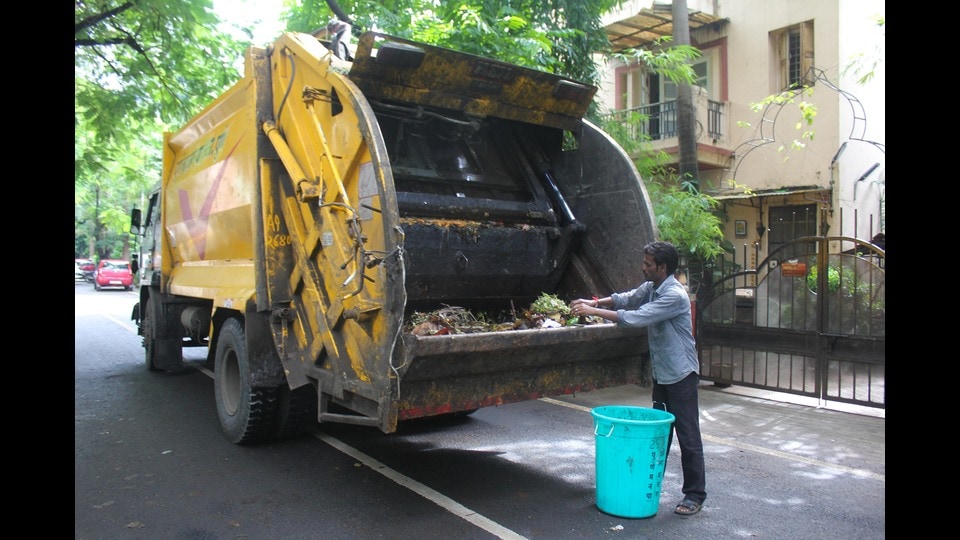
As per PMC officials, Broadcast Engineering Consultants India Limited (BECIL), a central public sector enterprise, will provide project management consulting and variate Pune waste to Energy Private Limited, a wholly-owned subsidiary of TGBL, to implement the project of converting Pune’s municipal non-recyclable waste into hydrogen.
A statement issued by BECIL read, “With this project, Pune city can reduce up to 2.5 million MT CO2e, more than 3.8 million MT waste will be diverted from the landfill, and more than 180,000 estimated households will be served directly. The municipal solid waste (MSW) otherwise being dumped in low lying urban areas will be diverted, saving up to 689.5 cubic metres space every day and 25.16 hectares of precious land per year.”
A statement issued by TGBL read, “The refuse derived fuel (RDF) from the waste will be later utilised to generate hydrogen using plasma gasification technology. The technology has been developed while closely working with the Bhabha Atomic Research Institute (BARC) and the Indian Institute of Science, Bengaluru.”
The waste will comprise biodegradable, non-biodegradable and domestic hazardous waste and will be segregated at the TGBL facility in Pune using optical sensor technology. The wet waste from the facility will be used to generate humic acid-rich bio-fertilisers considered better than conventional bio-fertilisers with low carbon emissions.
Prateek Kanakia, chairman and founder, TGBL, said, “The growing Indian economy is witnessing an increase in the demand for energy from all sectors. The situation has put a lot of pressure on Indian energy reserves to meet the ever-increasing demand. It has increased the focus on identifying and developing alternative energy sources, mainly green and clean sources that do not harm the environment. With the rising demand from the ministry of new and renewable energy (MNRE) to generate clean hydrogen, it is essential to find alternatives to foster clean hydrogen in the country. We recognise that an efficient garbage collection and disposal system is crucial for quality urban solid waste management. Especially in India, unsustainable garbage management affects living spaces for many cities. Our association with the PMC is a step forward in mitigating these demands.”
Mahatma Phule Renewable Energy and Infrastructure Technology (MAHAPREIT), a Maharashtra government undertaking, has proposed to offtake the hydrogen generated at the facility and develop logistical infrastructure for the transportation of this hydrogen to various industries. For the first phase of the project, MAHAPREIT proposes blending in the city gas distribution network in Pune by partnering with Maharashtra Natural Gas Ltd [a joint venture of GAIL (India) Ltd and Bharat Petroleum Corporation Ltd (BPCL). The joint efforts by MAHAPREIT and GAIL will help the proposed hydrogen blending project set the benchmark for a circular economy with hydrogen generated from the city’s waste and blended back into its gas distribution network.
The entire project aims at demonstrating the technological- and financial- feasibility of generating hydrogen from waste. With the Government of India strongly focusing on hydrogen adoption, such projects will not only help India achieve decarbonisation goals but will also reduce emissions from waste disposal. Once achieved, the goals will help India realise its vision of Swachh Bharat and match its hydrogen ambitions.
Broadcast Engineering Consultants India Limited (BECIL), in a statement said, “With this project, Pune city can reduce upto 2.5 million MT CO2e, more than 3.8 million MT waste would be diverted from the landfill and around >1,80,000 estimated households will be served directly. The Municipal solid waste (MSW) otherwise being dumped in low lying urban areas will be diverted, saving upto 689.5 cubic meter space every day and 25.16 hectare of precious land per year.”


