
 E-Paper



PMPML stares at ₹3,863.1 cr operational loss
Pune Mahanagar Parivahan Mahamandal Limited (PMPML) has reported cumulative operational loss of ₹3,863.1 crore over the last 10 years

 Prefer HTon Google


PUNE: At a time when the Pune Mahanagar Parivahan Mahamandal Limited (PMPML) has reported a cumulative operational loss of ₹3,863.1 crore over the last 10 years, its growing shift towards privatised operations – by reducing the number of self-owned buses and relying heavily upon contractor-run services – despite the receipt of financial aid from both the Pune and Pimpri-Chinchwad municipal corporations; has raised serious concerns about service quality and financial transparency.
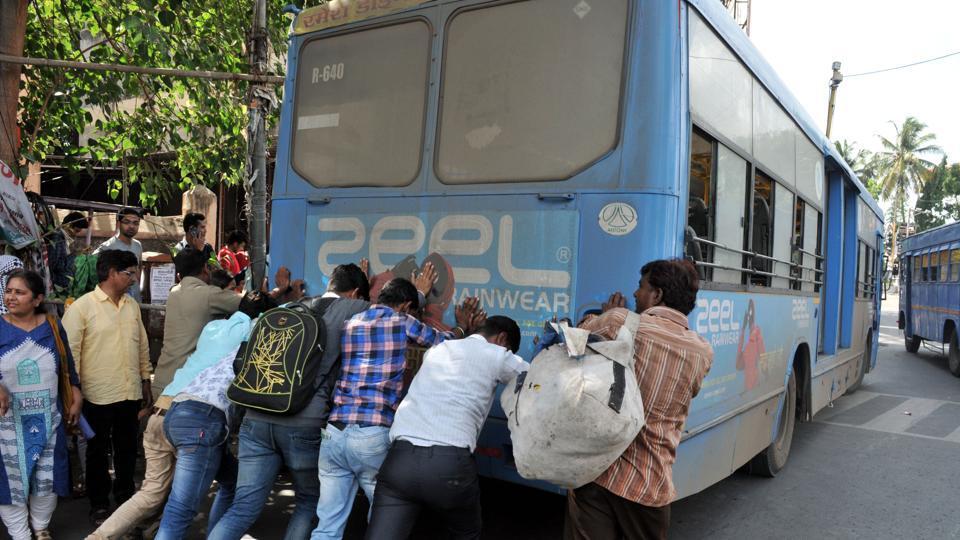
Currently, the PMPML operates around 2,000 buses, only 800 of which are owned by the public transport body with the remaining 1,100 buses operated by private contractors under a lease model. Around 70% of these buses are active on various routes while the rest are reportedly stationed at depots under the guise of maintenance and repairs. This has led to severe inconvenience for daily commuters, many of whom are forced to wait long hours at bus stops due to irregular services and reduced frequency.
Ujwal Keskar, former Pune Municipal Corporation (PMC) house leader and founder of the organisation, Apala Parisar, has voiced strong opposition to PMPML’s growing reliance on contractors, raising numerous questions about the transparency and efficiency of this model. In a letter addressed to the PMPML board of directors, Keskar has demanded an urgent meeting to address these issues and evaluate the functioning of the transport body.
Keskar has criticised the PMPML’s lack of planning, pointing out that despite constant complaints of delayed and insufficient services, no clear strategy seems to be in place to improve operations. “With buses lying idle at depots and passenger footfalls growing, commuters are bearing the brunt of this disorganised system,” said Keskar.
A major point raised by Keskar is the plan to induct 400 new electric buses (e-buses), also on a contract basis. While existing electric buses (e-buses) operate at a rate of ₹58 per kilometre, the new contract will hike the same to ₹84 per kilometre. Moreover, both drivers and conductors for these buses will be employed by contractors, which raises concerns about revenue accountability. Keskar has questioned whether the PMPML has any mechanism to monitor and ensure that the revenue generated per trip actually reaches the transport body.
Another point raised by Keskar is the lack of direct control over drivers and fare collection which renders claims of full earnings from contracted operations going to the organisation questionable. The letter urges the PMPML management not only to review the contractor-based model but also to address service gaps immediately. “PMPML is meant to be a public service organisation and not a profit-generating platform for contractors,” Keskar said, while pressing for a transparent discussion and restructuring of the current operational strategy.
Meanwhile, a senior PMPML official said on condition of anonymity: “While the operational deficit is a challenge, our focus remains on ensuring efficient and affordable transport for citizens. The contractor model allows us to expand services faster, and we are continuously working to improve transparency, monitoring, and service quality.”


