
 E-Paper



Monday Musings: Politics, faith and the comfort of godmen
The recent controversy surrounding Nashik-based self-styled godman Ashok Kharat has once again drawn attention to these connections

 Prefer HTon Google


In Maharashtra, it is not unusual to see political leaders at temples, trusts or in the company of spiritual figures. Photographs of these visits appear regularly, a darshan before a big decision, a blessing before an election, or a quiet meeting away from the usual political spaces. Over time, this has become a familiar part of public life.
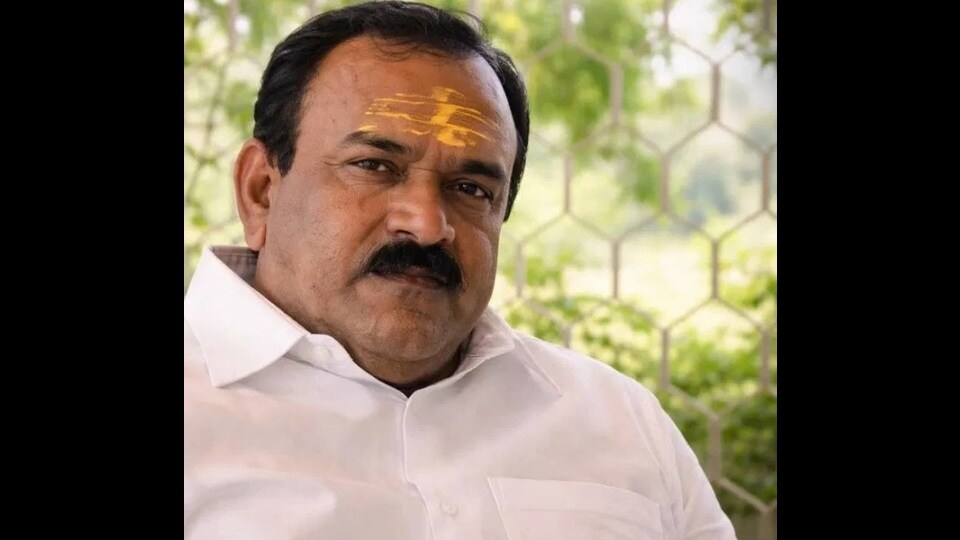
The recent controversy surrounding Nashik-based self-styled godman Ashok Kharat has once again drawn attention to these connections. As allegations against him surfaced, older images and accounts of political leaders visiting him began to circulate.
Among those mentioned were leaders from different parties, including Shiv Sena chief Eknath Shinde and his party and MLA Deepak Kesarkar, who was a regular visitor. In 2020, the Kharaat-led trust got preferential treatment from the then Uddhav Thackeray-led government as it diverted water for the trust.
Such associations are not new, nor are they limited to one party or one region. Leaders across the political spectrum have, at different points, maintained links with spiritual figures. Former chief minister Ashok Chavan, for instance, was seen seeking blessings os one such godman. When Ashok Chavan took charge as chief minister (CM) of Maharashtra for the second time in November 2009, he drew criticism for inviting godman Sathya Sai Baba to his official residence.
Similar images exist of leaders from other parties, cutting across ideological lines.
For many politicians, these visits are part personal faith and part public life. In a state like Maharashtra, where religious traditions run deep and local shrines hold strong influence, being seen at such places also carries a certain connection with people. A visit to a well-known spiritual figure or temple is easily understood by voters. It signals familiarity, belief and, at times, humility.
There is also a practical side to it. Political life is uncertain and often stressful. Elections, shifting alliances and constant public scrutiny create pressure. In such an environment, spiritual spaces offer a sense of reassurance. Whether it is a brief visit to a temple or time spent with a guru, many leaders see it as a way to pause and reflect.
At the same time, some spiritual figures have built large followings that go beyond religion. They run organisations, attract crowds and hold influence in certain regions. For politicians, this makes them important social nodes. A visit is not always just about faith; it can also be about reaching out to a network of followers.
This is where the lines begin to blur slightly. When spiritual figures are widely respected, the association tends to be seen as natural. But when questions arise around individuals, as in the case of Kharat, the same connections come under closer attention.
What stands out in such moments is not the presence of these links, but how common they are. Leaders from different parties, often rivals in public, can be found visiting the same spiritual figure. It reflects a shared space that exists outside the usual political divides.
In many ways, this overlap has become part of the rhythm of politics in the state. A leader may speak sharply against an opponent in a rally, and yet both may be seen at the same religious event or in the same darbar on another day. These are parallel tracks that rarely intersect directly but continue side by side.
For the public, these images are taken in different ways. For some, they reinforce a sense of cultural continuity, that leaders remain connected to traditions. For others, they raise questions about how close such relationships should be, especially when controversies emerge.
But for the most part, these visits pass without much comment. They are seen as routine, almost expected.
The episode involving Kharat has momentarily brought these associations into focus. It has also shown how quickly attention shifts from an individual to the wider network around them. Yet, once the immediate news cycle moves on, the broader pattern is likely to remain unchanged.
Political leaders will continue to visit temples, seek blessings, and spend time with spiritual figures. Photographs will continue to surface, and these moments will remain part of the larger visual language of politics in Maharashtra.
It is a space where faith, public life and perception meet, quietly, and often without much scrutiny, until something brings it into view again.


