
 E-Paper



Pollution, invasive species push Ujani Dam towards disaster
Recent field surveys and water sampling carried out by BNHS scientists indicate that the water quality here has deteriorated to dangerously poor levels due to sustained inflow of untreated sewage and chemical effluents through the Bhima river.

 Prefer HTon Google


PUNE: An ecological crisis is unfolding at one of Maharashtra’s largest and most critical reservoirs, the Ujani dam, as per ongoing scientific research by the Bombay Natural History Society (BNHS). Recent field surveys and water sampling carried out by BNHS scientists indicate that the water quality here has deteriorated to dangerously poor levels due to sustained inflow of untreated sewage and chemical effluents through the Bhima river.
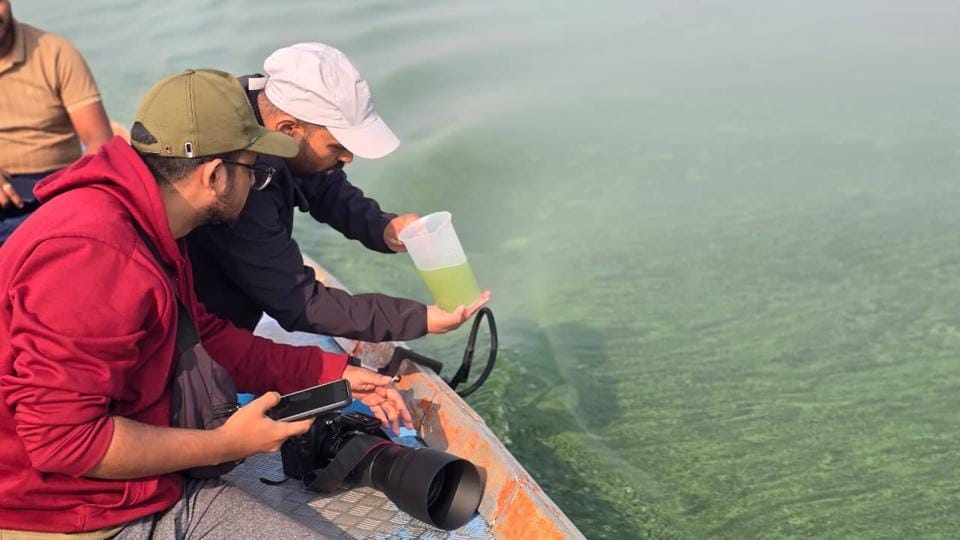
Ujani - a manmade wetland of national importance and a designated important bird area (IBA) supporting the central Asian flyway - now has thick, foul-smelling green scum covering large swathes of the reservoir, signalling eutrophication, oxygen depletion and toxic conditions that threaten biodiversity, agriculture and public health.
The problem goes way beyond pollution according to BNHS researchers. The ecosystem is simultaneously under attack from invasive alien species (IAS) such as water hyacinth and Ipomoea; and invasive fish such as Tilapia, African Catfish and Suckermouth Catfish. These species are rapidly displacing indigenous flora and fauna, disrupting the natural food web and accelerating biodiversity loss. The Suckermouth Catfish, which has no market value, is causing extensive damage to fishing nets, adding to the economic losses faced by fishermen already struggling with declining fish stock.
Dr Unmesh Katwate, senior researcher at BNHS who is leading the scientific assessment, said, “Ujani’s current water quality is extremely poor and poses serious risk to ecosystems and human health. This situation demands urgent intervention at a level comparable to national security. The Bhigwan garbage depot falls within the Ujani catchment area and leachate entering the reservoir cannot be ruled out. If immediate corrective measures are not implemented, public health risks and ecological damage will intensify. There is an urgent need to enforce strict pollution control and deploy substantial corporate social responsibility (CSR) funding for restoration.”
So much so that the BNHS, in partnership with the Cipla Foundation, is implementing a first-of-its-kind ‘wetland restoration and fisheries development programme’ in the Ujani catchment area. The initiative combines scientific research with on-ground action to restore ecological balance while keeping climate change and local livelihoods in mind. The programme includes removal of invasive plant and fish species, restoration of native habitats, promotion of native fish cultivation, and training of local fishing communities in sustainable practices. The BNHS is also working to build capacity among emerging bird guides and the angling community, integrating them into mainstream conservation while boosting eco-tourism around Ujani as a sustainable source of income.
As per the information shared by the BNHS research team, the degradation of water quality has had a devastating impact on agriculture across Pune, Solapur and Ahilyanagar districts. Polluted irrigation water has destroyed beneficial soil microorganisms, degraded soil texture, and rendered fertilisers and pesticides ineffective. Sugarcane yields have dropped sharply by 10 to 12 tonnes per acre while vegetable crops are increasingly affected by pest infestations linked to polluted water.
“Earlier, my sugarcane fields gave consistent yields but now, production has fallen by at least 10 to 12 tonnes per acre. The soil has changed colour, irrigation systems keep failing, costs have gone up and incomes are shrinking. Farming has become a losing battle because of this water,” said Ramesh Bhosale, a farmer from a village near Ujani.
Human- and livestock- health is also under strain. Although some gram panchayats have installed water purification systems, skin and stomach ailments remain common, especially among fishermen who come in constant contact with polluted water. Chemical contamination has seeped into the nearby wells, raising long-term health concerns, while veterinarians report reduced lifespans and productivity among livestock.
“We are forced to live with this dirty water every day. Children and elders suffer from skin infections and stomach problems. Even the well water is contaminated. There is no escape from this pollution,” said Savitri Shete, a resident of Indapurn located along the reservoir.
The fisheries sector has been among the worst affected. Between 60 to 70 native fish species that once bred naturally in Ujani have nearly vanished, destroying the livelihoods of around 4,000 fishing families. Indigenous species such as Kovra Shivda, Shengal, Sumbhar, Valanj, Salat, Phek, Ambali, Gugli, Shilan and Aher are now almost extinct, while even commercially valuable species are declining due to deteriorating water quality and invasive competition.
Another worrying trend is the change in migratory bird patterns. Flamingos, considered a key indicator species, are now arriving late and in altered numbers, reflecting the deteriorating health of the wetland along the central Asian flyway. Ujani reservoir supports a huge economic turnover, supplies water to multiple regions, and lies downstream of 54 sugar factories and four major industrial estates. BNHS experts stress that without immediate measures such as establishing large-scale effluent treatment plants (ETPs) in upstream industrial zones, strict control on untreated domestic sewage, installation of biological sewage treatment units in all villages along the Bhima river and the Ujani catchment area, and relocation of garbage depots from the catchment area, the damage may soon become irreversible.


