
 E-Paper



Pune lacks short-term mitigation plan to tackle air pollution
Though PMC implemented multiple plans to reduce air pollution, the city lacks short-term or immediate mitigation plans, experts said


PUNE For the past few days the city has been experiencing air pollution at an alarming level with citizens complaining of breathing issues. Although multiple plans are being implemented by the Pune Municipal Corporation (PMC) to reduce air pollution, the city lacks short-term or immediate mitigation plans, experts said.
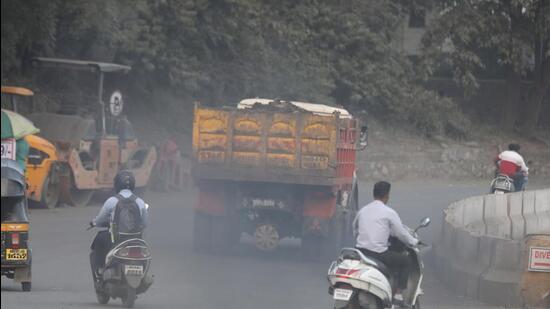
Moreover, there is a huge gap between the availability of real-time as well as archive data on air pollution in the public domain. Environment experts demand that authorities should come up with a short-term mitigation plan to avoid the hazardous health impact of air pollution.
In Pune, air pollution has increased significantly since October 12, and the Air Quality Index (AQI) has reported over 100 for 10 consecutive days.
As per SAFAR-IITM data, the overall AQI was recorded as 127 on October 25 at 7pm. The PM 10 concentration was 106 µg/m3 (micrograms per cubic meter) and PM 2.5 level recorded as 67 µg/m3.
Many citizens, health experts, and weather scientists have expressed their concern over the rising pollution level in Pune.
Nationalist Congress Party (NCP) MP Supriya Sule on October 22 posted on X (formerly Twitter) saying, “Air quality is a serious concern. Breathing this polluted air feels like smoking 3-4 cigarettes a day! The health of our citizens, especially children and the elderly, is at risk. We need immediate action from the government and local authorities to combat this issue.”
It is not the first time Pune has recorded such a higher level of AQI indicating an increased air pollution. The city is among the top ten most polluted cities in India as suggested by various reports. Therefore, there was a long pending demand for significant action to mitigate this problem.
After its inclusion in the National Clean Air Program (NCAP) in the year 2017-2018, the city has submitted an action plan for curbing air pollution in the city. As a part of this plan, the Pune Municipal Corporation (PMC) is implementing various initiatives, especially in the transport sector to strengthen the public transport system.
Encouragement for electric vehicles, the inclusion of e-buses in the PMPML fleet, and the Metro project are a few projects among these, said Mangesh Dighe, environment officer, PMC.
Although the city has its long-term action plan for the reduction of air pollution in Pune, there is no effective short-term measure that is visible in the city.
Stressing the need for short-term measures, Sharmila Dev, senior program associate, Parisar said, “Along with long-term programs, there is also a need for short-term or immediate action plans in case of higher air pollution in the city. It is necessary to protect people who are exposed for a long time to such high levels of polluted air. One of the busways for this will be to strengthen the traffic system.”
Meanwhile, there is a huge gap in the availability of air pollution data. While IITM-SAFAR provides real-time updates on air quality at 10 locations in Pune city, there is no archived data available on the same platform. The Maharashtra Pollution Control Board (MPCB), the government body that is responsible for implementing the NCAP programs in the state, is failing to provide a regular update on air quality.
Nitin Shinde, sub-regional officer, MPCB said, “Maximum monitoring systems in the earlier network were of manual form, where one has to collect data manually. Since the board has been faced with a manpower crunch for a long time, there were difficulties in getting the data regularly. With the installation of give new automatic monitoring system, the board is now getting a timely update about air quality.”


