
 E-Paper



Pune next to Gadchiroli with 333 schools not having drinking water
Pune district has as many as 333 schools without a running water connection on their premises, as per data released by the state water supply and sanitation department on Tuesday to highlight the status of the Jal Jeevan mission (JJM)


Pune district has as many as 333 schools without a running water connection on their premises, as per data released by the state water supply and sanitation department on Tuesday to highlight the status of the Jal Jeevan mission (JJM). This makes Pune only the second after Gadchiroli - a border district located in the eastern part of the state - to have the maximum number of schools without a tap water facility on their premises.
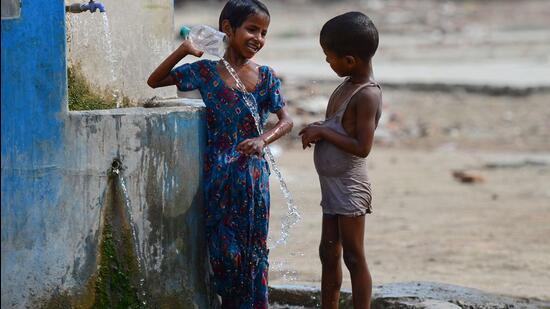
Moreover, 641 schools in Pune district also do not have the facility of running water in toilets causing inconvenience and hygiene issues for the students. Similarly, 754 anganwadis need drinking water tap connections and 1,986 anganwadis need running water in their toilets, again making Pune only the second district after Gadchiroli which needs drinking water tap connections at 1,535 anganwadis.
About revamping the infrastructure in these schools, Ayush Prasad, chief executive officer (CEO), zilla parishad (ZP), said that connections in these schools and anganwadis will be provided by mid-September. “There are about 1,385 gram panchayats and 3,639 schools in Pune rural and 4,600 anganwadis in the region. Some of these schools are located at remote places and so far, water and sanitation has been managed at home by schools and students. But now under JJM, all infrastructure has to be within the school premises. We have surveyed the schools and identified the infrastructure needed in these schools,” said Prasad.
He added that funds to the tune of Rs7.5 crore will be spent to ensure that all schools and anganwadis in the district have water connections for drinking and sanitation purposes. “We have also identified some schools whose infrastructure needs repair which will also be included under this. All of this work is expected to finish by mid-September,” said Prasad.
Harishchandra Gaikwad, president, Pune district principals’ association, said that since there are no tap water connections and running water in schools and anganwadis, the students’ health is at a risk. “If the water is polluted which may be the case as it is stored in bad conditions, it may lead to health issues in students. And we see that many students suffer in terms of their studies as they fall sick very often. In fact, many young girls avoid visiting schools during their menstrual cycles as there is no water. Many girls also hesitate to use toilets during school and suffer from infections later due to this. This basic infrastructure should be provided in schools to ensure that students attend classes regularly and remain healthy,” he said.
Mukund Kirdat, education activist from Pune and member of the Aam Aadmi Party (AAP), said that under the right to education (RTE) act, these basic facilities should be there in all schools. “Not having these basic facilities is a serious problem. It is not just an issue for the health of students but also reflects on the sanitation and hygiene in schools. We can find such discrepancies in corporation schools within the Pune city limits as well. There are tap water connections but the water flow is not sufficient for students in many schools within the city limits,” said Kirdat.


