
 E-Paper



Pune records second-highest single-day rainfall of season on Aug. 19
As per official data, Lohegaon recorded 44.8 mm and Pashan recorded 23.3 mm rainfall on August 19. Whereas Chinchwad recorded 41.5 mm rainfall


At 41.4 mm rainfall recorded till 5.30 pm, the city witnessed its second-highest single-day rainfall of this monsoon on Tuesday, August 19. Earlier on June 13, the city recorded its highest single-day rainfall at 55 mm.
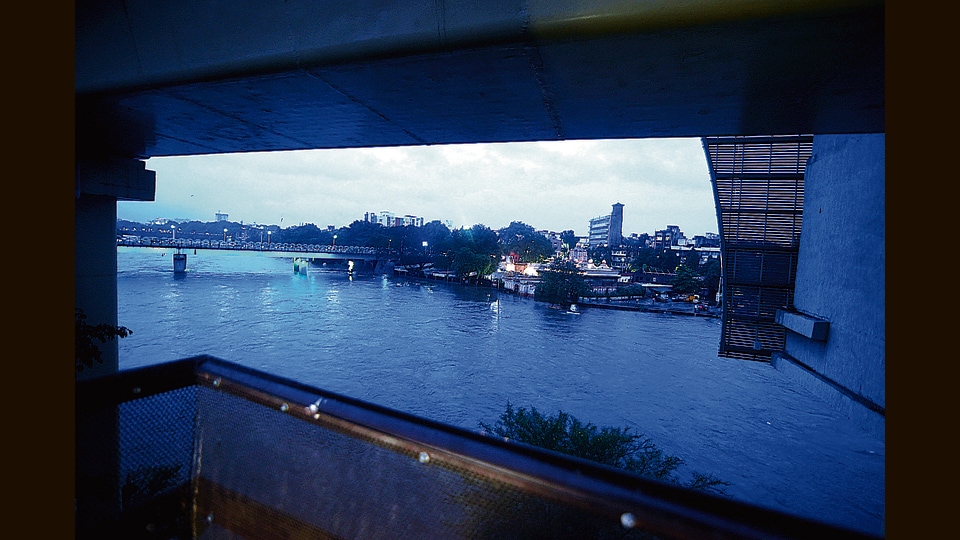
After experiencing a relatively dry spell during the first half of August, the city is now experiencing significant rainfall for the last two days. On August 18, the city received 35 mm rainfall in 24 hours whereas on August 19, the city recorded 41.4 mm rainfall till 5.30 pm. This raised the city’s average rainfall for the month of August to 88 mm against the normal of 145.5 mm.
As per official data, Lohegaon recorded 44.8 mm and Pashan recorded 23.3 mm rainfall on August 19. Whereas Chinchwad recorded 41.5 mm rainfall.
The ghat areas of Pune also recorded heavy to extremely heavy rainfall over the past 24 hours with several stations recording three-digit rainfall. At 320 mm, Tamhini station in Mulshi recorded the highest rainfall in 24 hours; followed by Davadi station in Maval recording 225 mm rainfall; and Lonavala recording 145 mm rainfall.
Due to heavy rainfall across Pune district, water levels in the Khadakwasla dam complex rose sharply, prompting the authorities to start large-scale water release on Tuesday, August 19. According to the irrigation department, water has started being released from all four dams of the Khadakwasla dam complex. On August 18, the Khadakwasla dam had 53.12% storage which rose to 86.99% storage by 5.30 pm on August 19. As a result, the dam’s discharge was gradually increased from 1,600 cusecs to 35,310 cusecs by 7 pm on August 19. Furthermore, 12,308 cusecs water was released from Panshet dam and 12,416 cusecs water from Warasgaon dam. With this combined outflow into the Mutha river, authorities have cautioned those staying in low-lying downstream areas against possible flooding.
Mohan Bhadane, sub-divisional engineer, irrigation department, said, “The ghat regions are witnessing heavy rainfall, leading to a sharp rise in dam inflows. To manage flood control, water release has been initiated. The discharge will be regulated depending on rainfall and inflow conditions.”
Amid water release from upstream dams and continuous heavy rainfall, authorities have also started releasing water from the Ujani dam. As per official information, 41,600 cusecs water release has been started from Ujani dam and the department has warned those staying in downstream villages of possible flooding.
Meanwhile, heavy rainfall activity in the ghat areas of Satara district has forced authorities to release water from the Koyna dam as well. On August 19, six radial gates of the dam were lifted from 11 feet to 12 feet, releasing 87,000 cusecs water into the Koyna river. Additionally, both units of the Koyna dam powerhouse are operational, discharging another 2,100 cusecs water. The total outflow from the dam has reached 89,100 cusecs. Authorities have warned villagers staying on the banks of the Koyna river of possible flooding.
Tuesday, August 19, marked the second consecutive day of heavy showers but the updated forecast suggests that rainfall activity is likely to reduce across Maharashtra from the next 24 hours. No significant warning has been issued by the India Meteorological Department (IMD) for rainfall from August 21 onwards.
BOX
Rainfall activity to reduce from August 20
After several days of widespread heavy showers, rainfall activity across Maharashtra is expected to reduce from August 20, according to the India Meteorological Department (IMD).
A red alert remains in place for the ghat areas of Pune and the entire Raigad district on August 20. An orange alert has been issued for the coastal belt; and the ghats of Nashik, Satara and Kolhapur districts; along with Thane and Palghar, indicating the likelihood of heavy showers. The Vidarbha region will remain under a yellow alert for the next 24 hours. From August 21 onwards, no significant alerts have been issued for most parts of the state, except for a yellow alert for the coastal districts.
S D Sanap, senior meteorologist, IMD Pune, said, “For Pune, a red alert has been issued for the ghat regions on August 20, followed by an orange alert on August 21. Beyond that, no major rainfall is expected in the city over the next few days. Within Pune city limits, no significant alert has been issued from August 20 onwards.”


