
 E-Paper



Pune’s Shivajinagar area records 38.8°C
Pune experiences heatwave-like conditions with temperatures above normal, reaching 40.9 degrees Celsius in Lavale. Health advisory issued as temperatures rise.


For the second consecutive day on Tuesday, March 26, Shivajinagar recorded the highest temperature of the season at 38.8 degrees Celsius. A similar temperature was recorded at Shivajinagar on March 25.
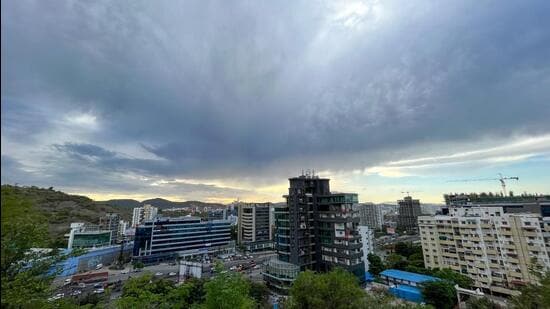
Meanwhile, the Lavale area in Pune recorded a temperature of 40 degrees Celsius. As per the forecast, the maximum temperature will continue to be above normal for a week.
For the past few days, there have been heatwave-like conditions in Pune with both minimum and maximum temperatures rising. In the last 48 hours, the temperatures along with humidity have increased significantly, resulting in uncomfortable weather conditions for the citizens. Considering the heatwave-like conditions, the Pune Municipal Corporation (PMC) has already issued a health advisory for citizens and for the last two days, the city is experiencing greater heat impact as was forecast by the India Meteorological Department (IMD).
As per IMD data, the maximum temperature in Pune city (Shivajinagar weather station) is above normal level by 2.7 degrees Celsius. In other parts of the city including Pashan, Lohegaon and Magarpatta, maximum temperature was recorded as 39.2 and 39.6 degrees Celsius. Lavale is the only area in Pune where temperature reached 40.9 degrees Celsius.
As regards minimum temperature, many areas in Pune are already recording higher night temperatures. In Shivajinagar, the minimum temperature recorded on March 26 was 18.6 degrees Celsius, which is above normal by 2.1 degrees Celsius. In other areas, the night-time or minimum temperature was recorded between 18 and 26 degrees Celsius. The highest night-time temperature was recorded at Wadgaon Sheri as 26 degrees Celsius, and the lowest minimum temperature in Pune was recorded at NDA and Shirur as 18.3 degrees Celsius. Pashan, which is considered one of the coolest areas in the city, also recorded a higher temperature at 20 degrees Celsius.
Relative humidity (RH) is also contributing to greater heat in the city. The RH level is higher during night-time, resulting in uncomfortable weather. As per the data, the RH was recorded as 27% in Shivajinagar during day-time on March 26. Whereas during night-time, it was recorded as 58%. Compared to March 25 when the RH level was recorded as 55% during night-time, the RH level increased by 3% on March 26. Due to active El Nino conditions, the state is expected to see above normal temperatures this summer, and as per earlier predictions, the second half of March is already seeing a significant rise in both minimum and maximum temperatures.
Vaishali Khobragade, senior meteorologist, weather and forecasting division, IMD Pune, said, “Currently, there is no active weather system over Maharashtra. However, a trough line between Vidarbha and south interior Karnataka is still there. Also, a western disturbance is likely to affect north India on March 29. As a result, the north-westerly winds will bring more moisture to the state, especially in the Konkan and central Maharashtra region. At the same time, the south-easterly winds will bring moisture to Vidarbha and the adjoining areas. Hence, it will feel hotter than whatever is the actual temperature. The state is likely to experience partly cloudy skies between March 29 and 31.”
As per state data, the highest temperature was recorded in Akola as 41.5 degrees Celsius and the lowest temperature was recorded in Pune as 18.6 degrees Celsius. In Buldhana, there has been a significant rise in maximum temperature. The temperature was recorded in the district as 40.2 degrees Celsius, which is above normal level by 5.1 degrees Celsius.
Interactive session on ‘local action for climate change’
Earlier this month, the Symbiosis School of Economics (SSE) and Symbiosis Centre for Urban Studies (SCUS), in collaboration with Sheffield University, hosted a two-day interactive session on ‘local action for climate change in Pune city’. During the programme, professor Vanesa Castán Broto from Sheffield University provided a global perspective on climate urbanism, emphasising the importance of citizen participation in urban governance for building city resilience. Professor Jyoti Chandiramani, director of SSE and head of SCUS, highlighted Pune’s climate stress points and ongoing student-led research initiatives to assess citizen awareness and climate action at the ward level. Sarath Babu presented Pune’s climate action plan, focusing on decarbonisation and individual-government collaboration. Dr Vidya Yeravdekar, pro-chancellor, Symbiosis International (deemed university) and Dr Ramakrishnan Raman, vice-chancellor (deemed university) said that they are consistently prioritising the university’s commitment to addressing climate change. Professor Prakash Rao from the Symbiosis Centre for Climate Change and Sustainability (SCCCS) discussed the need for adaptation and emphasised ecologically resilient cities. Professor Gurudas Nulkar from the Gokhale Institute of Politics and Economics highlighted the importance of resilience and cautioned against maladaptation to climate challenges.


