
 E-Paper



Red alert for ghat areas in Pune, Lonavla gets 210 mm rain in 24 hrs
A red alert has been issued for ghat areas of Pune district due to heavy rain. Local authorities have been instructed to assess risks and take precautions.


According to the India Meteorological Department’s (IMD) forecast, a red alert has been issued in ghat areas of Pune district for the first time this monsoon season for Wednesday, July 19. Western ghat areas around the city are likely to get heavy rain over the next 24 hours, and weather experts have recommended residents avoid visiting them.
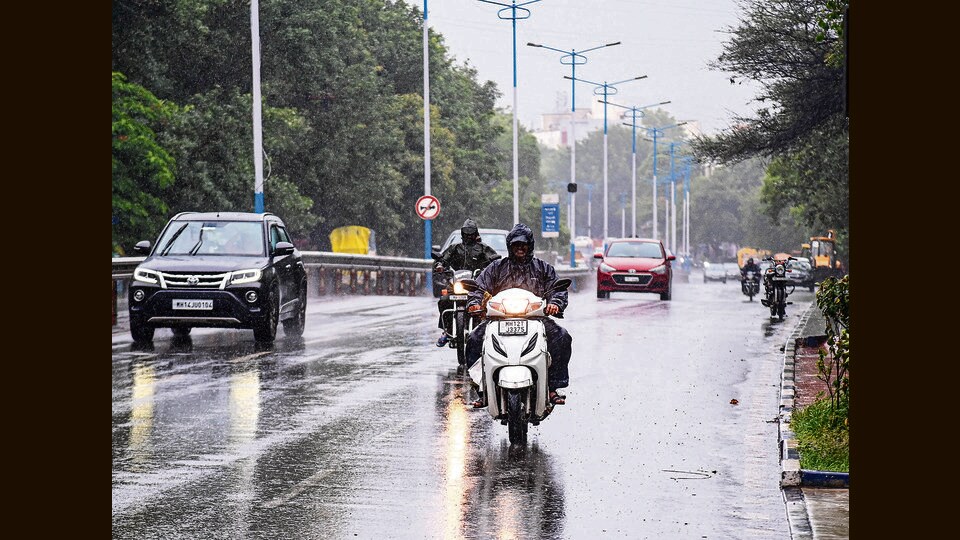
Accordingly, as per the Pune district disaster mitigation plan, local authorities have been instructed to assess the prevalent risks and take necessary precautions, said Ayush Prasad, Zilla Parishad CEO, Pune District.
“All hospitals have been adequately staffed and stocked with necessary medicines. Ambulances are functional and officials have been asked to stay on alert. Tehsil officials would be inspecting readiness,” Ayush Prasad informed.
In line with IMD’s earlier forecast, the state is receiving good rainfall in many districts of Konkan, Central Maharashtra, and Vidarbha subdivisions.
Lonavla City and the adjacent areas received very heavy rainfall in the last 24 hours, clocking 210 mm downpour; followed by Lavasa, which received 111.5 mm of rain.
The Pune region is also experiencing heavy rainfall in ghat areas. While in the city area, light rainfall between 4 to 8 mm is experienced in many places. On Tuesday, 2 mm rainfall was recorded at Shivajinagar, while Lohegaon received 4 mm precipitation.
Similar rainfall activity is expected to continue for the next 4-5 days, said IMD officials.
Anupam Kashyapi, head of the weather and forecasting department, at IMD, Pune said,” Although a low-pressure area over north Odisha, adjoining West Bengal & Jharkhand has become less marked. However, the associated upper air cyclonic circulation now lies over south Jharkhand & neighbourhood. A shear zone (low-pressure line) runs roughly along Lat. 20° N tilting southwards. Moreover, cyclonic circulation is likely to form over the Northwest Bay of Bengal within 48 hours. All these systems are making the monsoon vigorous in Maharashtra. Under the influence of these systems, widespread moderate rainfall with isolated heavy to very heavy rainfall over Maharashtra (except Marathwada) during the next 5 days.”
Heavy rainfall alert for ghat areas to continue till July 22
As per IMD GFS model forecasting, heavy to very heavy rainfall will be received in parts of Konkan, ghat Areas of Satara, Pune, and Nashik. Widespread moderate rains are possible in interior parts of Maharashtra. Accordingly, IMD has issued a colour-coded alert for most of the areas in the state. For Pune, a red alert has been issued on July 19, while an orange alert is issued between July 20-22.
Rapid progress in covering the deficit in Pune
As a result of sporadic rainfall activity, the Pune district is experiencing a deficit for a long time during this monsoon season. However, currently, the monsoon is making rapid progress in the district, and within the last 2 days, the rainfall deficit has dropped to 28% from 36 % with a decrease of 8 mm.
Commenting on the situation, K S Hosalikar, head of India Meteorological Department (IMD), Pune said,” Currently, the Pune district comes under ‘deficient’ rainfall category with ‘red’ colour code. Apart from that, 16 other districts are under the red category, while 2 districts are in the ‘yellow’ colour category with a large rainfall deficit. However, with the current rainfall indications, we are expecting the next 3,4 days many of the red and yellow colours may change to green or blue as well.”


