
 E-Paper



Sutradhara’s Tales: On Pune’s paper-making trail, in letter and spirit
Paper-making technology was learned by the Arab from Chinese prisoners who were captured in attack on Samarkand in 751 CE. This art of paper making eventually spread across Europe and India in the 18th century through agency of Islamic rulers

 Prefer HTon Google


Documents and records are one of the most tangible creations of medieval ages that provide us crucial evidence to understand various aspects of administration and governance of bygone days. State records for Pune that start as copper plate grants in the 8th century CE grow enormously in medieval ages due to the introduction of paper and paper manufacturing.
Pune archives aka Peshwe Daftar, famously houses excess of 40 million documents from the 18th and 19th century. But, what do we know of the medium of paper that these records were written on and where was it sourced from?
Paper was first manufactured in China in 105 CE. I-Tsing, the Chinese traveller who visited India on pilgrimage, notes that there was no paper available to him to record and translate the Sanskrit Buddhist texts. He observes that Indians wrote on either Bhurja-patra (birch bark) or Taad-patra (palm leaves) specially processed for the purpose.
Paper-making technology was learned by the Arab from Chinese prisoners who were captured in attack on Samarkand in 751 CE. This art of paper making eventually spread across Europe and India in the 18th century through agency of Islamic rulers. Muslim rulers extensively used paper as writing material and one finds one of the oldest paper manuscripts in India from Gujarat dating to 1223-1224 CE.
Art of paper making was introduced to the Deccan about 700 years back by Mohammad bin Tughlaq when he shifted the capital from Delhi to Daulatabad. A small settlement between Daulatabad and Khultabad was set up and named as Kagazipura where paper-making operation started in full swing. The paper manufacturing continues until today and follows the traditional methods of handmade paper making.
As the need for documentation and keeping records increased, paper as medium was most preferred. The raw material to make the paper in the form of various natural fibres, too, was easily available.
Shaiste Khan descended into the Deccan with a huge army of 40-50 thousand troops. And on conquering Pune in May 1660, he made Lal Mahal, the former residence of Shivaji Maharaj, his base.
The original Kasba peth, Shahapura and Somwar were not enough to accommodate the requirements of his military camp. Hence, Khan went on to settle a new peth, Shastapura, also known as Astapura, along the river and beyond the Nagjhari stream, which is the present day Mangalwar peth.
The military also brought in various artisan communities to settle in Pune. Prominent among them were shikalgars (weapon makers) and Kagajis (paper artists). A separate Kagadipura was settled to the east of Kasba for paper making. Water is an essential requirement in paper making especially used for multiple washing cycles was available near the river; no wonder Kagadipura was settled along the Mutha river banks.
The various types of papers known during the Maratha period are named after their region of make or by usage or community associated. For example, “Habsani” or “Hapshani” paper was the one imported from Abyssinia Africa or made on Konkan coast near Janjira by Habshis (Abyssinians). Similarly, “Madgadi” paper might be named after fort Madgad near Diveagar in Raigad district.
“Hareri” was the paper manufactured at town of Harihar, a large paper-making centre in Mysore, Karnataka. “Daulatabadi” as name indicates was manufactured at Kagazipura near fort Daulatabad. “Firangani” and “Portugali” are the papers imported from Portugal. Paper manufactured at Junnar was coveted for its quality and was known as “Junnari Kagad”. “Shastakhani” was the name given to paper manufactured in paper-making units at Kagadipura in Shastapura peth of Kasbe Pune. The prominent towns such as Aurangabad, Junnar Pune where artisans engaged in paper making lived came to be known equivocally as “Kagadipuras”.
“Parabshai” was a paper exclusively used and preferred by Prabhu or Parab community engaged in clerical works. “Tiklidar” was fine quality paper decorated with silver and gold dots whereas “Buttedar” was paper decorated with silver and gold motifs all over the surface.
The jasoods (spies) in Maratha period came to be known as “Kagadi” as they carried paper letters to and fro, as part of the undercover activities.
The Peshwas revived paper manufacturing in Pune in 1783 by specially inviting the paper craftsman, Allibhai, to Pune. He and his assistants were given free residence in Kasba peth and were eventually settled in Pune. Their tribe continued to grow as the demand for paper increased, thus, continuing the legacy of Kagadipura established in the 17th century at the same location. During the 18th century, 40-odd manufacturing units or Kagaz Karkhana were operational at Kagadipura. But, they were reduced to mere eight in 1885 due to waning local demand. Of these, seven were in Kagadipura and one was at Bhamburda across river Mutha. Today, most of the units have disappered or replaced by modern machinery but the place name sticks due to prominent presence of Kagadipura Masjid. The area also is home to “Juna Kalbhairav”, a forgotten city deity of Pune.
The paper manufactured at Pune factories was quite strong and durable. Towns of Nasik and Junnar too housed paper manufacturing units. But, the process differed substantially; both the places utilised cloth fabrics to make paper while the Pune units recycled the discarded paper scraps. Earlier they used to use ropes, strings, coir and gunny bags made of jute as fibre for paper making. But, it demanded excess labour to beat the bundles and wash the fibres.
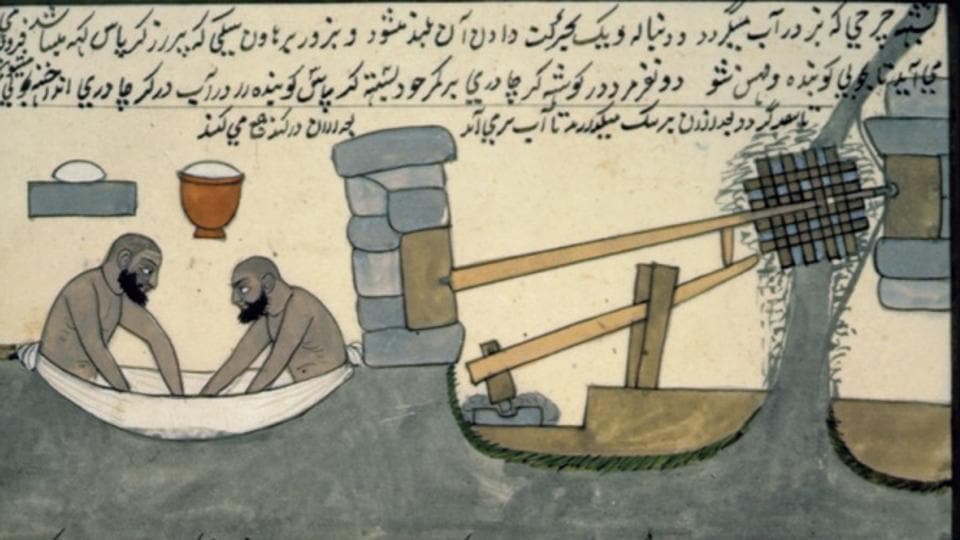
Six principal instruments were used as tools in this kind of paper manufacturing. A large hammer was known as “Dhegi” or “Dang”. Various kind of “chalnya” (sieves) were used as “sache” or paper molds to drain out excess liquid. “Chapari” was the bamboo frame to hold and support the paper mache and for drying. A large rounded pebble shaped block of agate stone called “Shilemani” was used to refine and polish the paper surface. “Kavade” or big shells were used often. This would render the surface of paper smooth and easy to write upon.
The quality of hand-made paper made in Maratha world was superior to the ones imported from Europe as they lasted long, did not break due to aging, held ink in better fashion and did not allow fading of inks even after 300 years.
Though making paper by hand is a tedious process, this historical art has been revived in modern age and finds new connoisseurs through endeavours such as the Handmade factory at Agriculture College.
Saili Palande-Datar is an indologist, environmentalist, history researcher and farmer. She can be reached at sailikdatar@gmail.com


