
 E-Paper



275 Indians still missing in Nepal flash floods as death toll crosses 1,200
Over 1,900 Indian nationals who were in China when the natural disaster occurred on August 26 have safely crossed into Nepal, as per the MEA's latest briefing.

 Prefer HTon Google


A total of 275 Indian nationals are still missing in the aftermath of the deadly flash floods that devastated Nepal, while 169 Indians have been rescued so far, the external affairs ministry said on Friday.
So far, 1,907 Indian nationals who were in China when the natural disaster occurred on August 26 have safely crossed into Nepal and there are no more Indian travellers stranded in the Tibet Autonomous Region, external affairs ministry spokesperson Randhir Jaiswal told a regular media briefing.
“[A total of] 275 Indian nationals remain missing. We continue to be in close touch with the Nepali government and the ministry of home affairs here and the concerned state governments in India as well,” Jaiswal said in response to questions. This figure includes 49 Indians listed as missing in China, he said.
Three more Indians were rescued from Trishuli Bazar, one of the worst-hit areas, since Thursday, he said. The Indian side deeply appreciates the efforts of Nepal’s authorities in this regard, he said.
Deaths continue to peak in Nepal and China
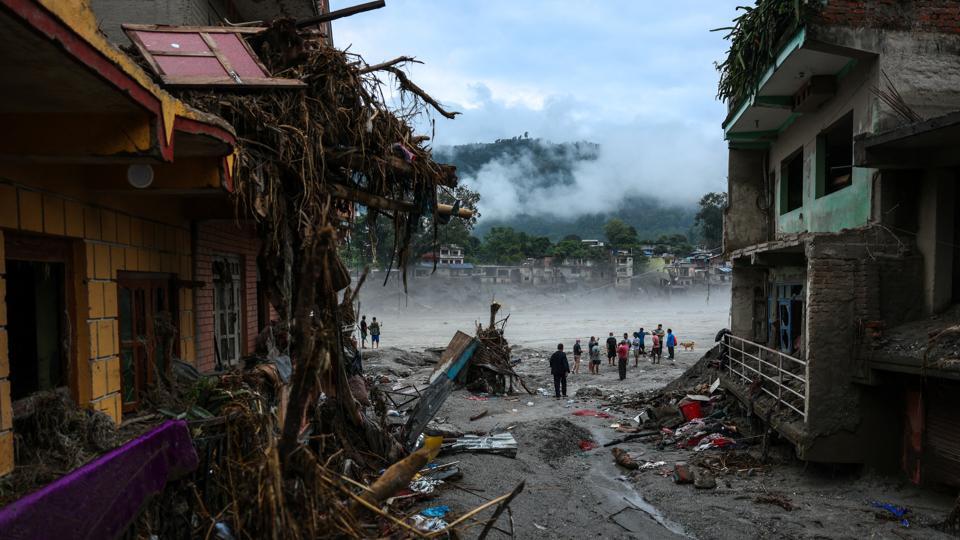
Flash floods and debris flows triggered by the partial collapse of a glacier hit a checkpoint on the China-Nepal border on August 26 and devastated dozens of settlements along a stretch of the Trishuli River.
The cascade of mud, rocks and water from near the Langtang Lirung mountain peak swept away villages, roads and bridges in Nepal and Tibet, killed more than 1,280 people and devastated entire communities living in Himalayan valleys.
More than 5,600 people are still missing on both sides of the China-Nepal border, including some 550 foreign nationals. Chinese authorities have also reported 21 deaths and 541 people missing in Tibet.
Hundreds of workers are also believed to be trapped inside hydropower plants in Nepal, including some in tunnels.
Jaiswal said that India has sent 54 personnel to Nepal to support relief and rescue efforts and airlifted 95 tonnes of relief materials on seven aircraft.
The personnel sent to Nepal include 30 tunnel rescue experts, 19 forensic experts, and a five-member medical team. “Our rescue and forensic teams are deployed on the ground and they are closely working with the Nepalese authorities,” he said.
“We will continue to provide assistance as per the requirement from the government of Nepal,” Jaiswal said, adding that the Indian side plans to send more forensic kits, Bailey bridges and other relief materials sought by Nepal.
Also Read I Nepal floods: DNA samples of kin of Vidisha engineer, two workers to be collected
Debate on climate change flares up
With the Nepali side making a push for compensation from “major greenhouse gas emitters” in the wake of the natural disaster, Jaiswal said India had promptly extended solidarity and support to the government and people of Nepal, and will continue to support rescue, relief, reconstruction and recovery efforts as a close friend and partner.
“India has consistently maintained that climate change is a common challenge and action in this regard must be based on the principle of common but differentiated responsibilities and respective capabilities,” Jaiswal said, pointing to the need for developed countries to do more.
“Developed countries, which historically are responsible for the emissions and have contributed overwhelmingly to this present crisis, must take the lead in reducing emissions and supporting developing countries by way of finance and technology transfer to meet this challenge,” he said.
Also Read I ‘Kept chanting Hare Krishna’: Nepal man rescued alive after being trapped in tunnel for 9 days
Nepal’s foreign minister, Shisir Khanal, also offered a clarification on Friday, saying that his comments regarding financial compensation were not aimed at specific countries such as India, China, or the US.
“Our call has been for the global community to look at this disaster from the perspective of climate change and the impact it is having in Nepal,” Khanal said.



