
 E-Paper



Sutradhara’s tales: Sir Charles Malet’s British residency at Poona
The last decades of 18th century marked the decisive entry of British to Poona city and court of Peshwas

 Prefer HTon Google


Pune: The last decades of 18th century marked the decisive entry of British to Poona city and court of Peshwas. Unfortunately, the reason for this entry stemmed from disruption in internal affairs due to Raghoba dada’s flight against the ‘consortium of ministers’, the Barbhai. It was at Cambay, the head of British factory, Sir Charles Warre Malet, gave fugitive Raghoba refuge and transported him safely to Surat.
The backing of Raghoba by British led to the first Maratha war which went on for seven years. Finally, it was Mahadji Shinde who emerged successful in protecting Maratha interests through substantial conquests. The treaty of Salbai closed the war in 1782 which acknowledged the Sawai Madhavrao’s claim to Peshwa post and also ensured that Mahadji’s territorial claims were agreed upon. The treaty also needed Mahadji to provide guarantee for the due observance of the stipulations on the part of the English and Peshwa court at Poona.
Initially, a permanent British Resident, David Anderson was appointed at Shinde’s court representing the Governor General. The tussle for prominence in dealing with British between Mahadji Shinde and Nana Phadnis, who was principal minister acting on behalf of young Peshwa, led to change in the situation. Through Nana’s efforts to seek direct dealing with Governor General, Malet was appointed as first British resident at Poona.
The court of Poona had frequent and intimate dealings with Bombay. As an official well versed in dealings of British affairs at west coast, long serving officer, Malet was called upon to represent British interests at Pune. On his arrival at Pune, Malet was assigned Gaekwad wada (present day Kesari wada) in Narayan Peth for his stay, by the Peshwas.
But, as he did not like to live in the midst of the city, he preferred pitching tents during the dry season. He also proposed to build a small mansion for his residence away from the city. He was anxious about and wanted to avoid the frequent disruptions from town folks. Till the site of bungalow was finalised by Nana, Malet stayed in tents in Khajagiwale Baug in Sadashiv peth. Some of his retinue occupied the Gaekwad wada at Narayan peth.
Finally, with consultation of Nana, he chose site of the river Mula-Mutha confluence, the sacred Sangam, to pitch his tent away from the hustle-bustle of the city. It is at the same place, he later, built a spacious and commodious bungalow which came to be popularly known as ‘Sangam Bungalow’. The place allocated for the bungalow was near Bibi Sayyidani Dargah by Peshwas on August 10, 1792.
The spacious bungalow at Sangam was an entirely different and great departure from the typical Maratha wada construction prevalent in the 18th century. Instead, the bungalow brought in various neo-Gothic architectural elements in its construction style and plan. The use of basalt as building material granted it a robust and powerful presence.
The Sangam complex was made of expansive four square garden in the front and the central driveway. The bungalow had wide verandas on all sides to keep the tropical sun out. The three main blocks of the central building consisted of one for his Indian wife; the second block was used for administrative business; and a third, for kitchen and dining. The quarters for the cook, horse keeper and servant staffs were separate. He had five more cottages for his British aides, 10 tents, four huts for his guns, and two tents for visiting envoys.
In his stable, he had 25 horses, of which 14 were of the best quality. Malet’s guard consisted of 225 men and there were another 250 servants.
Captain Edward Moor wrote in his memoir ‘A Narrative of the Operations of Captain Little’s Detachment’ first published in 1794 the following praises for the Residency bungalow: “The Sangam is a little town quite detached from the city, being divided from it by the river Mutha, and inhabited entirely by the gentlemen, their attendants, and two companies of sepoys, stationed here as the Resident’s honorary guard. Sir Charles’ garden is watered by both rivers, by means of aqueducts. It produces all the fruits and vegetables of this country, here is an excellent vineyard …and we readily declare, that with the advantages of society and situation, the Sangam is the most enviable residence we ever saw in India”.
James Douglas tells us that in Sir Charles Malet’s day, the Resident in Poona 1785-91, the Residency was the most pleasant abode in India. Sir Charles built aqueducts, planted vines, apple and peach trees, kept a stud of Arab horses, and a number of elephants, in fact lived in a style suitable to the rank and dignity of the great nation he represented.
During eleven years of his residence at Pune, Sir Malet excelled himself in the field of diplomacy, but not the internal and international trade. Malet’s cautious and farsighted policy surely contributed in raising the prestige of British power. His intimate knowledge of Maratha character and politics, his mastery over Persian and Urdu, enabled him to obtain information in all matters. He had extensive spy network and through which he worked towards establishing British supremacy in Maratha dominion. Malet conciliated and controlled Nana even at the zenith of his power and on more than one occasions, successfully thwarted his ambitious projects.
Through his letter correspondences, Malet offers us excellent pen pictures of the important characters and events of Peshwa court.
Sir Malet resigned from his post at Pune on February 22, 1797 as a protest against his exclusion from appointment of governorship of Bombay, retired from service and left India soon. He died on January 24, 1815 and was survived by second wife Suzanne (daughter of deceased painter, James Wales), and three sons.
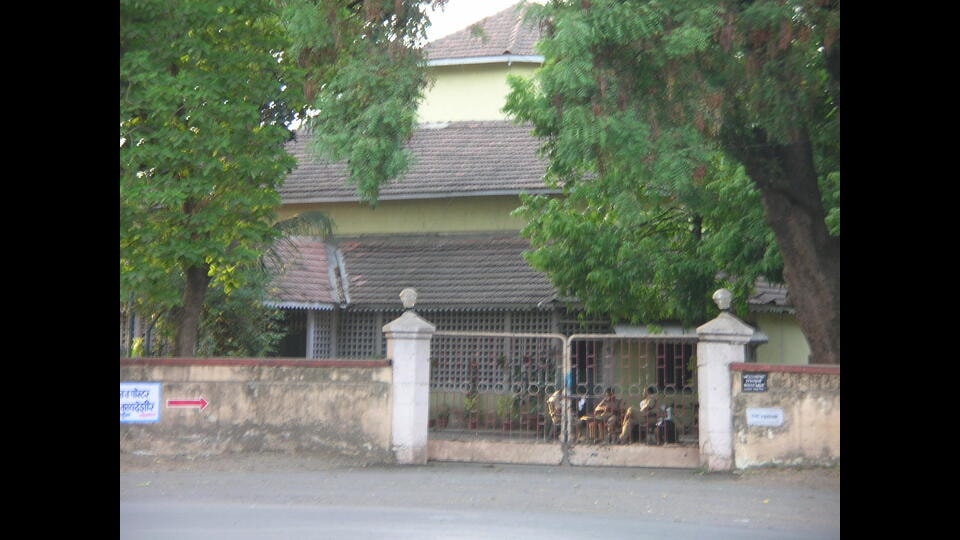
The “Sangam” Bungalow was burned down by Peshwa troops in Anglo-Maratha war on November 5, 1817. It was rebuilt afterwards and presently houses residence of district court jf Justice, next to the College of Engineering, Pune. The memorable establishment of Poona Residency by Malet is awarded Grade II in Pune’s Heritage List and is protected under it.
The story about painting school at Poona arranged by Sir Malet is for the next column.
Saili Palande-Datar is an indologist, environmentalist, history researcher and farmer. She can be reached @ sailikdatar@gmail.com


