
 E-Paper



Taste of Life: How the meat safe entered Pune homes?
The meat safe found a place of prominence in the Maharashtrian kitchen as the “dudhache/dubhatyache kapaat” (the milk cupboard), the word “kapaat” being a corruption of “cupboard”

 Prefer HTon Google


In 1900, the general health in Wanowrie Barracks caused great anxiety to the government owing to the prevalence of enteric fever and cholera during the monsoon months. Several theories were put forward in the report prepared by Major F Davies that included the city filth-pits, excessive number of latrines, defective storage of water, and the sorry state of the kitchen.
Many kitchens had indifferent flooring and smoke-blackened walls. The meat safes were not up to the mark. The pattern of safes let into the wall and opened to the outside air on one side was considered faulty. It did not provide enough ventilation and allowed the outside dust to be blown into the safe.
Food that was kept too long went bad in the Indian heat. The meat was sometimes kept in a small net-covered wooden frame on a kitchen desk. The net let air cool the food but kept the flies away. Meat and milk were also stored in larders built in the house’s coolest part. There were air holes in the walls to let in fresh air. A meat safe, also known as a pie safe, was a piece of furniture designed to store meat, pies, and other foodstuffs. It was very popular before iceboxes and refrigerators came into regular use.
In India, the meat safe was either an accessory to the larder or a larder in itself in houses where none was provided. It was usually made with a framework and walls of wood or metal, with a door of perforated zinc. There was plenty of ventilation, but flies could not get in. The shelves were of wood, metal, or slate. The safes varied in price according to type and size. The perforated zinc could be lightly scrubbed and dried.
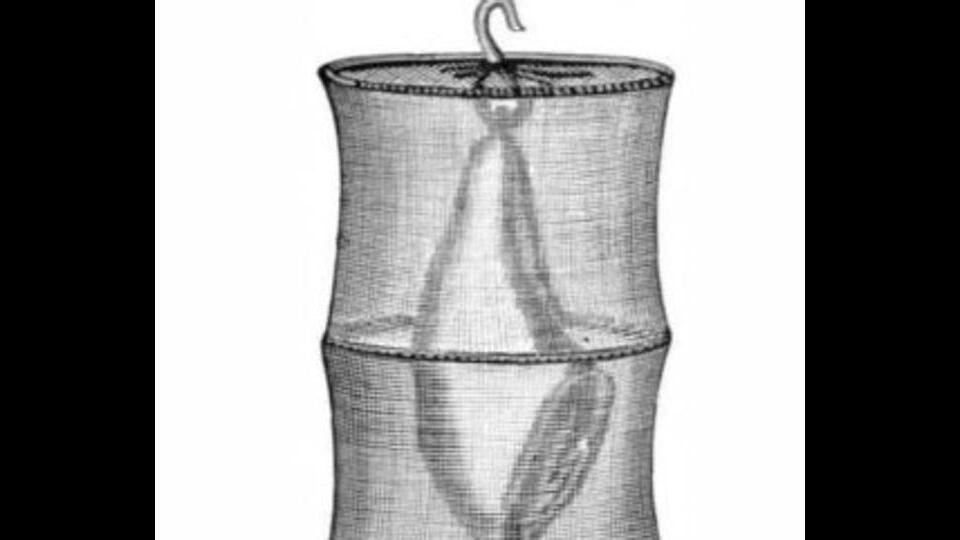
In bungalows with big larders and little space, portable meat safes were used. These safes were also used during travel. The portable meat safe had a hook that was intended to hold uncooked meat and a hoop that held muslin gauze. The joint of meat was hung up to the hook not less than 5 ft from the ground so that air could surround it freely. As the joint was surrounded by gauze, the flies couldn’t affect the entrance. Domestic manuals advised the housewife to choose a cool place for the meat safe, where the sun did not penetrate, that was airy, easily accessible, and away from drains of any kind.
The British in India considered themselves superior and modern than the natives. Their lives in bungalows were characterised by furniture and objects, sometimes imported from France and Belgium that they considered a reflection of their buying prowess, cultural identity, artistic expression, and historical heritage. Until the beginning of the twentieth century, few Indian homes had tables and chairs. This was considered a mark of “backwardness” by Europeans since pieces of furniture facilitated the leisure acts of a privileged society. The change began in the late nineteenth century when European furniture entered Indian homes.
The meat safe found a place of prominence in the Maharashtrian kitchen as the “dudhache/dubhatyache kapaat” (the milk cupboard), the word “kapaat” being a corruption of “cupboard”. The vegetarian Brahmin upper and middle class of Pune used meat safes to store milk, curd, and other milk products and protect them from cats and flies. The four feet of the cupboard were sometimes kept in shallow bowls filled with water to not let ants and other insects crawl up to the storage compartment.
European men and families returning to their homeland auctioned off their belongings including furniture in India. Western education and jobs had created a customer that craved objects possessed by the Europeans. With a desire to possess the pieces of furniture that were considered synonymous with opulence and sophistication, he was quick to purchase them.
The Reliance Trading Company was a leading house in Pune that auctioned furniture, crockery, and other wares belonging to European families leaving Poona for good. It was situated at Solapur Road and had a branch on Main Street. The furniture to be auctioned usually included a chest of drawers, chest fieldset, almirahs with mirrors, teapoys, side tables, writing and dressing tables, desks, dining tables, chairs, ice boxes, wooden and iron beds, prams, crockery, gramophones, pianos, meat safes etc. The Poona Popular Agency was another auction house popular in Pune. These auctions were usually held during Navratri, before Dussehra, in Peth areas, when people thought it auspicious to buy clothes and furniture.
The advertisements for the auctions appeared in Marathi newspapers regularly after 1915 with the names and descriptions of the objects written in the Devanagari script. They indicated a flourishing market for European furniture in Pune. Interestingly, advertisements after the late 1920s mentioned “milk cupboard” or “dubhatyache kapaat” instead of meat safe. I wonder if there was any hesitation on the part of the vegetarian Brahmin customer to use the safe to store milk considering it previously stored meat.
Shivaji Works Ltd from Tikekarwadi near Solapur manufactured milk cupboards that were sold by Kelkar Brothers in Pune. They were claimed to be lightweight but sturdy and could be washed with water at night.
Initially popular among the rich and the influential, the meat safe aka “dubhatyache kapaat” became popular and an object of necessity in a span of a few decades amongst the growing bourgeoisie in Pune and elsewhere. After the Second World War, it could be found in every other house across religions and castes. In the absence of a refrigerator, it was one of the first pieces of furniture the household bought once it could afford them.
Although initially associated with the display of wealth, the meat safes greatly helped the housewife. Its use to store milk is a curious adoption and adaptation of a “foreign” object of furniture during a period of national pride.


