
 E-Paper



Taste of Life: Pune’s first “native” restaurant fails to attract patrons, inspires future eateries
It is quite clear from the advertisements published in 1881-82 in the newspaper “Kesari” that “Pune Bhojanagruha” was situated in Tukaram Patwekari’s wada, opposite Dhamdhere wada in Budhwar chowk. The small lane where Dhamdhere wada was situated used to be (and still is) known as Dhamdhere bol


“Pune Bhojanagruha”, the first “native” restaurant in Maharashtra, opened its doors to its patrons in June 1881. The cultural and religious desire to insulate commercial dealings and food transactions had created several hurdles in the commercial prospering of the nineteenth-century cities governed by the Raj. The opening of “Pune Bhojanagruha” tried to solve the problem, principally faced by travelling merchants, pilgrims, and students, of obtaining food prepared outside the domestic hearth.
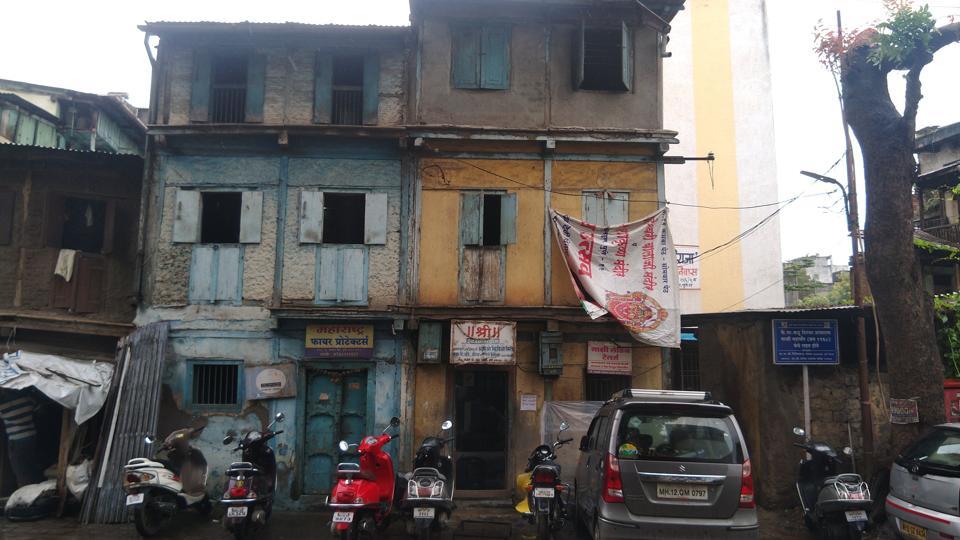
As mentioned in this column last week, it is quite clear from the advertisements published in 1881-82 in the newspaper “Kesari” that “Pune Bhojanagruha” was situated in Tukaram Patwekari’s wada, opposite Dhamdhere wada in Budhwar chowk. The small lane where Dhamdhere wada was situated used to be (and still is) known as Dhamdhere bol. This lane near the Dagadusheth Ganpati temple is now known for Srikrishna theatre.
Budhwar chowk was the most important commercial hub in the city when “Bhojanagruha” came into existence. Farasakhana police station is situated in the same chowk today. Because of its proximity to Shaniwarwada and Nanawada, most of the businesses were carried out from Budhwar chowk since the early nineteenth century. Raviwar Peth, the jewellery hub of Pune, was not situated very far away from the chowk. Kotwal Chawadi, the seat of Pune’s Kotwal, was nearby too. Most of the schools in Pune were in the same vicinity. These factors made Dhamdhere bol an ideal location for the “Bhojanagruha”. The proprietors of the restaurant would have hoped to attract the businessmen, travellers, students, and the elites of Pune to partake their meals at the eatery.
But it did not function there for long. Seetaram Ramchandra Gaekwad, in his book “Pune Shaharache Warnan” (The description of Pune city), published in 1886, writes about Chowdhary wada which was situated in Guruwar peth near the “Panch Howd” Mission. The locality was known for its slightly more cosmopolitan population and market. According to Gaekwad, Chowdhary wada housed “Punyache Boarding” (Pune’s Boarding House) “initially”. It is interesting to note that Gaekwad does not use the word “Bhojanagruha” to describe the eating house. It was not unusual at that time for the educated writers to use English words in their vernacular, in this case, Marathi, articles. English words were specifically used to express Western ideas, concepts, and philosophies. Gaekwad uses the English word “Boarding”, clearly hinting that this was a “Western” institution. At the same time, he makes it quite clear that it was the only restaurant in Pune city at the time.
Gaekwad, in his book, also fails to mention the original location of the “Bhojanagruha”. He makes his readers believe that the restaurant started its operations in the Bhajekar wada, which was not true.
In the 1880s, Chowdhary wada was owned by the illustrious Bhajekar (Chitale) family. The three Bhajekar brothers – Narayan, Mahadev alias Bapusaheb and Ramchandra lived there with their families. Bapusaheb, lawyer and playwright, was Vishnushastri Chiplunkar’s friend and classmate from Deccan College. The fact that Bhajekars chose to accommodate “Bhojanagruha” in their wada points at the close association Chiplunkar had with the eating house.
The shifting of “Bhojanagaruha” from the original location in Budhwar peth to Guruwar peth hints at a few possibilities. It is likely that the eating house did not attract many customers in the initial days and that the venture failed to gain a profit. The letter written by one “Mr. Shoshak” in “Kesari” demonstrated the inhibitions people had about the restaurant. The clientele the restaurant would have attracted in Budhwar peth would have mostly been conservative and apprehensive towards the eatery. Guruwar peth was more liberal and tolerant, and the proprietors might have expected them to be more welcoming towards the restaurant.
Unfortunately, “Bhojanagruha” seems to have faced difficulties at the new location too, because it then shifted to another location, not completely suitable for a restaurant.
It is unclear when “Pune Bhojanagaruha” shifted from Bhajewar wada, Guruwar Peth, to Pethe wada in the Tambat (coppersmith) lane in Kasba peth. Originally owned by the Pethe family who was related to the Peshwas, the majestic three-storied mansion, whose drawing room once had gilded walls, was jointly owned by Mr. Potfode, Mr. Nizampurkar, Mr. Karde, Mr. Dakhve, and Mr. Kadu in the 1880s.
Gaekwad mentions in his book that the locality was not a peaceful one. Several coppersmiths had their workshops in the lane and the noise was unbearable. One of the workshops was located in the Pethe wada itself. It is obvious that this location was not ideal for the “Bhojanagruha”.
One can assume that the business failed to take off in Guruwar peth too, and the proprietors had to shift to a cheaper, more affordable location. They might also have hoped to attract different patronage than from Budhwar and Guruwar peths. Though equally conservative, Kasba peth had a working-class population, which the “Bhojanagruha” might have hoped to attract.
The shifting of the “Bhojanagruha” from the elite Budhwar peth, to a more cosmopolitan Guruwar peth, and then to Kasba peth tells us about the response, it received from Pune. The unwelcoming attitude on display resulted in the shutting down of “Bhojanagruha” sometime in 1884, three years after it began its operations.
“Pune Bhojanagruha” was an important milestone in the journey of Pune from a town to a city. Irrespective of the response it generated, one has to acknowledge that it paved the path for more restaurants to run their businesses in Pune.
And for that, we have to thank Narayan Ramchandra, the proprietor of “Pune Bhojanagruha”, Vishnushastri Chiplunkar, Bapusaheb Bhajekar and many others who tried their best to make this venture a success.
More about them the next week.
Chinmay Damle is a research scientist and food enthusiast. He writes here on Pune’s food culture. He can be contacted at chinmay.damle@gmail.com


