
 E-Paper



The next natural step for farming
Despite India ranking No. 1 globally in organic farming, only about 2 to 3 per cent of cultivable land is under chemical free farming

 Prefer HTon Google


Pradnyesh Jori, Sanket Bhor and Pandurang Pable came together to promote natural farming and help farmers get rid of their debt cycles
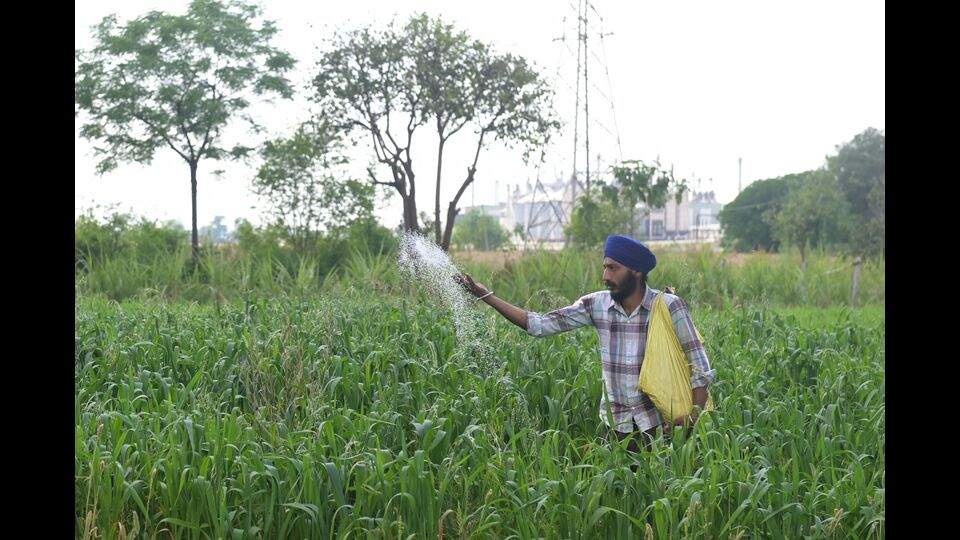
The more things change, the more they stay the same. Farming has undergone several shifts over the years, from the widespread use of chemical fertilisers and pesticides to hydroponics and organic farming, which is essentially chemical-free. Yet, despite India ranking No. 1 globally in organic farming, only about 2 to 3 per cent of cultivable land is under such practices.
The reason is not difficult to understand. As Sri Lanka’s experience has shown, while organic farming is healthier, yields are often 20 to 30 per cent lower than with chemical farming, even though the produce commands a premium price.
It was against this backdrop that Pradnyesh, then studying agriculture in Kolhapur, connected with Sanket, who comes from a farming family but was pursuing a Chartered Accountancy degree. When the Covid-19 pandemic brought the world to a halt, both returned home to Pune. Around the same time, Pandurang Pable, a family friend of Pradnyesh with over two decades of experience in process automation, digital marketing, and business expansion, also found himself back in his village.
Farming was the common thread that brought them together. As they began to study the realities on the ground, what they uncovered was deeply concerning. As Pradnyesh explains, “Most small farmers, especially those with one to three acres of land, were operating at a loss without even realising it. They were caught in a cycle of taking credit from local stores, repeatedly purchasing fertilisers and pesticides, facing recurring crop issues, and eventually repaying loans after harvest with little or no profit left.”
Labour added another layer of strain. When the trio mapped proper profit and loss statements, including the cost of land and family labour, it became clear that most farmers were running deep losses. Only larger farmers managed to remain profitable, largely because they could store produce and sell it at the right time.
This led them to a simple but powerful question: if chemical inputs were a major contributor to losses, could reducing them change the equation?
Determined to find answers, they decided to run their own experiment. As Pandurang recalls, they began with a small plot of one guntha, about 1,000 square feet, to test non-chemical farming methods firsthand.
Pandurang says, “We started by using Jeevamrut, a natural fertiliser made from cow dung, cow urine, jaggery, and gram flour, which ferments over a few days. Alongside this, we revived the practice of companion farming, growing crops such as cucumber, cluster beans, okra, fenugreek, and coriander together.”
These plants, with roots at varying depths, support one another and make better use of the soil. In all, they cultivated around 20 different vegetables.
Pandurang notes, “Modern farming has largely moved towards monocropping with heavy chemical inputs, causing traditional practices like companion farming to fade away.”
Soil, he explains, does not like to remain bare; it will grow something regardless. The idea, then, is to grow crops that benefit both the land and the farmer rather than allowing weeds to take over.
The results were striking. Their small plot delivered yields about 25 per cent higher than chemical farming, along with better taste and quality. For them, it was proof that natural farming was not just viable but highly effective.
By the time they completed this phase of experimentation in 2023, their conviction had strengthened. Natural farming not only reduced input costs but also had the potential to outperform conventional monocropping. To deepen their understanding, Pradnyesh and Pandurang went on to study permaculture in Hyderabad.
After completing the course, they travelled across cities, engaged with consumers, and studied market dynamics closely. As Pradnyesh points out, they discovered that natural vegetables were difficult to find, grains, when available, were often too expensive, and there was a clear gap between demand and supply. Compounding this was a lack of trust, with consumers unsure whether products were genuinely chemical-free.
Having identified the gap, they moved towards building a solution. They began working with farmers in their network near Solapur. Since only a small fraction practised natural farming, they initially collaborated with those following organic methods using Jeevamrut.
To test consumer response, they designed another experiment. They selected 80 families in Pune and offered them curated food kits containing staples such as jowar, wheat flour, dals, and pulses—enough for a family of four.
Their research showed that many organic brands were priced high, creating the perception that healthy food was unaffordable. In reality, the additional cost worked out to just ₹10 to ₹12 per person per day.
Packaging presented its own set of challenges. Determined to avoid plastic, they used paper bags for flour, carefully adjusting thickness to manage moisture.
“Fresh flour was packed only after receiving orders and delivered immediately to prevent dampness. These were placed in cloth bags stitched from repurposed saris, adding a sustainable layer but also increasing operational complexity,” Pandurang says.
Despite the challenges, the response was encouraging. The 80 families experienced a shift in mindset, recognising that the marginal increase in cost was justified by better taste, quality, and potential health benefits. Their stone-ground wheat flour is priced at ₹72 per kg, around 50 per cent higher than mass-market alternatives.
Yet, affordability alone was not enough. Trust remained a critical barrier. To address this, the trio introduced batch-wise testing using rapid testing methods to ensure that their produce was genuinely free from chemical residues.
To scale
Looking ahead, the founders are preparing for larger experiments. As Pandurang explains, “We plan to cultivate crops like jowar interspersed with pulses such as matki and moong, without using any fertilisers, not even natural ones.”
This approach relies entirely on rainfall, echoing traditional farming practices, with results expected after the monsoon.
They also aim to expand cultivation to 60 acres by 2027, combining family-owned land and current holdings. At present, they are already experimenting with natural farming across six acres using zero external inputs.
A strong emphasis is being placed on scalability.
“We are documenting processes to make them replicable as they grow. We support farmers by covering essential expenses, providing training, managing sales, and offering a 40 per cent share of profit, reducing risk and creating a more sustainable model,” Pandurang states.
Sattvaved Life LLP, registered in October 2025, was founded with clear principles: ethical practices, complete transparency, and zero use of plastic. Sales began in January 2026, with Pandurang leveraging his experience in digital marketing to drive growth.
Like most early-stage ventures, challenges persist. Delivery costs remain high relative to order size, and maintaining freshness, especially for fruits and vegetables, requires tighter control over production. As Pradnyesh notes, expanding into their own farming operations is the logical next step
Funding
So far, the three founders have self-funded the venture, investing over ₹12 lakh. They are now preparing to raise ₹1 crore to scale operations across five cities and to strengthen their natural farming initiatives. As Pandurang explains, this will help improve supply consistency, ensure quality control, and make natural food accessible on a larger scale.
The Future
Their long-term vision is to take natural farming to scale while restoring its economic viability. Inspired by Bhaskar Save’s low-cost farming model and the philosophy of Pandurang Shastri Athavale, they believe that farming need not be loss-making if unnecessary expenses are reduced.
In the near future, they plan to expand their network by collaborating with more farmers, ensuring a risk-free model by supporting daily expenses and sharing profits after sales. Their purpose remains clear, to make natural food accessible, farming profitable, and farmers free from debt cycles.
A tall order, but one they are steadily working towards.


