
 E-Paper



Monday Musings: When sugar became fuel
For decades, Maharashtra’s political and economic story could be told through its sugar factories

 Prefer HTon Google


For decades, Maharashtra’s political and economic story could be told through its sugar factories. They shaped cooperative politics, transformed villages across western and southern Maharashtra, created employment and determined the fortunes of the state’s rural economy. Every crushing season was a barometer of prosperity, with sugar prices influencing everything from farmers’ incomes to local politics.
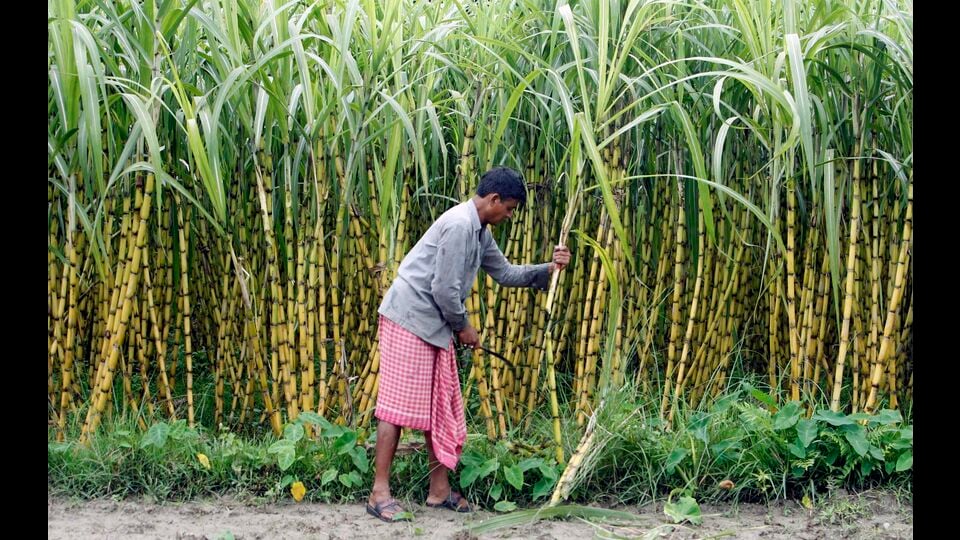
Today, those very factories are quietly undergoing another transformation. Many are no longer just producing sugar. Increasingly, they are producing ethanol.
The shift has been so gradual that it has escaped the public attention it deserves. Conversations around ethanol often remain confined to debates over petrol blends or vehicle compatibility. Yet the bigger story lies elsewhere. Ethanol has fundamentally altered the business model of Maharashtra’s sugar industry and, in doing so, changed the economics of one of the state’s most influential sectors.
A decade ago, ethanol was largely viewed as a by-product of sugar production. Today, it has become an important revenue stream for sugar mills. The change has been rapid. According to industry estimates, Maharashtra’s ethanol production capacity increased from around 26 crore litres in 2021-22 to nearly 244 crore litres in 2022-23 after the Centre accelerated its ethanol blending programme. Today, the state’s installed production capacity exceeds 300 crore litres annually, making Maharashtra one of India’s largest ethanol-producing states.
The numbers reflect more than industrial expansion. They tell the story of how government policy can reshape an entire sector. Investments worth thousands of crores have flowed into distilleries and allied infrastructure as cooperative and private sugar mills diversified their operations. Sugar factories that once depended almost entirely on crystal sugar are now planning production cycles around multiple products, including ethanol, power generation and compressed biogas.
For years, sugar mills remained vulnerable to fluctuating sugar prices and global market conditions. Ethanol has introduced another source of revenue, changing financial calculations inside factory boardrooms. Several mills have evolved into integrated agro-processing units rather than remaining conventional sugar factories. The ripple effects extend beyond factory gates. Around every sugar mill revolves an ecosystem of cane farmers, transporters, contractors, machinery suppliers, workers and local businesses. As production patterns evolve, so do investment decisions in rural Maharashtra.
The transformation has also placed Pune on the map in an unexpected way. Long before ethanol became a national priority, Pune-based Praj Industries invested in indigenous biofuel technologies that are now used in distilleries across India and overseas. It is a reminder that the state’s industrial ecosystem has contributed not only to sugar production but also to the technologies driving India’s biofuel ambitions.
But every structural transformation eventually enters a new phase, and Maharashtra’s ethanol story is no exception.
When the blending programme gathered pace, Maharashtra enjoyed a distinct first-mover advantage because of its vast sugar industry and early investments in distilleries. Currently, that advantage is gradually narrowing. States such as Uttar Pradesh, Bihar, Karnataka and Gujarat have significantly expanded their ethanol capacities, particularly through grain-based ethanol. India has already achieved its 20% ethanol blending target ahead of schedule, and production capacity across the country has expanded rapidly.
The result is a far more competitive market than the one Maharashtra helped create.
Industry associations have pointed out that procurement by oil marketing companies has increasingly shifted towards grain-based ethanol as more states enter the sector. Sugar industry bodies have expressed concern that cane-based distilleries are operating below capacity compared to the early years of the programme. The challenge for Maharashtra is no longer establishing an ethanol industry—it is maintaining its leadership in one that has become national.
This changing landscape also raises broader questions. What does this transition mean for cropping patterns in a state where sugarcane already occupies a substantial share of irrigated land? How should policymakers balance farmer incomes, energy security and efficient use of water resources? As Maharashtra experiences increasingly erratic monsoons, swinging from fears of drought in June to overflowing reservoirs barely a month later, these questions become part of a much larger conversation on sustainable growth.
What makes this moment significant is that ethanol has changed the vocabulary of rural Maharashtra. Sugar factories are now discussing distilleries, biofuels, compressed biogas, sustainable aviation fuel and carbon reduction alongside cane crushing and sugar recovery. These conversations would have seemed unusual even a decade ago.
Whether one sees ethanol primarily as an energy policy, an agricultural reform or an industrial opportunity, the fact is difficult to ignore. Maharashtra’s sugar economy is no longer driven solely by sugar.
The cooperative movement transformed the state’s villages by converting sugarcane into prosperity. A generation later, another transformation is underway, one that is turning the same crop into a source of energy and industrial value. The first phase of Maharashtra’s ethanol story was about creating a new industry. The next phase will be about remaining competitive in a market where every major agricultural state wants a share of the biofuel economy. For Maharashtra, that may prove to be an even bigger test than producing sugar itself.


