
 E-Paper



World Menstrual Hygiene Day: Women from Velhe village switch to eco-friendly products
Shattering the barriers of taboo around menstrual hygiene, around 53 per cent of women from Velhe village, near Pune city are now using menstrual cups

 Prefer HTon Google


Shattering the barriers of taboo around menstrual hygiene, around 53 per cent of women from Velhe village, near Pune city are now using menstrual cups. Many initially were hesitant to use cups but awareness about the issue helped many women in making the choice.
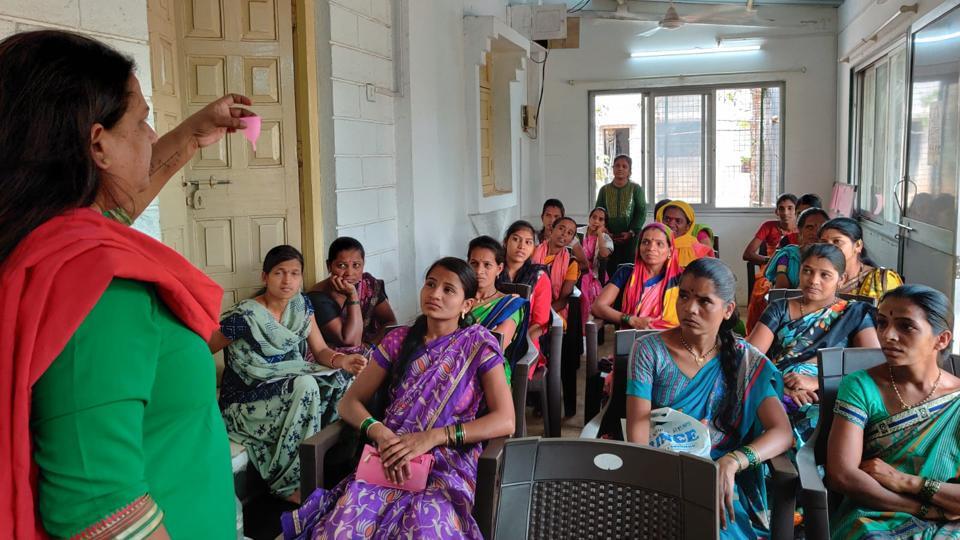
Menstrual cups are an eco-friendly alternative to sanitary napkins.
Many women from the village shared their experiences regarding the transition of using clothes, to sanitary napkins to menstrual cups.
Ashwini Ranjane from Ghavar village said that initially, it was a little difficult to use the cups. “But they are so much easier to use that I don’t think I will ever go back to using napkins again. Disposing off the napkins is also a task. It adds to the plastic waste. As we use cups, we are eliminating all the plastic waste,” said Ranjane.
Tejal Kumbhar, from Sakhar village, said that cups are easier to use. “It is cost-effective as one cup can be sterilized and used for over at least three years,” said Kumbhar.
Dr Diksha Chaddha, director of social programmes, Sirona Hygiene Foundation, said that the shift to sustainable safe options of cups is the behaviour change we were targeting.
“If earlier, the women would either use cloth or disposable pads, the idea was to change the behaviour to using cups, so that it’s convenient, comfortable and cost-effective. The principles of behaviour change communication required are to first make them aware of the problems in current behaviour of using cloth or napkins. Then they were made aware of a new product or behaviour and informed about its advantages,” said Dr Chaddha.
She added that another issue is that of hiding the pads before and after use.
“They often tie up used pads in polythene to dispose of in community bins or outside in the woods instead of throwing it with house waste. The cup is an effective solution as it can be used without undergarments, lasts up to 10 years and saves them the trouble of buying or disposing off pads,” said Dr Chaddha.
Leena Dandekar, founder and director of Raintree foundation, who has organised the awareness program in the village said that menstrual cups have proven to be cost-effective, eco-friendly, safe, and reusable.
“Project ‘Mukta’ was initiated as a pilot in three phases over six months targeting 150 women from nine villages of Velhe. Each woman received menstrual cups training only once. Post this intervention, 53 per cent of women have started using menstrual cups regularly in our intervention area. For rural India, this is a very good percentage,” said Dandekar.


