
 E-Paper



BLOs are foundation of clean electoral roll: CEC Gyanesh Kumar on J’khand visit
Addressing a dialogue programme with BLOs at Tapovan in Deoghar, Chief Election Commissioner Gyanesh Kumar stated that the intensive revision of the electoral roll is underway in various phases across the country, and the goal is to ensure that no eligible Indian citizen is left out.

 Prefer HTon Google


Chief Election Commissioner Gyanesh Kumar said on Monday that just as a clean electoral roll is the foundation of democracy, the BLOs (booth level officers) are the foundation of a clean electoral roll.
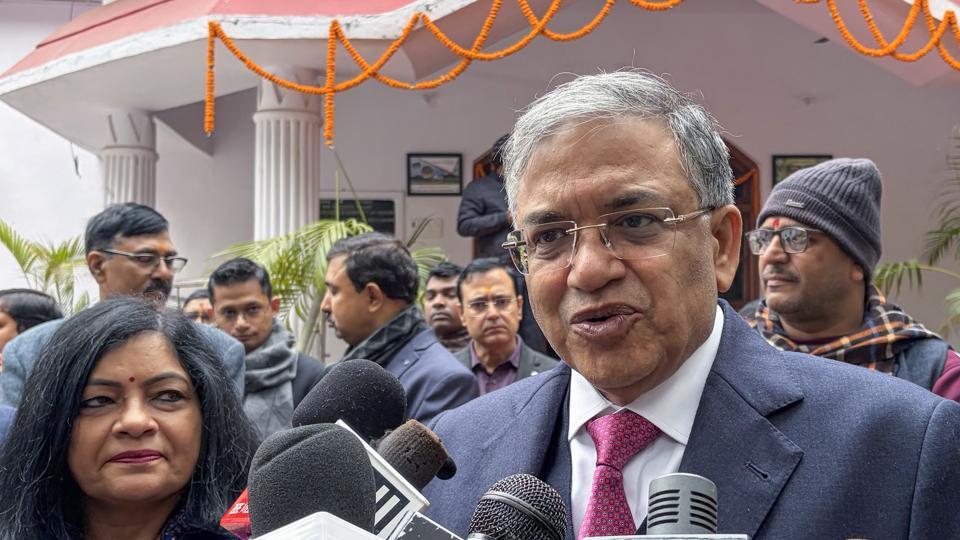
Addressing a dialogue programme with BLOs at Tapovan in Deoghar, the top election officer stated that the intensive revision of the electoral roll is underway in various phases across the country, and the goal is to ensure that no eligible Indian citizen is left out.
“Although it has not yet been announced in Jharkhand, the knowledge of the entire process and the preparations made by the BLOs here indicate that during the intensive revision in the state, the goal of ensuring that no eligible Indian citizen is left out of the electoral roll will be achieved,” said Kumar.
The CEC further stated that sometimes BLOs did not have identity cards while going door to door for electoral roll work, which led to people viewing them with suspicion.
“The Election Commission of India has now issued identity cards for BLOs, so every BLO has their own ID card, and they do not face any hesitation during door-to-door verification,” he added.
During the dialogue programme with the BLOs, information was provided by BLOs from various polling stations in Deoghar district regarding the intensive revision of the electoral rolls, officials said.
BLO Pramila Yadav gave detailed information on why the intensive revision of the electoral roll is necessary, while Gulshan Parveen explained how to map the current electoral roll into A, B, C, and D categories based on age, and how to map it with the previous electoral roll.
BLO Geeta Kumari explained the mapping of the electoral roll, and Deepam Kumari explained the eight checkpoints of the mapping process. BLOs Rakhi Devi and Sangeeta Devi explained the process of assigning notional numbers to houses, and Kumari Priya explained how to fill out Forms 6, 7, and 8. BLO Razia Khatoon provided detailed information on various topics, including the fact that during the intensive revision process, female voters should be mapped with their parents, not their husbands.
Praising the BLOs, the CEC stated that BLOs from Deoghar would soon be invited to a training programme for BLOs at the IIIDEM in New Delhi, organised by the Election Commission of India.
In a press conference held after the programme, the Chief Election Commissioner said that during his two-day visit to Deoghar and Dumka districts, he had the opportunity to visit Baba Baidyanath and Baba Basukinath temples, and also to interact with the BLOs, who are the guardians and pillars of the Election Commission.
Based on his interaction with the BLOs and their preparedness, he stated that he was confident that whenever the intensive revision program of the electoral roll is announced in Jharkhand, it will be conducted smoothly and transparently.
Jharkhand chief electoral officer K Ravi Kumar, deputy commissioner of Deoghar Naman Priyesh Lakra, and other senior officials were present on the occasion. Earlier in the day, Kumar worshipped at Basukinath Temple, a day after he visited Baba Baidyanath Temple in Deoghar with his family members.


