E-Paper



Jharkhand activists defer strike after government assurance
The capital city witnessed a large-scale mobilisation as hundreds of agitators from various districts including Kolhan, Palamu, Hazaribagh, and South Chotanagpur divisions marched towards the high-security zone from Morabadi ground.

 Prefer HTon Google


Hundreds of Jharkhand movement activists staged a demonstration on Wednesday and attempted an indefinite siege near chief minister Hemant Soren’s residence, demanding state recognition, jobs, and pensions.
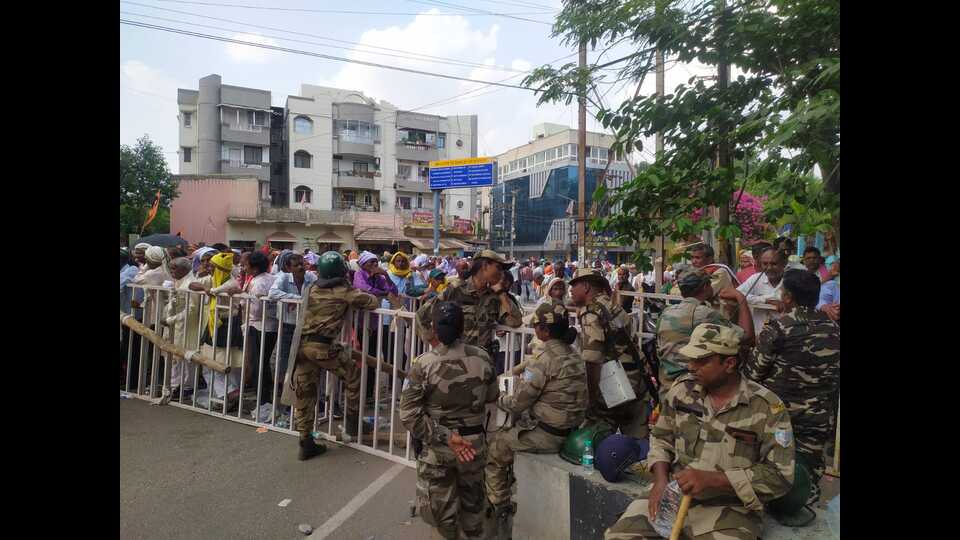
Organised under the banner of the Jharkhand Andolankari Sangharsh Morcha, the intense but peaceful protest culminated in the postponement of a planned indefinite strike following a formal assurance from the state government.
The capital city witnessed a large-scale mobilisation as hundreds of agitators from various districts including Kolhan, Palamu, Hazaribagh, and South Chotanagpur divisions marched towards the high-security zone from Morabadi ground. While many carried traditional items, nearly 5,000 activists wore symbolic attire to demonstrate their resolve.
A group of 16 core activists, led by prominent leaders including Asgar Ansari, Nizamuddin Ansari, Mangla Paharia, and Suraj Prasad Jaiswal, initiated a high-stakes protest. The situation remained highly charged as leaders of the Morcha, including Morcha founder Pushkar Mahto and treasurer Rozlin Tirkey, voiced their commitment to the struggle for activists’ rights through extreme protest measures.
Police personnel equipped with riot control vehicles and water cannons intercepted the massive rally progressing toward the Chief Minister’s official residence at Kanke 100 meters before the Jharkhand High Court Chief Justice’s official residence in Morabadi and did not allow them to move further.
City Superintendent of Police (SP) Paras Rana, who supervised the entire city during the agitation, confirmed that the administration managed the situation strategically without resorting to force.
“The agitation remained entirely peaceful, and the police did not have to use force anywhere,” SP Rana stated.
To defuse the tension, senior administrative officials coordinated a high-level meeting for a delegation of the agitators at Project Bhawan, a police official deputed near the barricade said.
Pushkar Mahto later informed Hindustan Times that the Chief Minister, who had to leave for New Delhi on Wednesday for an urgent meeting, extended a positive assurance regarding their demands. The Chief Minister promised that the cabinet would formally deliberate on the activists’ charter of demands during its upcoming meeting on June 15.
Following this breakthrough, State Finance Minister Radha Krishna Kishore visited the protest site in the evening. He met with the 16 activists engaged in the indefinite hunger strike and successfully convinced them to call off their protest pending the cabinet decision.
Earlier in the day, organisation founder Pushkar Mahto expressed deep anguish over the plight of the state’s creators.
“Although liberation from oppressive regimes was achieved in 2000, it is unfortunate that after a long struggle, Jharkhand agitators find themselves strangers in their own home,” Mahto said.
The Morcha’s primary demands include official state-level recognition and a distinct identity for all activists, guaranteed employment and livelihoods for their children, removal of legal stigmas associated with past political imprisonment and a monthly honorarium pension of ₹50,000 for every registered activist.
While the immediate crisis has been averted, the Morcha leadership has indicated that their next course of action depends entirely on the outcome of the June 15 cabinet meeting.