
 E-Paper



Unsterile tattooing can put you at risk of hepatitis C, cautions Ludhiana health dept
A tattoo artist should use a new needle from a sealed and sterilised packet, and must always wear gloves while inking a customer.

 Prefer HTon Google


Warning that unsterile tattooing can transmit the blood-borne hepatitis C virus (HCV), the district health department has advised caution to tattoo enthusiasts.
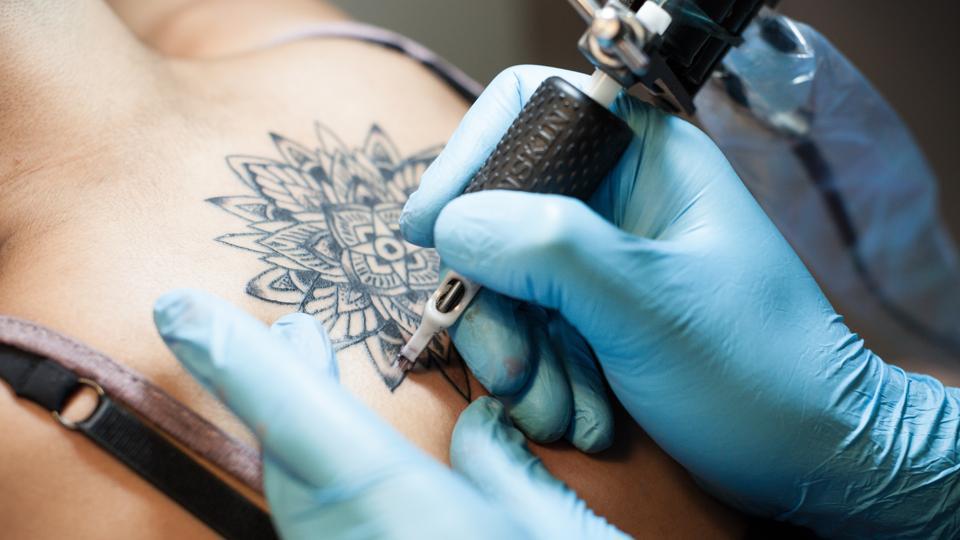
Tattooing involves needles puncturing the skin to insert pigment into the layers of the skin. If infected blood remains on the needle or transfers to the pigment, the virus can be transferred to unwary people while they are inked.
Residents, mostly migrant population, often go to roadside tattoo makers or those visiting fairs, where it is unlikely to ensure a sterile environment, putting the customers at risk of infection.
Figures from the Ludhiana civil hospital reveal an average of 150 new HCV patients every month. District epidemiologist Dr Divjot Singh said often patients did not reveal the cause behind the virus.
A person contracts the virus by coming into contact with infectious fluids and secretions from an infected person. Hence, the virus can be transferred while sharing needles to inject drugs and tattooing, he said.
‘FIND REPUTABLE TATTOO ARTISTS’
Dr Singh said people should only visit a reputable tattoo artist, as those found at fairs or sitting along roads were not the wisest choice. “Also, before getting a tattoo, one must ensure that the tattoo artist has a sterile environment. The artist should use a new needle from a sealed and sterilised packet, and must always wear gloves,” he added.
Unmindful of dust and pollution, the roadside tattoo artists often set up shop in makeshift structures, charging ₹20 to ₹50 per alphabet. One such artist, requesting anonymity, said mostly males, aged between 15 and 30, came to get tattoos, and were often from the economically weaker section.
On the other hand, reputable tattoo artists have proper premises and follow safety measures. Their charges are anywhere from ₹500 and up.
5,700 HCV PATIENTS REGISTERED
Dr Singh said 5,700 patients had registered under the National Viral Hepatitis Control Programme in the district since 2016. “Of these, 4,200 patients were undergoing treatment. The district has recorded a 92% cure rate,” he said, adding that a number of patients from Sangrur and Moga were also getting treated in the district.
FREE LAB TEST
Under the National Viral Hepatitis Control Programme, the government has quashed the fee for HCV lab test.
From September 1 onwards, a patient can get the lab test at the civil hospital for free. Earlier, the patients were charged ₹881 for the first test.
Dr Singh said when the programme was started in 2016, the patients getting registered were charged ₹3,000 for the first test (rest tests were free). The amount was reduced to ₹2,200 and then slashed to ₹881 eventually. Now, it is completely free.


