
 E-Paper



What the Delhi water bill waiver scheme means to consumers
Under the scheme, all households that have functional meters installed by November 30, 2019, and are located in neighbourhoods under categories E, F, G and H will receive a 100% waiver on their entire water bill arrears till March 31, 2019, senior officials said.


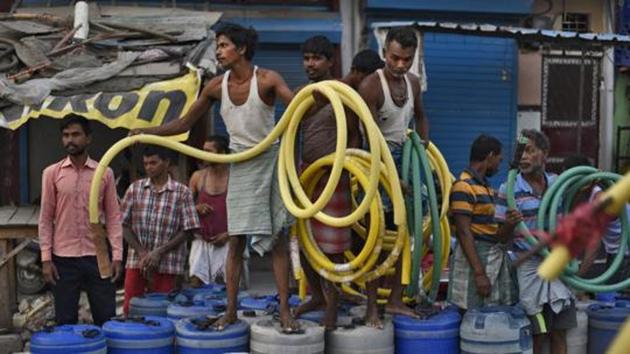
Households in low-income neighbourhoods of the capital are likely to be the biggest beneficiaries of the waiver scheme in water bill arrears, announced by chief minister Arvind Kejriwal on Tuesday.
According to data shared by the government, this is also the category with the highest number and percentage of households with bill arrears.
Under the scheme, all households that have functional meters installed by November 30, 2019, and are located in neighbourhoods under categories E, F, G and H will receive a 100% waiver on their entire water bill arrears till March 31, 2019, senior officials said.
In Delhi, colonies are graded from categories A to H by the municipal corporations for the purpose of imposing house tax. The factors that decide the categories include its location, infrastructure, accessibility, connectivity and availability of public services. Under the grading system, category A colonies such as Anand Niketan and Basant Lok would be the most affluent and category H colonies such as Begumpur, Burari and Chhawla would be the least affluent.
ARREARS & WAIVERS
Under the scheme announced on Tuesday, all households with a functional water meter installed within the deadline will be entitled to receive a 100% rebate on the late payment surcharge that is applied at a rate of 5% on pending bill amount every month.
When it comes to the principal arrear amount, the exemption rates would vary. Households in colonies under categories A and B would get a 25% rebate, those in category C would get a 50% rebate, D 75% and those in categories E, F, G and H will get a 100% rebate, the government officials said.
On the other hand, of the total consumers in the clubbed categories of E, F, G, H, around 59% are consumers with arrears, compared to 52% in the combined categories of A and B, 47% in category C and 52% in category D, which are the slabs set by the government for implementation of the waiver scheme.
HOW TO AVAIL OF IT
There are nearly 1.3 million consumers with arrears to the tune of Rs 2,500 Crore in the domestic category and Rs 1,500 Crore in the commercial category. For installing functional water meters, seven agencies already empanelled by the Delhi Jal Board may be approached, the government said.
Once the installation is complete, the category certificate (A, B, C, D, E, F, G and H) may be produced and the rebate will be automatically implemented, the government said.
Officials said this service can be availed of through the door step delivery of services scheme by dialling 1076. An assistant will come and collect the details and do the needful and it is not necessary to visit any office.
LEARNING FROM THE PAST
Delhi Jal Board’s vice-chairman Dinesh Mohaniya said the government hopes the scheme will lead to increase in the functional meter count in the city as was the experience after a similar exercise in 2016.
In 2014-15, Delhi had around 1.87 million connections with functional meters and the numbers rose to around 2.37 million by 2018-19, of which, Mohaniya said, 0.50 million had increased immediately after the waiver experiment in 2016.
The government’s estimate is that the present waiver is likely to help them recover Rs 600 crore and it comes from the previous learning graph.

Stay updated with all top Cities including, Bengaluru, Delhi, Mumbai and more across India. Stay informed on the latest happenings in World News along with Delhi Election 2025 and Delhi Election Result 2025 Live, New Delhi Election Result Live, Kalkaji Election Result Live at Hindustan Times.


