
 E-Paper



Why Sus-Pashan footpaths is no cakewalk for pedestrians
The experts are questioning the width and height of the footpaths which is usually based on pedestrian footfall and land use in the area


The civic body is constructing two footpaths on Pashan road to make the roads more accessible for the pedestrians but is it following the Indian Roads Congress and Urban Street Design Guidelines while undertaking the construction work is what the experts and residents are raising objections about.
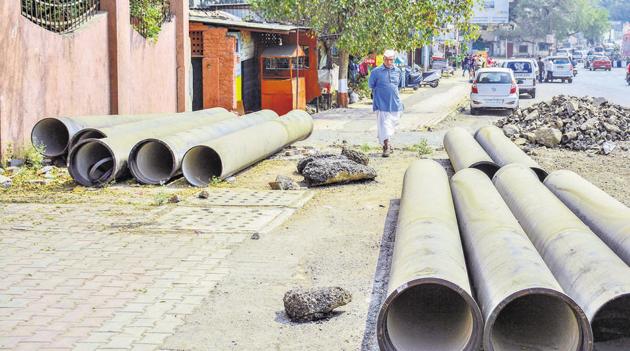
The experts are questioning the width and height of the footpaths which is usually based on pedestrian footfall and land use in the area.
According to guidelines, the idle footpath model should be with a ramp within the footpath at the edge only if clear walkway width available at the ramp is minimum 2.5 metre, while the ramp in parking zone/roadside if clear footpath width is 2.5 metre or less.
Pranjal Kulkarni, senior associate, Institute for Transportation and Development Policy (ITDP), said, “The width of footpath should be based on land use and pedestrian footfall. As per Indian Roads Congress and Urban Street Design Guidelines, the total width of footpath in a commercially active one should be at least 4 to 6.5 metre with 2.5 to 4 metre of clear unobstructed walking space exclusive of a utility box, trees and shop facades.”
The width can be increased in areas with high footfall, he added.
”The footpath should have a uniform height of maximum 150mm above road level and should be continuous at the same level at the property entrances and junctions for convenience of the pedestrians,” he said.
Kulkarni said, “The height of the construction of the footpath for which is underway are too high and will be problematic especially for senior citizens and toddlers.” According to him, the footpaths could have been wider considering the wide right of way available and the pedestrian activity. He suggested that dedicated parking bays, bulb-outs with property entrance ramps and utility boxes outside the pedestrian zone can help in providing an unobstructed and convenient walking experience.
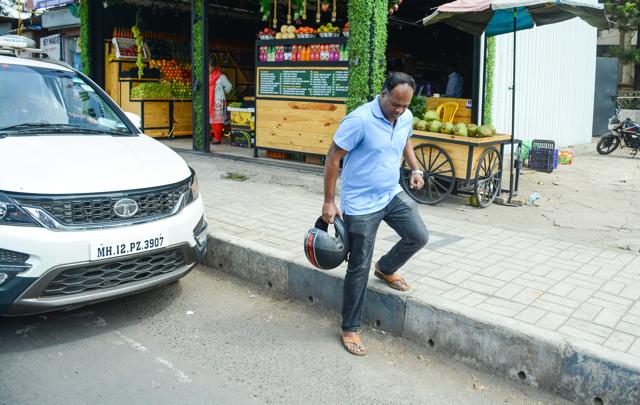
According to him, the footpaths could have been wider considering the wide right of way available and the pedestrian activity. He suggested that dedicated parking bays, bulb-outs with property entrance ramps and utility boxes outside the pedestrian zone can help in providing an unobstructed and convenient walking experience.
According to the residents who measured the footpath said it was in between 11 to 15 inches (279.4 mm to 381mm) in some places along the stretch from Balaji chowk to Sai chowk.
When HT intervened in the issue Dinkar Gojare, who is overlooking the Pashan road project, along with, junior engineer Ajit Surve visited the area for a survey.
“The work is ongoing and the road edge channel preparation is balanced and is as proposed of seven inches which are approved height of a footpath according to Indian Road Congress,” said Gojare.
Captain Surendra Birje, a resident of Pashan has been constantly writing to the Pune Municipal Corporation (PMC), but despite his complaints, the construction of the footpath continues. “The footpaths are not at all pedestrian-friendly and the height will be a problem for residents to use it,” said Birje.
“Pavement blocks are many times removed for digging and never replaced. Where do they go? Loose dirt then pollutes the air. Footpaths are used by contractors for dumping pipes, work material among others. This is not acceptable,” he said.
Rajesh Deshpande, another resident from Pashan road, said, “The footpaths are built haphazardly, there is no continuity, this will create problems for pedestrians.”


