
 E-Paper



Going down memory’s everchanging stream
Surrealist Salvador Dali famously said the difference between false and true memories is the same as for jewels: it’s the false ones that look the most real, the most brilliant. And far, far more interesting. Sanchita Sharma writes.


Surrealist Salvador Dali famously said the difference between false and true memories is the same as for jewels: it’s the false ones that look the most real, the most brilliant. And far, far more interesting. Of course, the same can be said of breast implants and very many other surgeon-assisted enhancements, but Dali did not know of them all those years ago, so I’ll let that pass.
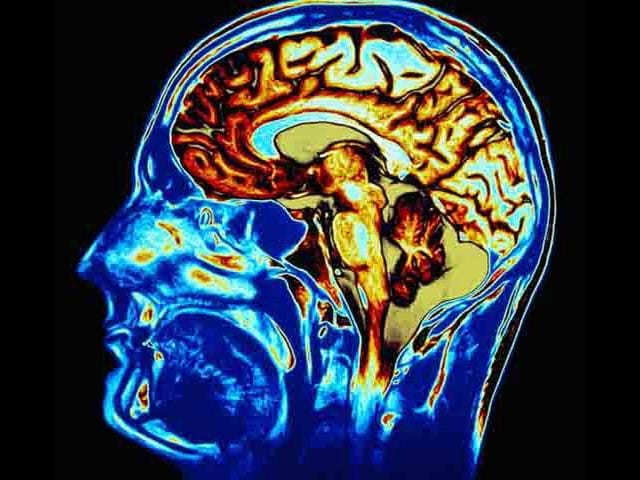
Charles Fernyhough, in his book The Pieces of Light: The New Science of Memory, cites three decades of research to confirm that Dali got it right.
You just cannot say your recollections are accurate. All memories are fluid and evolving, with the brain continuously colouring the past with experiences you’ve had since then.
To put it simply, recall works a bit like a game of Chinese Whispers. You’re convinced you’ve got it right even when you haven’t. The biggest deception, of course, is that our memories always appear to be indelible snapshots or in-camera recordings of our past when they are everything but.
The brain remembers by picking up cues from the past and padding them with details, which keep changing each time we recall. This bias in recall is partly what allows the cinematic details of overwhelming traumatic experiences that in the past overwhelmed or stressed us greatly to fade away. Over time, the recall of that experience gets blunted, which helps us revisit the past without the harrowing emotional rollercoaster ride that terrified or saddened us when we were actually experiencing the trauma.
Now scientists are working on therapies that can be used to re-engineer our memories and help us forget the worst. It’s a step ahead from the medicines currently being used by neuroscientists to numb the emotional tone of a memory before asking patients to revisit a traumatic event.
What scientists are doing now, albeit in the lab, is targeting and erasing specific memories permanently. This will help people actually forget past humiliations, such as piddling in your pants before your entire class in junior school, or worse, getting publicly yelled at by your mother in high school.
Memory doctors are now working on these old, buried memories that are deeply implanted in the brain and have undergone consolidation through the restructuring of neural connections, which do the work of digging out our impressions of the past. To recall, the brain synthesises a protein called PKMzeta to stabilise the neural circuits that do the recalling.
Scientists are now able to nuke memory by giving you a medicine that blocks protein synthesis. In the absence of the protein needed to reconsolidate the memory, the memory just disappears. Using medicine that selectively block receptors in specific areas of the brain, scientists ensure that all other memories, whatever they are worth, remain unaffected.
The possibilities are endless for people with post-traumatic stress syndrome, or worse, for evil drug lords who can use these drugs change the memories of witnesses to clean their dark and dirty past (I can see a Face Off-worthy screenplay there).
Some ethicists are already arguing that mind-altering therapies can create Frankensteins and robots with no emotional mooring. Anyway, this treatment has currently only been tried successfully in labs and we do not know whether, over time, forgetting is the best way forward.
After all, our experiences, both good and bad, make us what we are. We learn from our successes and failures, even collectively as a race, which is what helped humans climb down from trees and start using tools.
And deep down — in some cases very deep down — we want the past to persist, because it gives us a continuity and permanence that makes life meaningful.


