
 E-Paper



Reviewing 2018, the year of India’s sporting revolution: Flip Side by Kunal Pradhan
It’s been a watershed year for Indian sport, writes Kunal Pradhan in his fortnightly column this week. But, for him, the two stories that really herald India’s wider sporting revolution are of Hima Das and Shubhankar Sharma

 Prefer HTon Google


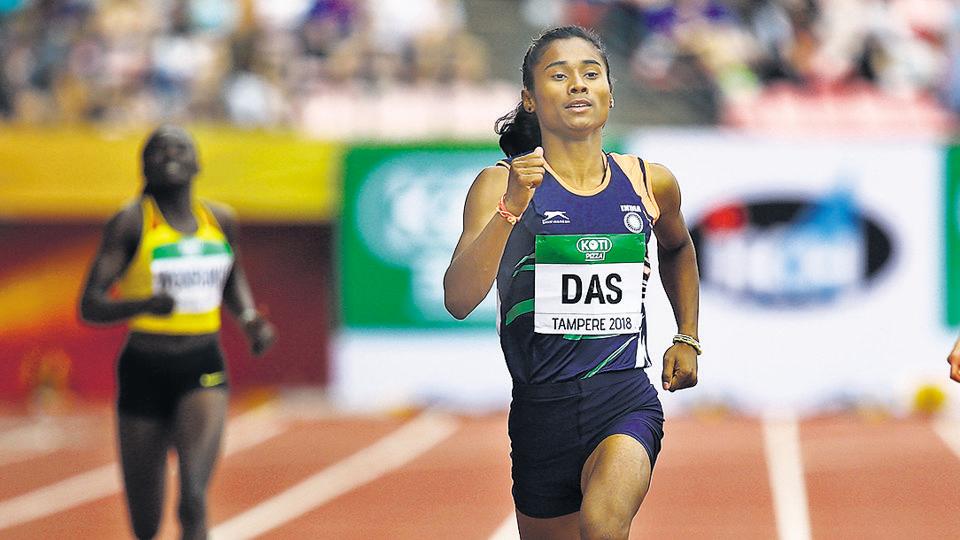
The story goes that, this July, a young woman in Helsinki, Finland called her father in his village in Dhing, Assam, to tell him that she was now a junior world champion. The dad, a farmer, to whom the import of the achievement didn’t immediately sink in, told her it was late and he would think about what she’d said in the morning. Hima Das, 18, told her father that he would not have any time to think in the morning because he would be too busy giving TV interviews.
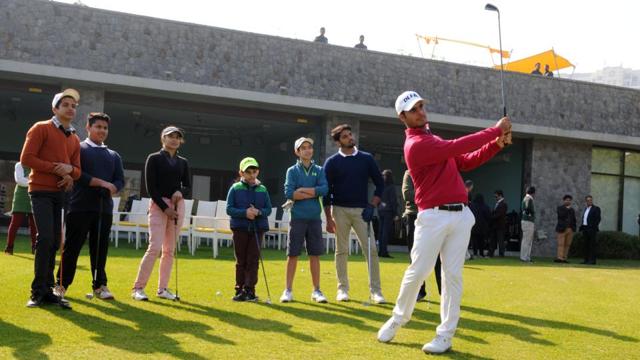
A couple of months before that, at the World Golf Championships in Naucalpan, Mexico, a young man approached the legendary Phil Mickelson during a practice session ahead of the decisive final round of the tournament. Mistaking him for a pesky journalist, ‘Lefty’ shooed him away: “Not right now, after the round.” It look Mickelson a few seconds to realise that the young Indian before him was Shubhankar Sharma, 21, the 54-hole leader and his playing partner in the final group that day.
These two sporting anecdotes, related several times over the last few months, are important to retell as we bid goodbye to 2018 because they underline why this has been a watershed year for Indian sport.
As December draws to a close, the Indian cricket team is holding its own in a Test series Down Under. This is not the first time this has happened, but there is a crucial difference. The drivers are not batsmen from some once-in-a-generation Fab Four. They are a set of menacing fast bowlers who’re regularly hitting the 85-90 miles per hour mark (and, for good measure, they’re even hitting a few Aussie helmets). India has had genuine quicks – Kapil Dev in the late ’70s, Javagal Srinath in the early ’90s, and even Ashish Nehra and S Sreesanth in short spells in the mid-2000s – but never before has it possessed a fiery quartet.
Last Sunday, PV Sindhu capped an Olympics silver-winning-year with a pioneering World Tour Finals victory. With it, she took the personal head-to-head tally against her great rival, Japan’s Nazomi Okuhara, to 7-6; and silenced critics who uncharitably suggested she didn’t have the killer instinct to win big titles.
These achievements come at the back of a 15-golds haul at the Asian Games, and the rise of a new generation of young shooters who’ve taken the baton from Abhinav Bindra, Gagan Narang and Vijay Kumar ahead of the 2020 Tokyo Olympics.
But, for me, the two stories that really herald India’s wider sporting revolution are of Hima Das and Shubhankar Sharma – because of how young they are, the nature of their sports, and the resolve they’ve shown by not getting swept away in the moment.
Sport is about excellence, grit, and skill. But it’s also about context – about where you’ve come from, and where you are headed. It is about a farmer’s daughter from a small village outpacing the world in an event as competitive as the 400m; and about a boy from Chandigarh being crowned Europe’s top rookie and the Asia’s top player in the same breakthrough season.
What is exciting about Hima and Shubhankar is how much better they can be, and how they’re beginning their journeys in two truly global sports at a point where other Indians hope to finish theirs.
In a session at the 2018 Hindustan Times Leadership Summit, Hima told me how she felt she wasn’t anywhere close to her best yet. “I don’t run after medals,” she said, “I run after timing. My only objective is to get one microsecond faster every practice session.” It was the confidence of an adventurer marching inexorably towards a distant peak.
In an interview to The Hindu, Shubhankar said matter-of-factly, “I know how to win. That’s a good thing.” In 2010, Arjun Atwal opened the doors of America to Indian golfers by winning a PGA Tour title. It was unthinkable until that moment, a story that films are made about – like a bobsled team from Jamaica qualifying for the Winter Olympics despite never having seen snow. Atwal was 37 then. At 22, Shubhankar, like Hima, is ending 2018 with a shoe-in to make the next giant leap.
Who knows, it could even happen in 2019.


