


 Live Score
 Cricket Teams
 Cricket Players
After Tilak Varma's injury setback, BCCI left with no choice but to turn to Shreyas Iyer for India’s T20 World Cup squad
Tilak Varma's surgery raises concerns about his availability for the T20 World Cup, prompting discussions about potential replacements.

 Prefer HTon Google


Tilak Varma’s surgery has dropped an uncomfortable question into India’s T20 World Cup build-up: What if he can’t medically be cleared in time, and who then could be his replacement? Reports quoting a BCCI official claim that Tilak reported acute pain in Rajkot while with the Hyderabad team for the Vijay Hazare Trophy, was diagnosed with testicular torsion, and underwent successful surgery.
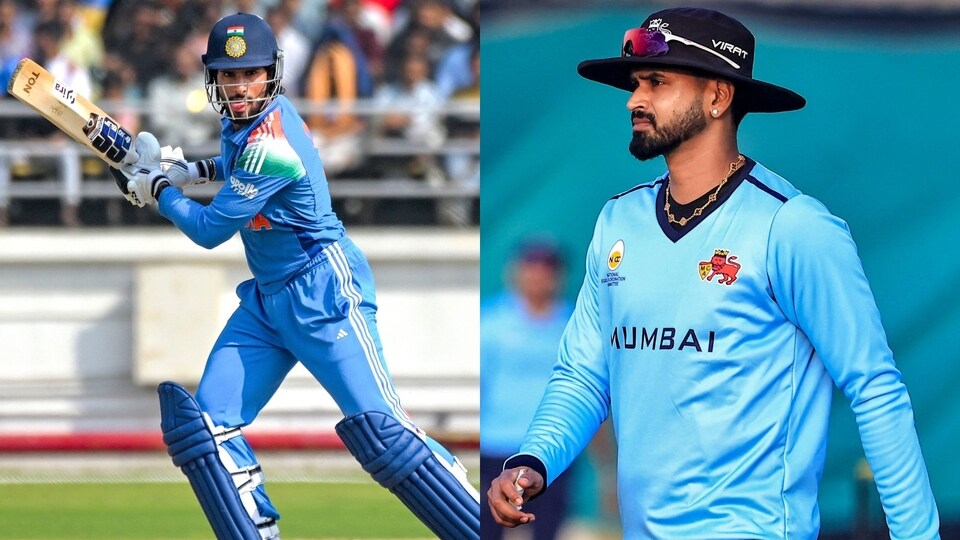
The issue isn't only that India loses a left-handed batter in the top three for the series against New Zealand. If Tilak’s recovery is delayed, it may force India to make a last-minute change to the squad for the marquee tournament.
Who can replace Tilak Varma and why?
The most sensible argument for replacing Tilak Varma should be a ready-made top middle-order batter who can handle pressure and allow India to keep their existing batting plan intact. In that brief, Shreyas Iyer fits the best. Tilak’s strongest value is how he keeps India functional in the overs 7-15, the phase that decides most T20s, when teams throw matchups, and boundary riders at you. The replacement India pick must be comfortable living in that phase, not just visiting it.
Shreyas Iyer is naturally a No.3/ 4 operator, someone who has built his career around reading fields, managing spin-heavy stretches, and then shifting gears. Even if he doesn’t replicate Tilak’s handedness, he replicates a far more important thing: a top-four batter who can keep the innings from stalling in the middle overs.
Iyer’s inclusion avoids the extra opener trap
Several alternative names being floated in the ecosystem are top-order specialists, excellent players, but often openers by design. The issue with picking a specialist opener as a squad replacement in this case is simple: it quietly pushes India into an unwanted reshuffle. Someone must move, roles change, and suddenly the replacement becomes the centre of the batting order.
Iyer does the opposite. He allows India to keep their template intact because he is already shaped for the same functional lane Tilak occupies: a top-four responsibility with middle-overs weight. That reduces decision-making friction in-game, which is what teams strive for in World Cups.
Also Read: Tilak Varma races against time after abdominal injury; set to miss New Zealand series, T20 World Cup in doubt
Form and readiness without role confusion
If India has to make a late squad switch, they will prefer a player who walks in with clarity. Iyer ticks that box, and he has recent, tangible evidence of rhythm too, returning to competitive cricket with 82 off 53 balls for Mumbai in the Vijay Hazare Trophy.
He has also been declared fit after clearance from the BCCI’s Centre of Excellence, which is significant because it removes the grey area around availability and allows selectors to focus purely on cricketing fitness.
The selection logic
India doesn’t need to replace a left-handed batter at three as much as they need to replace a middle-overs problem solver in the top four. In a squad context, Shreyas Iyer is the most clean-cut and role-accurate replacement for Tilak Varma. And remember, he is the winning captain of IPL 2024 and the runner-up from last year. Several eyebrows were raised when he did not get picked in India’s Asia Cup squad. This could be BCCI’s opportunity to make amends.
Why Iyer and not Shubman Gill?
Now, there might be questions why Shubman Gill cannot replace Tilak Varma; after all, he was India’s T20I vice-captain and preferred opener until recently. But when the T20 World Cup squad was announced, much to the surprise of a lot of fans and experts, he was left out, and Ishan Kishan was drafted in, while Sanju Samson was now projected as the opener for the upcoming tournament.
This is exactly the context why Iyer is a better-suited replacement for Tilak. Gill’s T20I numbers have fed the tempo debate, and if they pick him now, they’re essentially picking an opener who was already judged surplus for this squad balance. Iyer, by contrast, fills the squad’s missing piece if Tilak is out, a ready top-order batter who doesn’t push India back into a top-order rethink.


