


 Live Score
 Cricket Teams
 Cricket Players
Ben Stokes' cheap tactics aimed at Jadeja isn't new; Sunil Gavaskar, Sachin Tendulkar faced a similar situation against…
Ben Stokes' attempt to deny Ravindra Jadeja, Washington Sundar centuries isn't a first. Sachin Tendulkar and Sunil Gavaskar faced it too.

 Prefer HTon Google


Cricket, more than any other sport, is a numbers’ game. Don’t let anyone try to convince you otherwise. And cricketers, more than any other sportspersons, know exactly what their statistics are, never mind that they insist that they don’t much care for individual milestones.
Batters are judged and measured by centuries and averages, bowlers by five-wicket hauls and strike-rates. That’s the nature of the beast.
Why, only the other day at Old Trafford, an entire country and all those populating the English dressing-room were going gaga after Joe Root became Test cricket’s second-highest run-maker behind Sachin Tendulkar as he went past Rahul Dravid, Jacques Kallis and Ricky Ponting, all in the matter of minutes. Along the way, they also celebrated the former skipper’s 38th century, which put him level with Kumar Sangakkara and behind only Tendulkar (51), Kallis (45) and Ponting (41) for the most Test hundreds. That’s how cricket works.
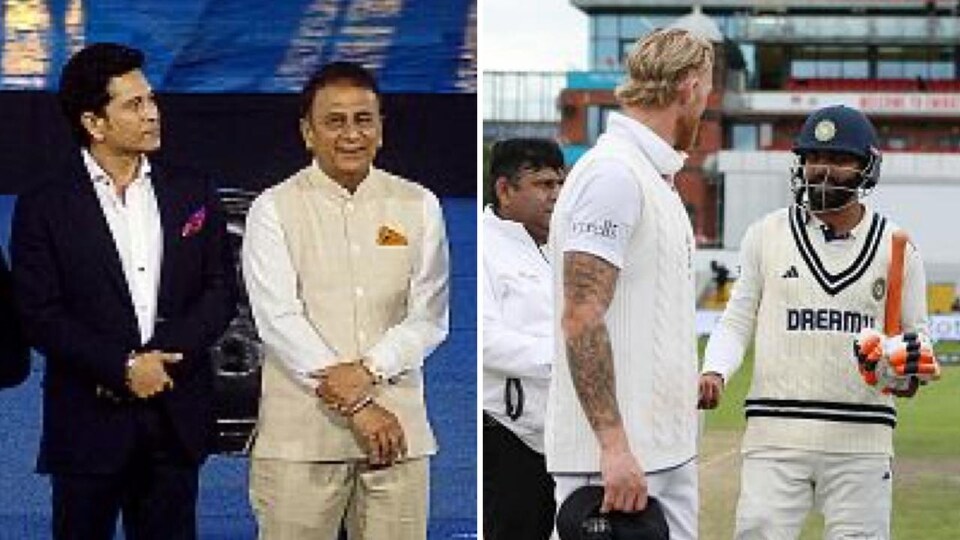
Ben Stokes and the rest of his bunch didn’t take kindly to India opting to bat on in the final hour of the final day’s play in the fourth Test on Sunday so that Washington Sundar and Ravindra Jadeja could complete their respective tons. Much of it had to do with their own inability to take more than two wickets in 75 ineffectual overs on a day-five strip, and perhaps their misplaced belief that unilaterally, they could decide when the game could be called off. Their churlishness hasn’t endeared them to even their die-hard fans, but their behaviour isn’t without precedent.
When Pakistan tried to deny Sunil Gavaskar a century
A major international incident was avoided in Bengaluru in September 1983, all stemming from Pakistan’s desire to deny Sunil Gavaskar a 28th Test century. It was the opening game of a turgid three-Test series in which all matches ended in drab draws. The weather had a big part to play in the match meandering into an insipid affair. By the time of the final day, both sides hadn’t even completed their first innings, though by then, Javed Miandad had been dismissed for 99, caught in the covers by substitute K Srikkanth off Madan Lal.
Gavaskar and Anshuman Gaekwad comfortably erased the 13-run first-innings deficit and built a handy lead of little consequence when, with 14 of the then 20 mandatory overs bowled in the final over, Pakistan captain Zaheer Abbas took his team off the field without informing umpires Madhav Gothoskar and Swaroop Kishen in conduct uncharacteristic of him. Technically, Pakistan had forfeited the Test, but clearly, the law couldn’t be strictly enforced in its letter because of the massive ramifications. Gavaskar was on 87; clearly, he wanted to go on to three-figures, well within his rights. Zaheer and Pakistan’s reluctance to let him get there was obvious, and it needed a veiled threat from the officials for manager Intikhab Alam and Zaheer to realise that unless they returned to the field – by this time, nearly a half-hour had elapsed since they had left the ground and incensed the home crowd – India would be declared winners.
As soon as Gavaskar hit the first ball of the final over, from Mudassar Nazar, for four, he and players left the ground for a second time to formalise the draw. That night, the teams flew together to Delhi for a One-Day International. “Some of his players were critical of his (Zaheer's) action, which they felt was unnecessary and unsporting," Gavaskar has written.
Sachin Tendulkar wasn't spared either
The events in Ahmedabad in November 2009 bear greater resemblance to Old Trafford 2025. Sri Lanka replied to India’s 426 with 760 for seven declared on the back of a 351-run partnership between Jayawardenes Mahela (275) and Prasanna (154 n.o.). India had to bat out 135 overs to secure a draw; 79 overs were left on the final morning when Tendulkar walked out at No. 5 to join current head coach Gautam Gambhir.
Gambhir was the fourth batter dismissed for 114 but Tendulkar and VVS Laxman steered India to safety. With the former approaching his 44th century, Sangakkara wanted to take his troops off the field, ala Stokes, until he was reminded by umpires Daryl Harper and Tony Hill that it wasn’t his call alone to make, that Tendulkar and Laxman too would have to play ball. Having battled for more than four and a half hours to ensure an honourable draw, there was no way Tendulkar was going to give up a Test ton. Long Sri Lankan faces were indicative of their displeasure at the turn of events that perhaps had more to do with the flatness of the surface, which prevented their bowlers from making an impression. Just three years earlier, Sangakkara and Mahela had put on 624 for the third wicket against South Africa in Colombo. Surely, they weren’t stacking up those many runs only because the team required that of them.


