


 Live Score
 Cricket Teams
 Cricket Players
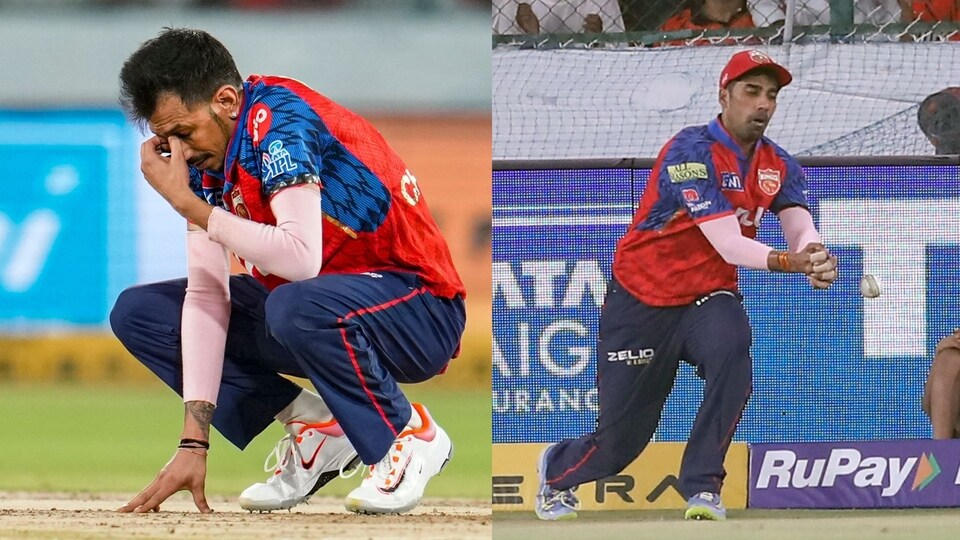
INR 3.21 crore Shashank Singh drop burns Yuzvendra Chahal as PBKS suffer costly fielding collapse
Punjab Kings dropped a crucial catch of Heinrich Klaasen, who went on to score 69 runs, leading Sunrisers Hyderabad to a 33-run victory.

 Prefer HTon Google


Punjab Kings had Heinrich Klaasen on 9. Yuzvendra Chahal had drawn the false shot. Shashank Singh had the ball coming to him at deep backward square. Then, Punjab dropped the match’s most expensive chance.
Sunrisers Hyderabad made 235/4 and beat PBKS by 33 runs in Hyderabad. Klaasen finished with 69 off 43 balls. Ishan Kishan made 55 off 32. Cooper Connolly’s unbeaten 107 kept Punjab alive deep into the chase, but the target carried the weight of missed chances from the first innings. PBKS did not merely concede a large total. They allowed SRH’s most dangerous middle-overs hitter to rebuild his innings after a clear escape.
Shashank’s drop changed Klaasen’s innings
The decisive mistake came on the fourth ball of the ninth over. Chahal bowled to Klaasen with SRH already moving, but still within Punjab’s reach. Klaasen tried to sweep and failed to control the stroke. The ball went to Shashank at deep backward square.
Punjab had manufactured the dismissal. Yuzvendra Chahal had done the difficult part. Klaasen had offered the wicket. Shashank put it down.
The cost arrived quickly and kept growing. Klaasen was on 9 at the time of the drop. He finished on 69. He added 60 runs after the reprieve in a match that PBKS lost by 33.
That single sequence marks the innings' clearest turning point. Punjab did not need theory, hindsight or dressing-room language to identify the damage. The number sits in the score progression. A batter who should have left on 9 stayed long enough to produce almost double the final margin.
Heinrich Klaasen’s post-drop innings shaped SRH’s total. His presence protected the innings through the middle overs, kept pressure on Punjab’s bowlers and gave SRH the base for a 235-run score. Kishan supplied early power. Klaasen supplied the lasting damage. Punjab had a chance to remove that layer before it became decisive.
They missed it.
The ₹3.21 crore fielding wound
Our impact-money model values Klaasen’s full innings at ₹3.69 crore. Shashank Singh dropped him when only 9 of those 69 runs had been scored. The remaining 60 runs formed roughly 87% of Klaasen’s innings output.
On that basis, Shashank’s missed catch opened approximately ₹3.21 crore of Klaasen’s eventual match value.
The stricter delivery-by-delivery view puts Klaasen’s post-drop value at around ₹3.09 crore. That figure isolates only the balls faced after the reprieve. The broader ₹3.21 crore figure links the drop to the share of Klaasen’s final innings value that came after Punjab let him survive.
Both calculations put the cost of the mistake above ₹3 crore.
For Punjab, the damage was larger than a fielding penalty. It was a transferred asset. Chahal created a wicket ball. Shashank failed to complete the wicket. Klaasen converted the life into a high-value innings. SRH collected the benefit.
That is the clean money line from the match: one dropped catch off Chahal opened a ₹3.21 crore Klaasen damage window for SRH.
Chahal’s work went unpaid
Chahal’s spell deserves a different reading from the scorecard. His value in this game came through the chances he created. Punjab failed to cash them.
The Klaasen miss hurt the most. Another catch also went down off Chahal when Ishan Kishan was reprieved. Kishan added 37 runs after that drop and finished with 55. In the impact-money model, that post-drop segment was worth around ₹1.36 crore.
Together, the two missed catches off Chahal allowed Klaasen and Kishan to add 97 runs after being reprieved.
The combined post-drop batting value from those two missed chances stands at approximately ₹4.45 crore.
That figure captures Chahal’s hidden loss better than his bowling figures. A bowler’s economy records the runs conceded. His wickets column records only the dismissals completed. It does not record the catch that should have ended Klaasen on 9. It does not record the 60 runs that followed. It does not show the ₹3 crore-plus value Punjab handed back to SRH through one dropped chance.
Punjab’s own chase made the first-innings waste feel harsher. Connolly’s unbeaten century gave PBKS a route into the game, but a 236 chase demands near-perfect batting. Punjab’s fielding had already removed that margin. SRH’s 235 carried at least one avoidable match-defining innings inside it.
Klaasen did not need a second invitation. Punjab gave him one. He made 60 more. SRH won by 33.
Shashank’s season as a catcher already needed scrutiny before this game. This drop gave it a number that cuts through softer descriptions: ₹3.21 crore.
Method note
The valuation is based on a cricket impact model designed exclusively by the author. The model studies batting contribution through runs, scoring rate, match situation, phase pressure and role difficulty, then converts that impact into a rupee value using the player’s auction price and expected season usage. For the dropped-catch calculation, the model isolates the batter’s output after the reprieve and compares it with his final match value. It is not an official IPL metric, salary calculation or franchise valuation.


