


 Live Score
 Cricket Teams
 Cricket Players
INR 89 lakh loss in three deliveries: Shreyas Iyer allowed to take the game away by Karun Nair
Delhi Capitals faltered against Punjab Kings despite setting a high total. Two dropped catches of Shreyas Iyer by Karun Nair cost them an estimated ₹89.38 lakh.

 Prefer HTon Google


Delhi Capitals had 264 on the board and still found a way to lose control of the game against the Punjab Kings. KL Rahul’s unbeaten 152 had given them the kind of total that usually survives even a poor bowling phase. However, against the Punjab Kings, the total did not survive two missed chances.
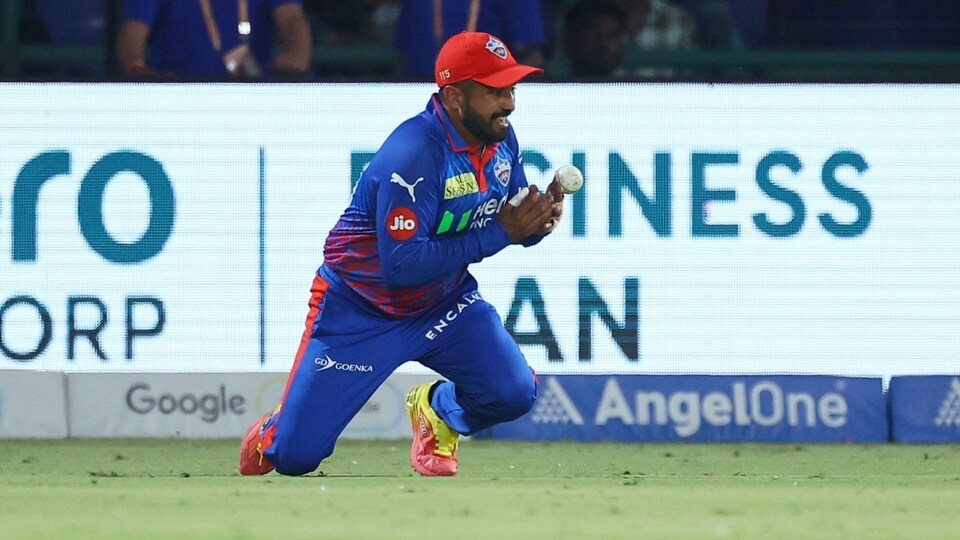
Karun Nair dropped Shreyas Iyer twice in three balls. By the end of the chase, those two errors had turned into an estimated ₹89.38 lakh batting-consequence cost for DC.
Karun Nair’s two drops leave DC with ₹89 lakh damage
Punjab were 202/4 after 14.5 overs, still needing 63 from 31 balls. The asking rate was above 12. Shreyas was on 28 off 20. DC had absorbed the first wave from Prabhsimran Singh and Priyansh Arya, and the game was entering the phase where one wicket could have changed the chase.
Vipraj Nigam created that opening at 14.6. Shreyas went for a big shot, mistimed it, and sent the ball towards long-off. Karun Nair had the chance. He put it down. The batters crossed for one, and Shreyas moved to 29 off 21.
From that delivery to the finish, Shreyas scored 43 off 16 balls. Punjab needed 63 when he was dropped. He personally supplied 68.25% of the remaining runs after that first reprieve. Our model values the first missed chance at ₹48.86 lakh in batting-consequence terms.
The second chance arrived almost immediately. At 15.2, Shreyas miscued Kuldeep Yadav towards long-on. Karun Nair was again the fielder. He dropped him again. Punjab were 209/4, still needing 56 from 28 balls. Shreyas was 35.
That second missed chance is valued at ₹40.52 lakh. From there, Shreyas added 36 runs off 13 balls and finished unbeaten on 71 off 36 as Punjab chased 265 in 18.5 overs.
Taken as separate missed opportunities, the two drops cost DC ₹89.38 lakh in batting-consequence value.
There is an important distinction in the calculation. The two values overlap in the match sequence because the second chance existed only because the first had already gone down. If the innings is treated as one continuous damage window, the clean single-chain value is ₹48.86 lakh from the first drop to the finish.
But if each dropped catch is priced as a separate opportunity to dismiss Shreyas, the combined chance cost becomes ₹89.38 lakh. That is the number that best captures how much DC allowed Punjab to gain by failing twice to close the same wicket.
The direct fielding debit is lower. In the fielding layer, each dropped catch carries a seven-point penalty. With one impact point worth roughly ₹2.288 lakh in this match, Karun’s two drops amount to a direct fielding loss of ₹32.03 lakh.
The ₹89.38 lakh figure prices the consequence.
The difference is crucial. A dropped catch is not valued only by the act itself. Its real cost depends on the batter, the match state and what happens after the reprieve. Dropping Shreyas twice with Punjab still needing 63 and then 56 was not a routine fielding blemish. It kept alive the batter who finished the chase.
DC still had a contest at 202/4. They had a second chance at 209/4. Both times, Shreyas offered control back to them. Both times, Karun failed to complete the dismissal.
The punishment was immediate. After the second drop, Shreyas attacked Kuldeep’s over and pushed the chase into Punjab’s hands. What was still a demanding equation became manageable. DC’s 264/2, built on Rahul’s 152 and Nitish Rana’s 91, was no longer the defining number of the match. The defining number became Shreyas’ 71 not out.
For DC, the night will sit as a fielding failure as much as a bowling failure. Their bowlers had already been stretched by Punjab’s aggressive start, but the chances arrived. The match offered them two direct routes to remove Shreyas Iyer before he finished it. Karun Nair missed both.
By the model, those misses carried ₹89.38 lakh in combined batting-consequence damage and ₹32.03 lakh in direct fielding debit. The first figure shows what Shreyas made Delhi pay. The second shows the cost of the dropped catches themselves.
In a record chase, DC did not lose only because Punjab batted brilliantly. They lost because, when Shreyas Iyer finally made mistakes, Delhi failed to catch them.


