


 Live Score
 Cricket Teams
 Cricket Players
IPL’s bold tactical idea set to have an impact
The Impact Player rule is dominating conversations in team planning rooms as the tournament gears up for 12-a-side clash


It's a fast-moving world and if you wait for things to happen, you'll be left behind. What is true in life is also true in sport, especially professional sport where leagues are competing for the viewer's attention. If the league stagnates, people will look elsewhere. There is a constant challenge to give the fans as much value for their time as possible. So whether that is done by trying to make the game faster or by introducing variables that make the games harder to predict, the idea is to simply make it a better product.
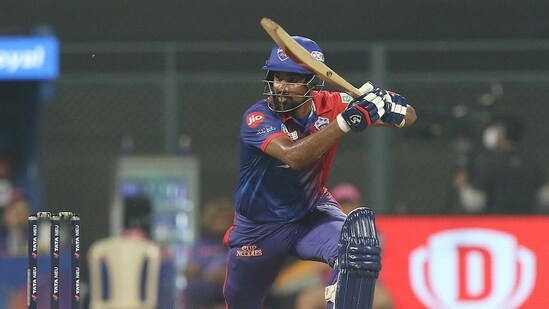
The Indian Premier League's 16th season will be another step in that direction. In the past, India hasn't always been ready to accept innovation easily. Be it T20s, Hawkeye, DRS or pink-ball Tests, the BCCI first rejected these ideas. Why, the IPL itself was born out of a competing rebel league. But once the league took off, aside from all the glitz, the organisers were happy to maintain the status quo.
Of late, however, that’s beginning to change. In 2021, the IPL did away with the contentious soft signal for catches by the on-field umpire. This year, the players are empowered to challenge on-field wide and no-ball calls – both line and waist height calls – under DRS; an idea first tried in the recent Women's Premier League. But IPL’s boldest embrace of innovation will be the introduction of the Impact player (IP).
Game changer?
It can be argued that the idea is not original – the Big Bash tried it with the X-factor rule where a substitute could come in halfway through an innings and the SA20 innovated by allowing captains to change their teams after the toss. But by combining the two changes with further tweaks, the Impact Player regulation promises to effectively turn cricket into a 12-a-side affair.
The rule change will come with no riders — the substitution can be made at any stage of the game like football.
Also Read | 'After CSK picked me, Dhoni called and said I don't know if you'll play or not'
“We used it in the Syed Mushtaq Ali T20s and we got feedback that limiting the substitution till the 14th over didn’t always work,” said a BCCI official. “That’s when we decided to give complete freedom to the teams on when to use it.”
Preparations
The team thinktanks are letting their imaginations run wild in the planning room.
“It’s as intense as things are before auctions,” said a franchise coach. “You are no longer picking the playing eleven before the toss, but two — one each for batting and bowling first. Besides you have to identify a squad of 16 for each match, ideally with each of the five sitting out, in a chance of a role-play if they come in as IP.”
If Gujarat Titans are bowling first and the ball is swinging, Mohammed Shami could bowl three overs on the trot and be substituted by Vijay Shankar. The all-rounder could bowl an over and bat in the top order during the run chase. If they bat first on a pitch that they later realise is assisting spin, they can substitute Shubman Gill or Kane Williamson after their knocks with Jayant Yadav.
“There’s no room for egos. It’s a tactical call and you play a part until you are required in a match situation,” said Deep Dasgupta, who will be commentating during the tournament.
Delhi Capitals head coach Ricky Ponting has identified ‘that guy that might bat at seven and maybe bowling an over or two’ as going out of the game.
India played Deepak Hooda in a squad of fifteen at the last T20 World Cup for a similar role. He ended up playing one match in which he batted three balls, did not get any runs and wasn’t used with the ball.
“It’s a lifeline for a lot of specialists who otherwise might struggle to find a place in T20 cricket,” said Dasgupta. “Besides, it adds to the theatre.”
Focus on tactics
Expect strategic timeouts to be more intense, cameras panned more frequently on dug-outs, more conversations during the broadcast. All the garnishing you need to make live sport more engaging.
“I like the idea of having an impact player coming in and changing your team, after the toss,” MI captain Rohit Sharma said on Wednesday. “Luckily for us, we’re playing last. So, we will probably get some ideas from the games that happen before us.”
If the IP rule finds universal acceptance and is carried forward to international cricket, it has the potential to reduce the impact of losing the toss.
Veteran tweakers like Piyush Chawla and Amit Mishra found takers at the auction as they could have a role to play on certain pitches which will assist turn.
T20 matches are already a big tactical play and the IP rule adds to that. “We are looking at it from every possible way. That particular day, we will decide and the opposition will decide our Impact Player,” said new KKR coach Chandrakant Pandit. Can the Pandit school of coaching stand up to the Ponting way? There’s a lot more beyond who lifts the IPL trophy this year.


