


 Live Score
 Cricket Teams
 Cricket Players
No Rohit Sharma, Virat Kohli is the ideal recipe for India's success at T20 World Cup
It appears as one of those great paradoxes that India haven’t won T20 World Cup since the inception of IPL, the most effervescent 20-over league in the world

 Prefer HTon Google


And then, just like that, six became five.
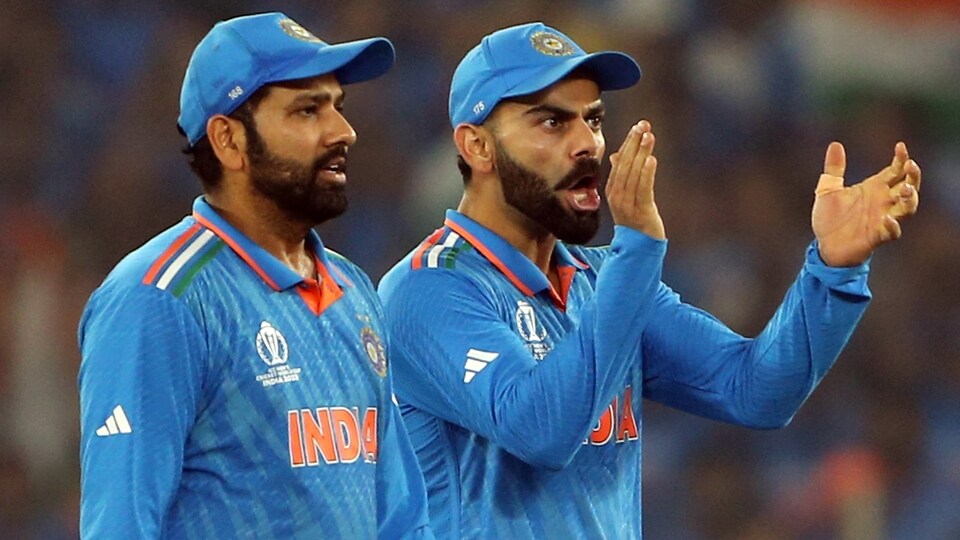
India’s jumbo squad arrived in South Africa last week, one lot set to enter the final preparatory phase for the T20 World Cup next June, with six international outings to work out their combinations. Incessant showers in Durban on Sunday put a spoke in the wheel with the first of three games against the hosts abandoned, hardly the ideal start current skipper Suryakumar Yadav and head coach Rahul Dravid would have hoped for.
Now, the management group has matches on Tuesday and Thursday against the Proteas, and three further games at home against Afghanistan in mid-January, as their only outings ahead of the North American World Cup adventure. Of course, there is also the IPL, most likely between mid-March and mid-May, but while the players will hone their skills and readjust to the arduous demands of the 20-over format, they will do so for their respective franchises, often operating in isolation from each other rather than the same dressing-room.
ALSO READ: 'Rohit's chance to make up for World Cup final': Gavaskar's big prediction as India's South Africa tour begins
It might appear one of those great paradoxes that a country which boasts the most visible and effervescent 20-over franchise league in the world hasn’t won a T20 World Cup since the inception of the IPL. But that’s not really that hard to explain; for all their dalliances with the big stage and the attendant pressure of expectations and performances of franchise cricket, the big boys don’t necessarily play a huge amount of cricket as a unit, except when there is a pressing need. Such as a World Cup.
For ten months since the end of the last T20 World Cup in Australia in November, India’s focus had turned to the 50-over game, inevitable given the home World Cup that held out so much promise but ended in bitter heartbreak last month. In the said period, three of the biggest batting names – Rohit Sharma, Virat Kohli and KL Rahul – didn’t play a single T20I, allowing the younger guns to showcase their wares and stake their claims.
The young batters haven’t disappointed, which is why India now have a teeming pool to choose from. But while a problem of plenty might appear a happy headache, it is still a problem and a headache. Having learned that lesson the bitter way in Australia last year, Dravid will be desperate to avoid an encore, particularly given that the extension of his contract has much to do with the imminence of the World Cup.
It becomes imperative, thus, that in the remaining five matches, India put out playing XIs comprising a majority of the squad that will line up in the US and the Caribbean in the summer. True, there will be some inevitable inclusions – pace ace Jasprit Bumrah, for instance, and influential all-rounder Hardik Pandya, as and when he returns from injury. But otherwise, the emphasis must be on giving game-time to the probable World Cup core, to allow this bunch to learn and grow and gel as a unit in the limited opportunities between now and June.
That’s why Rinku Singh must continue to be urged to feel comfortable in the skin of a finisher. That’s why Jitesh Sharma, one of two wicketkeepers in the mix, must be allowed to further his international education in the second half of the batting order, unlike Ishan Kishan, the other and more experienced stumper whose calling is at the top of the order.
That’s why leggie Ravi Bishnoi must be bowled at various stages – the Powerplay, the middle overs, maybe even in the last quarter – so that he doesn’t encounter nasty surprises at the crunch. And that’s why Arshdeep Singh, the left-arm quick who blows cold as he often does hot, must be coaxed and cajoled and coerced to keep working on his multitude of variations that haven’t necessarily been executed with the control and finesse one would expect of him.
Yashavi Jaiswal at the top of the batting tree has reiterated the value of clarity in communication, and Rinku and Jitesh and their ilk will expect no less. Most of them have been in ‘shadow’ Indian T20 teams – such as the ones that travelled to Ireland (with Shitanshu Kotak as the coach) or played in the Asian Games in Hangzhou and the home series this month against Australia (both under the inspirational VVS Laxman). Their thinking and approach have hitherto been shaped by the Laxman philosophy of inclusive coaching; continuity in that regard won’t be a hindrance because Dravid and Laxman entertain similar ideologies, so there is no question of confusion in messagery. It’s confusion in playing combinations that the management group must avoid.


