


 Live Score
 Cricket Teams
 Cricket Players
Pakistan cricket's obsession with self-destruction: Kirsten's latest meltdown exposes PCB's endless coach-captain churn
Gary Kirsten's experience with Pakistan cricket highlights a cycle of instability and frequent leadership changes, in which coaches and captains are replaced.

 Prefer HTon Google


Gary Kirsten did not need many words to describe his time with Pakistan. “I was the lowest-hanging fruit,” he said, reflecting on a coaching stint that had begun with promise and ended in a familiar frustration. It was a statement sharp enough to travel on its own, but it also carried a larger truth about Pakistan cricket.
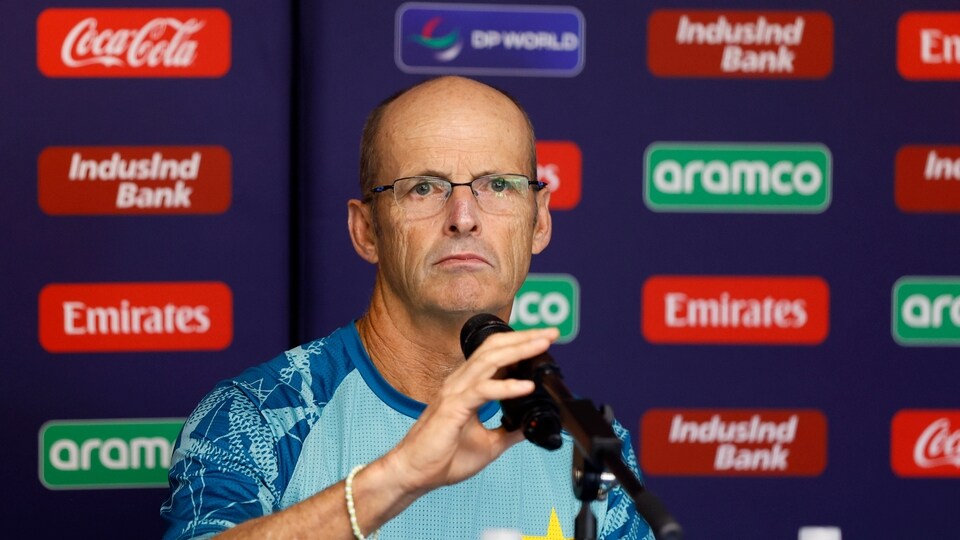
Kirsten’s bitterness was not really about one broken assignment. It was about the kind of system in which the coach is forever vulnerable because almost everything around him is unstable - the decision-making, the hierarchy, the power centres, and even the captain himself.
Gary Kirsten was just a part of the churn
Gary Kirsten’s account lands with force because it fits a pattern that has been visible in Pakistan cricket for some time. His remarks about interference, outside noise, and the coach becoming the easiest target do not, in isolation, sound like a personal grievance. They sound like a whimsical diagnosis by the PCB think tank.
In healthier cricket systems, the coach is hired to shape a method, develop a culture and help a team travel through phases of success and failure. Results matter, of course, but so does continuity. Pakistan, by contrast, have often been trapped in a cycle of immediate reaction - a poor campaign, a leadership rethink, a fresh appointment, another reset. Before one structure can harden into something coherent, another begins to replace it.
That is why Kirsten’s statement about being the “lowest hanging fruit” cuts so deep. It captures the disposable quality that has surrounded the role. In Pakistan cricket, the coach has too often appeared less like an architect and more like the first man standing in front of the storm.
The revolving door in the dugout
Pakistan’s instability becomes starker when the names are laid out in sequence. Since 2022, the team has moved through Saqlain Mushtaq, then interim support from Mohammad Yousuf and Abdul Rehman, then Grant Bradburn as head coach with Mickey Arthur working in the team director role, then Mohammad Hafeez as team director, then Azhar Mahmood as an interim red-ball coach, followed by the high-profile appointments of Gary Kirsten for white-ball cricket and Jason Gillespie for Tests. Neither of those overseas appointments lasted. After Kirsten’s exit and Gillespie’s departure, Aaqib Javed took up the role of the director, followed by the appointment of Mike Hesson.
That is not normal movement for a top international side. That is churn. And churn is not merely cosmetic. Every coach arrives with a different voice, a different equation with the players, a different sense of authority and often a different idea of how Pakistan should play. One wants patience, another wants aggression. One wants a fixed method, another inherits a half-built structure and is asked to rescue before the next crisis lands.
The damage lies not only in the exits but in the constant resetting of the team’s internal logic. When Saqlain’s stint ended, Pakistan moved in one direction. With Bradburn and Arthur, they moved in another. Hafeez represented another shift. Kirsten and Gillespie were meant to signal a more serious, long-term professional structure, especially because both arrived with strong reputations and the promise of defined roles. Yet even that phase dissolved quickly. The pattern kept repeating: appointment, expectation, turbulence, exit.
Kirsten’s remark thus feels like a summary of how the role works in Pakistan. The coach is visible, replaceable and, in moments of failure, conveniently exposed. What remains unaddressed is the larger culture that keeps making the job unstable in the first place.
The captaincy carousel
The disorder has not been limited to coaches. Pakistan have also kept reworking the captaincy map, which only deepens the impression of a side never far from reinvention.
Babar Azam stepped down as captain across formats after the 2023 ODI World Cup. Pakistan then split leadership, with Shan Masood taking over the Test side and Shaheen Shah Afridi being handed the T20I side. That arrangement barely had time to settle before another reversal arrived: Babar was brought back as white-ball captain in March 2024.
That, in itself, was a significant admission. It suggested that even after publicly moving on, Pakistan were not fully convinced by their own reset. But the changes did not stop there. After Kirsten’s exit, Mohammad Rizwan became Pakistan’s white-ball captain. Then came another T20I shift, with Salman Ali Agha appointed captain, while the ODI structure also saw further tinkering, with Shaheen Afridi once more appointed skipper.
Individually, every change can be explained. A board can argue form, dressing room fit, tactical direction or future planning. But taken together, the sequence reveals something more troubling: Pakistan have not just changed leaders, they have repeatedly redefined who leadership belongs to.
A stable coach-captain relationship is usually the spine of a serious international side. It allows plans to survive bad tours, poor tournaments and inevitable dips in form. Pakistan, by contrast, have too often changed both ends of that relationship within short periods. The result is a team that keeps starting over, even when it insists it is building for the future.
And that is the real issue. Pakistan are not short of talent. They are not short of cricketing intelligence either. What they have repeatedly lacked is the kind of continuity strong enough to withstand pressure. Coaches have changed, captains have changed, power centres have shifted, and structures have been redrawn before the previous version had time to breathe.
Kirsten’s statement exposes that cycle in one brutally simple line. He was the “lowest hanging fruit” because, in Pakistan cricket, the easiest response to turbulence has too often been another change at the top. But constant replacement does not ensure renewal; in fact, it sometimes becomes the reason renewal never comes.


