


 Live Score
 Cricket Teams
 Cricket Players
Season changed, CSK remained the same: Misery, lack of intent and confused tactics in powerplay continue in IPL 2026
CSK continue their miserable show in the powerplays from IPL 2025 in their first match against RR in IPL 2026.

 Prefer HTon Google


A season has changed, but Chennai Super Kings’ powerplay batting story has not. In their first innings of IPL 2026, against Rajasthan Royals in Guwahati on Monday, CSK stumbled to 41 for 4 in the first six overs, a start that immediately reopened the question that dogged them through IPL 2025: why does a side with this much batting reputation keep giving away the easiest scoring phase of a T20 innings?
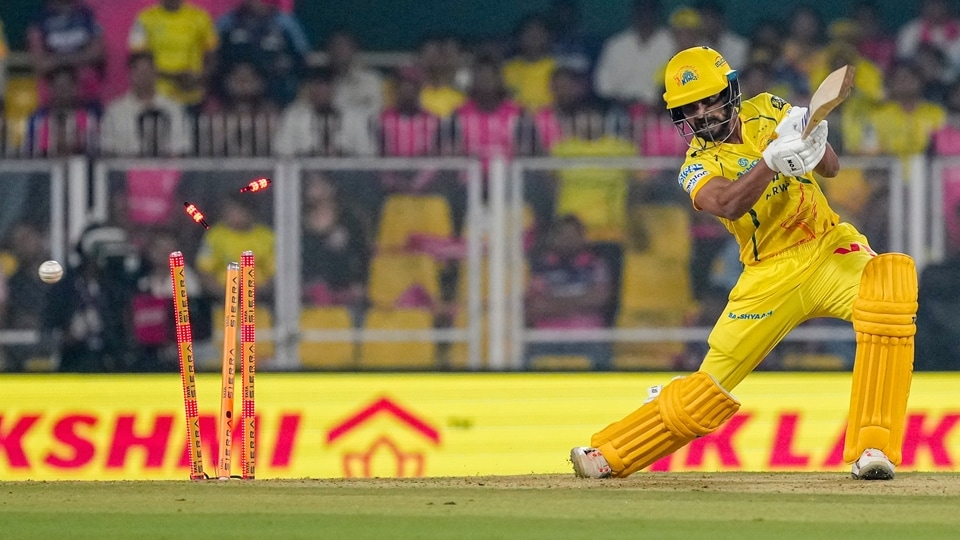
The number looks even worse when placed against the broader IPL context. The tournament opened with high scores in the powerplay in the first two matches, a reminder of where powerplay batting now sits in the league’s economy. Against that backdrop, 41/4 is not merely a slow start; it is a collapse wrapped inside a slow start. CSK were already without MS Dhoni, ruled out of the opener due to a calf strain, but this was a batting issue that predates one absentee.
The 2025 pattern has carried straight into 2026
In IPL 2025, CSK’s batting output in the first six overs was already among the weakest in the competition. Across 14 innings, they scored 731 runs in the powerplay at a run rate of 8.70, with an average powerplay score of 52.21. More damaging was the shape of those six overs: CSK lost 29 wickets in powerplays across the season, or 2.07 wickets per innings, while their dot-ball percentage stood at 42.66%.
The first half of the powerplay was where the damage was usually done. In overs 1 to 3, CSK scored at only 7.76 per over and played dots on 49.60% of deliveries. They improved to 9.64 per over in overs 4 to 6, but by then, they were often trying to repair a phase they had already surrendered.
That is why 41/4 against the Rajasthan Royals feels less like an isolated bad evening and more like continuity. It is 11.21 runs below CSK’s own already-poor IPL 2025 average powerplay score, while the four wickets lost are almost double their 2025 powerplay average. In one innings, the old problems returned together: low scoring speed, loss of wickets and a complete surrender of the top order.
The worrying part for CSK is not just the low score. It is that the collapse's structure matched last year’s pattern. In IPL 2025, CSK’s powerplay batting was poor because it was both low-output and high-cost. Their first powerplay of IPL 2026 has begun in exactly the same language.


