


 Live Score
 Cricket Teams
 Cricket Players
Vaibhav Sooryavanshi stunned Jasprit Bumrah, but that is only half the story
A thrilling face-off saw 15-year-old Vaibhav Sooryavanshi take on Jasprit Bumrah. Sooryavanshi scored 13 runs, including two sixes, showcasing fearlessness.

 Prefer HTon Google


There was enough pre-match buzz around this face-off to make it feel bigger than one short spell. The framing was obvious and irresistible: a 15-year-old opener whose early cricketing identity has been built on fearlessness against Jasprit Bumrah, still the most complete fast-bowling problem in this format. Ahead of the game, the conversation around Sooryavanshi centred on whether his approach would change at all. The expectation was that it would not.
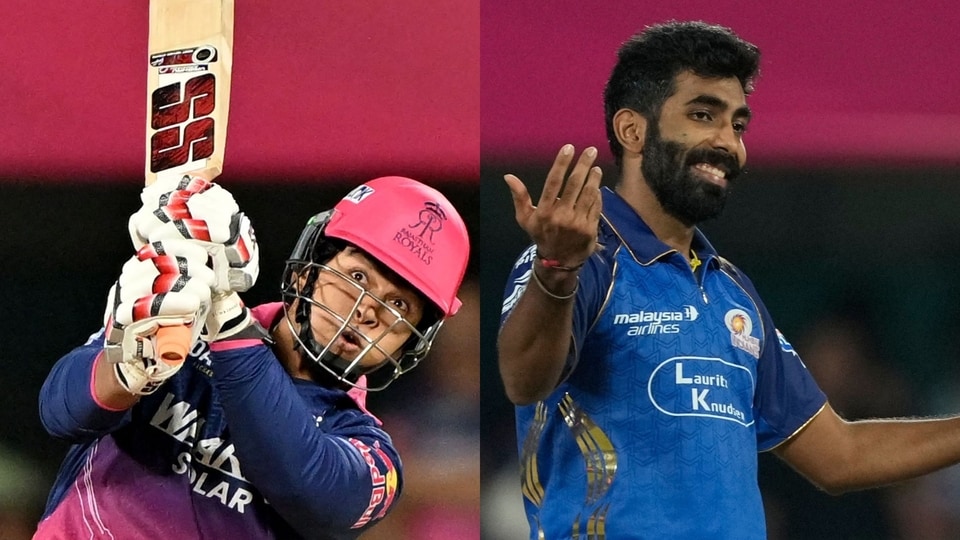
That is exactly why this contest deserves a deeper reading than the surface headline of “teenager smashes Bumrah.” Because what unfolded was not just a burst of daring. It was a revealing clash between a batter trying to seize every opening he got, and a bowler who, even when hit, still began sketching the answer by the end of the passage.
Why Sooryavanshi won the visible battle
On raw output, this round went to the batter. From the five legal balls visible against Bumrah, Vaibhav Sooryavanshi made 13 runs, striking at 260, with two sixes and only one single. More importantly, the tone was set immediately.
The first scoring shot was not a jab, not a guide, not a respectful sighter. It was a six off a ball in the slot on the pads. That matters because Bumrah usually dictates emotional terms against young batters. He makes them feel late, rushed or unsure. Sooryavanshi did the opposite. He announced, from the first ball he faced, that he was going to meet reputation with intent.
The second six made the passage even more interesting. After that early burst and a brief interruption in the strike, Sooryavanshi came back and attacked again. This was not another carbon-copy pad-line gift. It was a slower ball on a length, outside off, sitting up at hittable height. Sooryavanshi still swivelled and sent it over square leg. That one shot significantly expands the analysis.
The teenager won the mini-battle. Not because he played Bumrah risk-free. He clearly did not. He won because he landed the decisive blows, and against a bowler of Bumrah’s class, two sixes in five balls is not noise. It is damage.
Why this was not total domination
But calling it domination would be lazy. By the end of the passage, Jasprit Bumrah had begun adjusting. The final two balls Sooryavanshi faced brought no runs. One was an awkward, heavy full toss that evaded the swing. The other was a dipping lower full toss on the pads that Sooryavanshi could only dink, without scoring. Suddenly, the shape of the contest changed. The ball in between the two sixes also revealed the mastery of Bumrah, too. He bowled it back of a length and took pace-off it, forcing the batter to push for a single.
This is the technical heart of the duel. Sooryavanshi looked dangerous when the ball either entered his leg-side pickup zone or sat up into a pullable arc. He looked far less comfortable when the ball got beneath that arc or beyond his reach. That difference is everything.
Against young power hitters, “full” is not automatically safe. A hittable full ball can disappear. But low, dipping, harder-to-get-under full-length is different. Bumrah also probably found a way to evade the bat of Sooryavanshi, while being a bit shorter too. So while Sooryavanshi won the phase on impact, Bumrah recovered enough to show that the contest was not settled.
What the duel really tells us
This battle was ultimately a study in method versus margin. Sooryavanshi’s method is boundary-first, high-commitment, high-belief batting. In the visible sample, 12 of his 13 runs came in sixes. There was almost no middle ground. He was not trying to nudge Bumrah away. He was trying to shift the balance with force. That is why the moment felt so loud.
Bumrah’s response, though, hinted at the longer-game truth. If he misses the arc or offers sit-up length, Sooryavanshi can hurt him immediately. But if he keeps the ball fuller, lower and less swingable, the geometry changes fast.
So who won? In the visible exchange, Sooryavanshi did. He won the scoreboard battle, the crowd battle and the psychological first punch. But Bumrah still left behind the more sustainable tactical clue. The teenager took the moment. The bowler, even in a damaged spell, still exposed the map of how to contain him. Had the battle continued a little longer, Bumrah, at his level of expertise, would have found the answer to the Sooryavanshi problem.
That is what made the contest compelling. It was not a story of one player simply overwhelming the other. It was a glimpse of a young batter bold enough to attack the best, and of the best still showing why elite fast bowling is never judged only by the first blow.


