


 Live Score
 Cricket Teams
 Cricket Players
Will India look to emulate their new all-attacking T20 strategy in ODIs?
Having upped their T20 tempo in this series, India may now look to do the same with ODI cricket.


India had a lot to celebrate following their 66-run win against England, but the winning margin may overshadow the scare England gave the hosts with the big-bang approach of their openers. For example, when India lost their first wicket, in the 15th over, they were 64-1; chasing 318, England were 135-1 when they lost their first wicket in the 14th over, scoring at more than double India's rate.
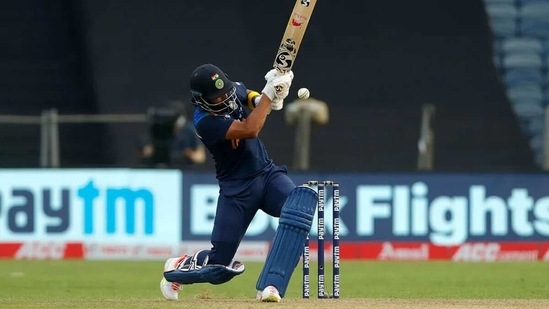
It is an approach that England has consistently stuck to, with great success, including their 2019 world cup win - begin with an explosion, and treat the last 20 overs as the death, instead of the last 10. India may need to learn how to do some of that if they have to keep their winning momentum going in the series.
Virat Kohli called it one of India’s "sweetest wins in recent times" because his inexperienced bowlers could pull things back after Jonny Bairstow and Jason Roy had put them on the edge with their hitting. But on another day, England may not implode after a powerful start and that’s when 315-320 may start looking like a middling target. England captain Eoin Morgan has made it clear they won’t change their approach just because of a few setbacks.
“Sometimes it doesn’t work because we don’t get it right,” he said at the presentation. “But, for us losing like that is way better than losing by 10 and 20 runs playing a different manner that does not suit us. This is the way we play and will continue to play.”
India's way is very different.
In the last three years, English openers’ scoring rate in the first 10 overs has been 6.03 runs per over, while India has been happy with 5.05 runs per over. Even in Pune, the England openers knocked off 89 runs off India’s target in the first 10, but India were happy with 39-0, batting with respect for the conditions and the movement Mark Wood and Sam Curran were extracting. That’s the way Rohit Sharma and Shikhar Dhawan have always batted, mindful of their ability to up the batting tempo once set. Despite the quiet start, India was well placed at 159/1 in 30 overs, with Dhawan and Kohli speeding up. But India lost Kohli in the 33rd over, and they could only manage 46 runs during the 30-40 over phase. As a result, India’s death overs charge, powered by Krunal Pandya and KL Rahul, fierce as it was (112 runs in 57 balls), did not provide a decisive edge.
Australia had taught India the same lesson in their last ODI series. In what was a high scoring series, Australians could set India 375 and 390 to win in the first two games at Sydney, simply because they went big, not only in the final 10 overs (110 and 114 respectively) but from much before, getting 114 and 88 in overs 30-40. India could not chase down those totals. The bowlers won India the final match, but they batted first with the same conservative approach of attacking the final 10 overs (110 runs), only accumulating 48 runs in overs 30-40. A three-year data check of runs scored by India in the final 20 overs shows that they are happy with a run-rate of 5.95 playing 44 per cent attacking strokes before the scoring rate picks up to 7.65 runs per over in the last 10, with 58 percent attacking strokes. In the same period, England goes hard even in overs 30-40 scoring at 6.21 per over, before going all out at 8.05 runs per over in the last 10.
Having upped their T20 tempo in this series, India may now look to do the same with ODI cricket. Kohli acknowledged it’s an area India is working on. “It’s a fair assessment,” he said at the presentation when asked if Morgan was right to say that India had finished below par. “I had told Shikhar that I would look to take the bowlers on in overs 30-40. It would have given us a chance to get to 340-350. But I got out…these will be high scoring games, and we will look to capitalize in the next one.” With KL Rahul having regained his touch, the explosive Suryakumar Yadav set to replace an injured Shreyas Iyer and the Pandya brothers in the ranks, India have all the firepower they need to match England's approach.


