
 E-Paper



CAG report reveals gaps in water plan execution
Passes strictures against govt for financial mismanagement

 Prefer HTon Google


The Comptroller and Auditor General (CAG) passed strictures against the Uttarakhand government for its financial mismanagement and failure to introduce a policy framework while implementing the centrally funded National Rural Drinking Water Programme (NRDWP).
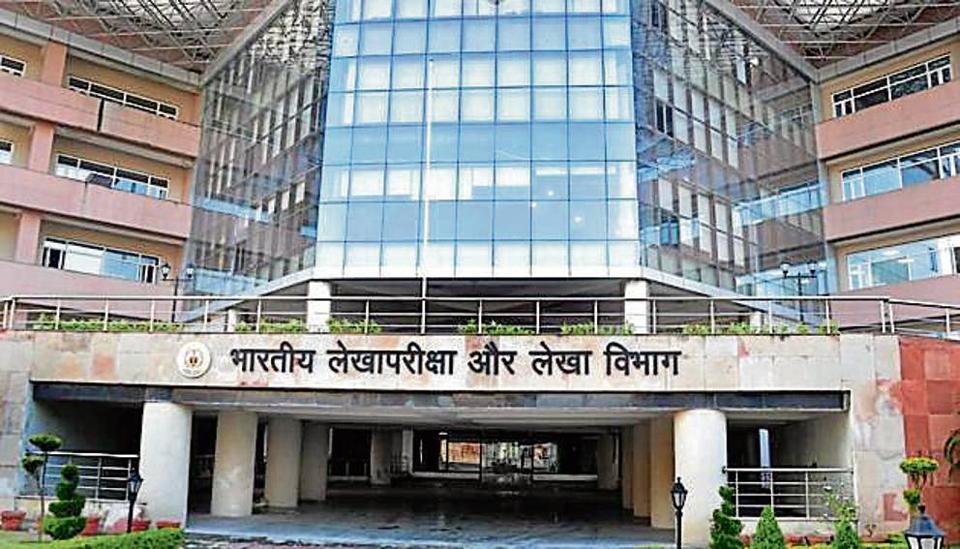
The CAG report tabled in the assembly recently has pulled up the state government for its failure to release its matching share of over ~120 crore for works relating to NRDWP. “The overall fund management was also found deficient, as during the period 2012 to 2017, the allocation of funds for different components of the programme was not in consonance with its norms,” the CAG report states.
The main objective of the programme, it says, is ensuring drinking water security to every rural household by utilising sources of water and ensuring sustainability of the system and resource. The report highlights the NRDWP mandate relating to institutionalisation of water quality programmes through community participation and spreading awareness among the masses.
The CAG report suggests that the purpose of the scheme stands defeated owing to the norms not being properly followed during its implementation. It also passes strictures against the Uttarakhand Jal Nigam (UJN), an implementing agency, for its failure to justify inadequate allotment/expenditure of funds for sustainability component.
Citing the example of Tehri district, the report states that ~42.01 lakh was spent out of sustainability component on construction of small water schemes and tanks that were not in consonance with NRDWP guidelines. It also points out shortfall in achieving targets of providing piped water and household connections by 2017. “The state was able to provide 55 litres per capita per day water to only 14.71% habitations against the goal of 50%.”
The report found the monitoring mechanism of NRDWP deficient as the function was carried out by executing agencies instead of the State Water and Sanitation Mission (SWSM), a designated agency for implementation of the programme.
“It (SWSM) had neither prepared any policy framework nor formulated any five-year comprehensive water security plan (CWSP) as envisaged in programme guidelines,” the report points out. “Also, it could not ensure regular monitoring of the progress made by the state in achieving drinking water security to every rural household.”
The programme guidelines stipulate that SWSM was required to be set up at the state level as a registered society for providing policy guidance and convergence of water supply activities.
The audit report says SWSM was not set up as a registered society. “Without registering as a society, as required under programme guidelines, SWSM was handling the financial issues of the programme.”
A Source Finding Committee (SFC) was not constituted in violation of NRDWP guidelines nor was the work of SFC delegated to any other agency. “(Consequently), 4,787 (water supply) schemes amounting to Rs 1,676.40 crore were approved… without any inputs of the SFC,” the CAG report states. The schemes were approved by the State Level Scheme Committee (SLSSC) without inputs from SFC, the report adds.


