E-Paper



Install GPS in buses in 6 months, HC tells Uttarakhand govt to crub mishaps
The Uttarakhand high court has directed the state government to install GPS (global positioning system) in every public transport bus within six months, a part of a slew of orders issued for road safety and enforcement of traffic rules.


The Uttarakhand high court has directed the state government to install GPS (global positioning system) in every public transport bus within six months, a part of a slew of orders issued for road safety and enforcement of traffic rules.
GPS is a satellite-based system that is used to locate positions.
HC said the response of the disaster response committee in each district was slow in major accidents. The committee, the court said, is required to be equipped with the latest equipment and must reach the site of an accident immediately.
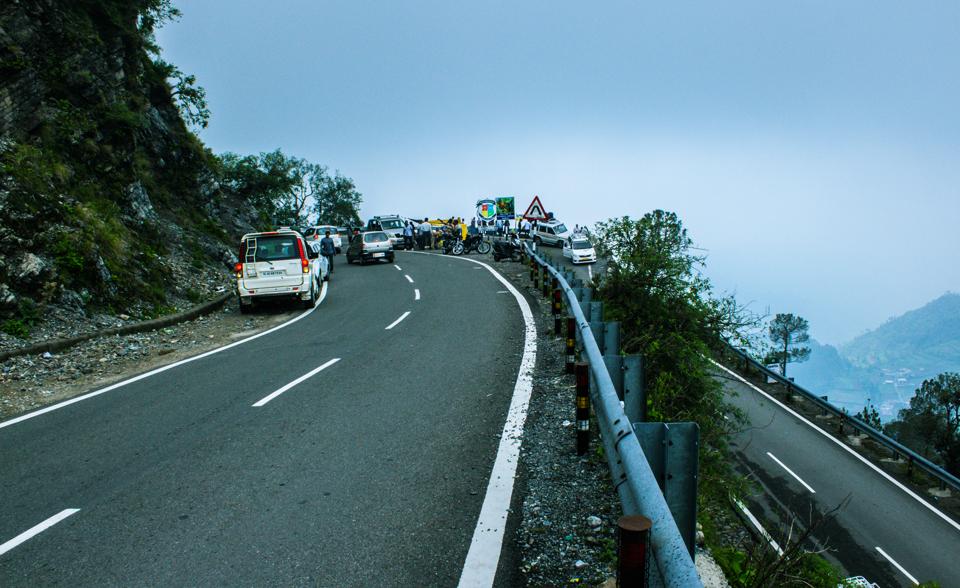
The state recorded 618 road accidents and 390 accidental deaths from January 1 to May 31 this year, according to a survey conducted by the traffic police. Forty-eight people died and 12 injured on last Sunday when a private bus they were travelling in fell into a 100-metre-deep gorge near Gween village, close to Dhumakot, in Pauri Garhwal district.
Over 25 lakh vehicles ply in Uttarakhand. Transport secretary D Senthil Pandiyan told HC that they do not have space to park seized vehicles. The court directed district magistrates in the state to provide sufficient land within three months for parking the seized vehicles. These places will be called ‘Traffic Awareness Centres’.
The court also directed the transport department to ensure that sufficient buses ply in inaccessible areas in the state, even during the Char Dham yatra, for the convenience of local commuters.
A single bench of justice Rajiv Sharma gave the directions while disposing of a petition filed by Arun Kumar in 2011. HT has a copy of the order.
HC said it had a long interaction with Pandiyan, who was summoned on Friday. “To minimise accidents in Uttarakhand, he has brought to the notice of the court that there are about 1000 vulnerable spots prone to accidents. He submits that poor road conditions, overloading, over-speeding, drunken driving, and defective buses are also factors leading to accidents,” the order said.
The transport secretary told the court that 21 enforcement teams in the state were checking violation of the provisions of the Motor Vehicles Act, 1989. “This number is inadequate. There should be at least 100 enforcement teams to undertake the enforcement and implementation of the Motor Vehicles Act and the rules, framed thereunder, and ancillary laws,” the order said.
On major causes leading to overloading, HC said advocate Navnish Negi had pointed out at the Bar that “during Char Dham yatras, a majority of transport buses are diverted, more particularly in district Pauri Garhwal; very few buses are available for general commuters which leads to overloading.”
HC observed that the state government had established the Institute of Driving and Traffic Research (ITDR) in Dehradun for imparting training of one month to drivers for issuance of commercial licences. “This institute is practically defunct. Licences are issued by the officers/officials without ensuring whether the driver has undertaken one month’s mandatory training or not,” the order said.
Main observations of HC
-- Residents living in hilly areas have a fundamental right to travel. It is the duty of the state government and public undertakings to provide the facilities. Citizens cannot be left at the mercy of private operators.
-- Buses which have completed their maximum mileage permissible are still plying the roads.
-- Roads are maintained by the public works department. Multidisciplinary approach is required to tackle road safety, “a very serious issue”. The foremost is to have a road safety audit.
-- Sirens can only be used by ambulances, fire tenders and any vehicle used for salvage operations.
Other directions
-- Transport secretary to issue instructions to public sector undertakings, including the Uttarakhand transport corporation, and private operators to wash buses every day for maintaining hygiene.
-- No transport vehicle be permitted to ply beyond the permissible maximum mileage.
-- Transport secretary to issue instructions that drivers and conductors behave with commuters in a dignified manner, more particularly with women, children and elderly people.
-- Use of a helmet is mandatory for pillion riders, including women and children, for their safety. Children should only sit behind the driver as pillion riders.