
 E-Paper



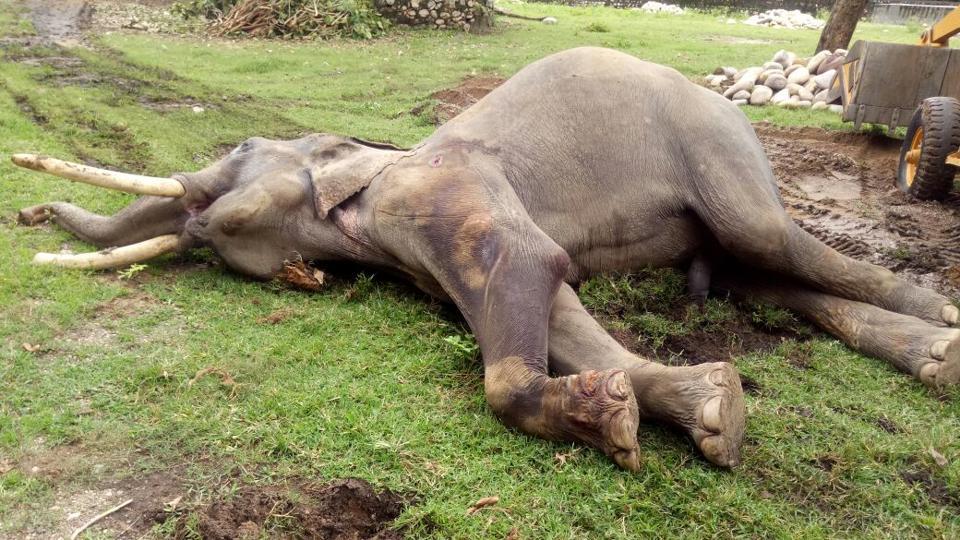
Male departmental tusker of Rajaji gored to death by wild tusker
The wild tusker who was apparently in its heat period wanted to eliminate the lone male elephant in the campus which also had two female departmental elephants.


Dehradun: A 50-year old wild tusker killed a 27-year old departmental tusker named Raja in Chilla range of Rajaji Tiger Reserve on Friday night. The wild tusker who was apparently in its heat period wanted to eliminate the lone male elephant in the campus which also had two female departmental elephants.
The wild elephant was reported chasing a school bus in Haridwar followed by damaging property at Chilla barrage colony a few days ago.
Officers informed that the elephant broke a wall constructed a decade ago to keep wild animals at bay. It then entered the campus where three big elephants and three small ones were kept. All were chained during the attack. It attacked Raja, the only tusker there and damaged its lungs. Raja died on spot. “There were serious injuries on its body. The tusks of the wild elephant penetrated the lungs of Raja and he died,” said Sanatan Sonkar, director Rajaji. The post-mortem was conducted which established that the tusk punctured the lungs of the animal. The body was disposed of as per The Wildlife Protection Act guidelines.
There were about 50 staff including mahouts that had to flee the spot to save themselves. One of the staff managed to shoot bullets into the air to shoo the animal away, but it was too late. The wild elephant ran into the dense forest but officers claim it would return.
“There are two female departmental elephants in the campus and the wild tusker will definitely return as it is in its ‘Musth’ period. I have deployed staff to avoid further emergency,” said Sonkar. During Musth or heat period, the male elephants become aggressive due to continuous secretion of male hormones.
Rehman, the mahout of Raja, was shattered after this incident. He said, “Raja was found in 1992 as a baby who was left astray after its mother was killed in a train accident. . Since then, the reserve management had been taking care of it.”
Local activists raise concern over poor construction quality of the wall. “It’s surprising that the wall meant to keep elephants at bay was broken by the tusker so easily. Are such walls constructed across the state a mere eyewash?” said Rajeev Mehta, former wildlife warden Rajaji.
Ministry of Environment, Forest and Climate Change (MoEFCC) latest elephant figures say that the population of elephants in Uttarakhand rose from 1346 in 2012 to 1839 this year.


