
 E-Paper



With 5000 poll events, BJP’s hyper-local campaign in bid to win Delhi after 21 yrs
Hoping to return to power in Delhi after 21 years, the party ran a hyper-local campaign this time, holding 5,239 rallies, public meetings, corner meetings (nukkad sabhas), party workers meetings and road shows, according to a senior leader.


The Bharatiya Janata Party (BJP) started its campaign for the February 8 Delhi Assembly elections on the development agenda. The party later launched a high-pitch campaign around “nationalism” with Shaheen Bagh at the centre in this election.
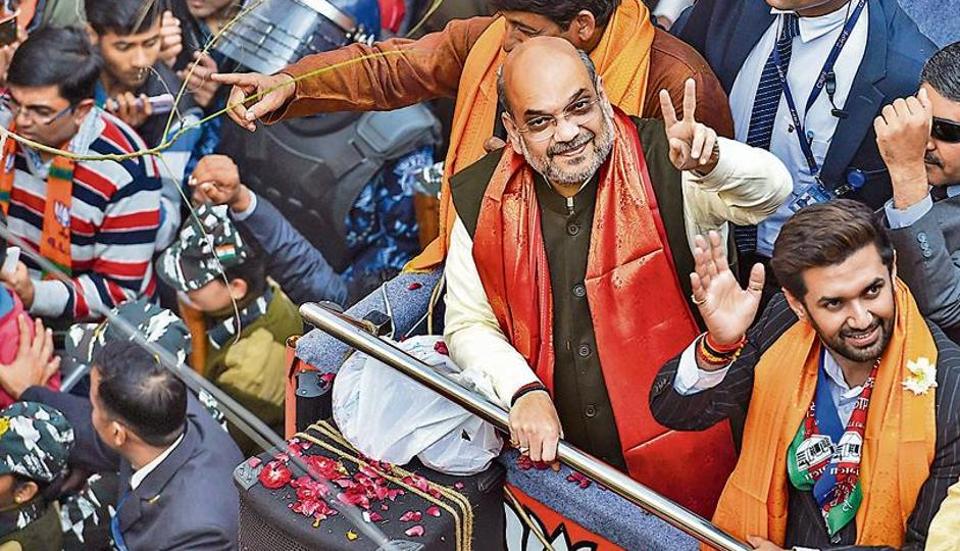
Hoping to return to power in Delhi after 21 years, the party ran a hyper-local campaign this time, holding 5,239 rallies, public meetings, corner meetings (nukkad sabhas), party workers meetings and road shows, according to a senior leader.
Under Union home minister Amit Shah’s supervision, who micro-managed the campaign, the BJP hit out at protesters at Shaheen Bagh for opposing the Citizenship Amendment Act and those who supported them. The party also attacked Delhi chief minister Arvind Kejriwal for allegedly supporting Shaheen Bagh protesters with Uttar Pradesh chief minister Yogi Adityanath stating that Kejriwal was “supplying biryani” there.
Union minister of state Anurag Thakur and BJP’s West Delhi MP Parvesh Verma were banned from campaigning by the election commission for their inflammatory slogans and statements. While referring to protesters at Shaheen Bagh, Thakur had led party supporters to chant the “goli maro” slogan and Verma had said that the protesters will “rape and kill your daughters and sisters”.
The BJP deployed 200 MPs and sitting and former chief ministers of BJP-ruled states in the election to canvas for the party. Shah, who has been micromanaging the election, covered nearly 60 out of 70 assembly constituencies. Since January 23, Shah held 2-3 public meetings or roadshows daily where he directly attacked Shaheen Bagh protesters and trained his guns on the AAP and the Congress for supporting them. On the last day of the campaigning, Shah held road shows in three assembly constituencies.
BJP chief JP Nadda has held meetings in all 70 assembly constituencies. He held public meetings as well as meetings with party workers to check the election preparedness at the grasroots level.
Unlike 2015, Prime Minister Narendra Modi this time held just two public rallies. In 2015, the PM had addressed four back-to-back rallies in Delhi.
With campaigning coming to an end on Thursday, senior BJP leader Tarun Chugh, who is the convener of the election management committee, said that he saw this election as an “ideological battle”. “This election is about development. But with Delhi chief minister Arvind Kejriwal supporting those protesting against CAA, it has become an ideological battle. It is a battle between those who support the PM and those who want ‘Jinnah wali Azadi’. It is our commitment to the people of Delhi that we will not let people burn the city,” said Chugh.
While nationalism was the main issue, Delhi BJP chief Manoj Tiwari said that his party has been able to damage the ruling AAP with its “reality check campaigns”. “We raised the issue of dirty and poisonous drinking water supplied by the AAP government. We raised the issue of inflated electricity bills, pathetic condition of schools and mohalla clinics. This has hampered the AAP’s campaign. We have been successful in exposing the AAP,” Tiwari said.


