
 E-Paper



Govt uses data, better training to ramp up ambulance service in Delhi
The fresh approach — which includes a full-time control room for data analysis, weekly rearrangement of deployment locations and training of staff — will also look at ways to augment the fleet size, a senior government official said.

 Prefer HTon Google


As the number of Covid-19 cases in the city continues to surge, the Delhi government is working on a three-pronged approach to ensure that the performance of its ambulance fleet is optimal.
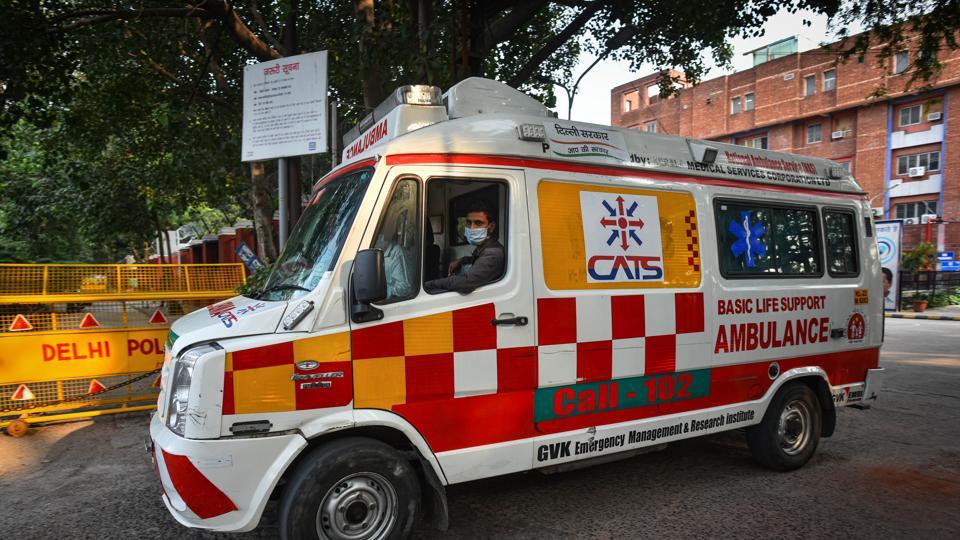
The fresh approach — which includes a full-time control room for data analysis, weekly rearrangement of deployment locations and training of staff — will also look at ways to augment the fleet size, a senior government official said.
The official said nine ambulances were added earlier this month, taking the total strength to 603 compared to 164 around four months ago. Of these, 286 are reserved for Covid-19 duty, the official said.
Jasmine Shah, vice-chairperson of the Dialogue and Development Commission of Delhi, an advisory body to the Aam Aadmi Party (AAP) government, said: “We have a strategy in place for best performance of the ambulance fleet in the light of the spike in Covid-19 cases. And the whole programme is being closely monitored by the chief minister himself. First, we have set up a war room that analyses real-time data in multiple aspects of the ambulance service – from fleet size to response time – and a daily report is provided to the CM.”
“Second, we have adopted a scientific approach towards the deployment of the ambulances. All Covid-19 related calls are analysed in terms of location and other aspects and the deployment of ambulances is re-arranged every week on the basis of the findings. Third, we have invested in thorough training of all ambulance drivers, paramedics and officials who attend distress calls,” Shah said.
A think-tank named SaveLIFE Foundation will help the government.
“Over the past five months, SaveLIFE Foundation has worked closely with the Delhi Government to manage the surge in demand for ambulances. By combining data science with the aggregation of private ambulances, staff training and smart deployment tactics, we have been able to bring response times of ambulances to an average of under 20 minutes. This, combined with several direct relief measures, has helped us serve the people of Delhi during the Covid crisis,” said Piyush Tewari, Founder and CEO, SaveLIFE Foundation
Government records said the fleet size of the centralised emergency trauma services (CATS) – a free service under the government’s domain – was 164 on May 15. It was increased to 337 on June 1, to 569 on July 1 and 594 on August 15. On September 15, the fleet size had increased to 603, the records said.
At any point, around 40% to 50% of the CATS ambulances were on Covid-19 duty.
Covid cases in Delhi had dipped for around a month between mid-July and mid-August – a period in which the city recorded less than 1,000 new cases in a day on several occasions. The numbers, according to the chief minister’s office, started witnessing a spike from mid-August, prompting the state government to scale up testing.
On Thursday, according to the state health bulletin, 4,432 new Covid-19 cases were recorded in 24 hours, as against 60,014 tests conducted, taking the total number of active cases to 31,721.
Also read: Delhi reports 38 Covid deaths and 4,432 new cases; RT-PCR tests slip below 10,000
The government, in order to increase its existing ambulance fleet, has in the past signed contracts with numerous small and medium-scale service providers and hired private ambulances from Delhi and also from neighbouring states such as Uttar Pradesh and Haryana.
Apart from the 603 ambulances in the government, there are around 800 ambulances that are run by private hospitals and service providers.
The sharp increase in active cases over the last one month — from 11,068 recorded on August 18 to 31,721 on Thursday — has also led to increase in occupancy of hospital beds and institutional quarantine. As on Thursday, 9,251 patients were admitted in hospitals and quarantine centres, against 4,343 on August 18, government data showed.
“With that, the load on the ambulance fleet has increased,” said an official in CATS .
The government ambulances primarily ferry Covid-19 patients between hospitals and also from their residences to hospitals and quarantine centres. On Thursday, data said, they attended 1,535 Covid-related calls.


