
 E-Paper



JNU may introduce 4-year UG programmes, forms committee to implement NEP-2020
The decision to form a committee was taken during the 155th academic council meeting held Thursday. The members of the JNU Teachers Association (JNUTA) alleged that they and student body representatives were excluded from the meeting.


The Jawaharlal Nehru University (JNU) on Thursday formed a committee to discuss measures for implementing the National Education Policy (NEP), 2020, including the introduction of four-year undergraduate programmes and conversion of the existing three-year courses into four-year ones.
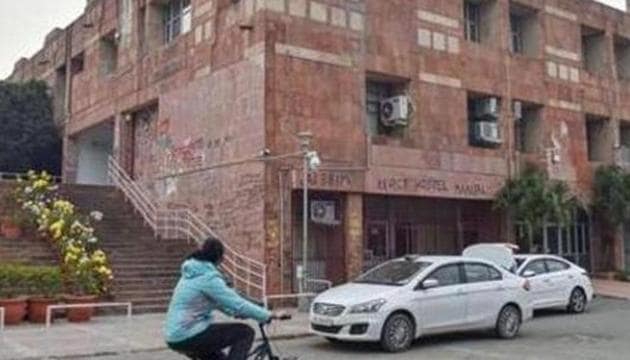
The decision to form a committee was taken during the 155th academic council meeting held Thursday. The members of the JNU Teachers Association (JNUTA) alleged that they and student body representatives were excluded from the meeting.
Chintamani Mahapatra, rector-I, JNU, issued a statement saying, “The council members felt that JNU should take the lead in implementing NEP-2020 in earnest and authorised the formation of an apex committee consisting of representatives from different schools and centres to deliberate and come up with recommendations.”
The Union cabinet in July 2020 approved the New Education Policy (NEP), which is set to bring a slew of major changes including allowing top foreign universities to set up campuses in India, a greater proportion of students getting vocational education, and a move towards institutes including IITs turning multidisciplinary.
According to Mahapatra’s statement, some of the major steps for the implementation of NEP, as discussed during the meeting, included the possibility of converting the existing three-year undergraduate programmes into four-year courses; the introduction of new four-year undergraduate programmes; offering master’s level programmes in online mode on subjects that do not require lab or experimental work; strengthening further the inclusive policy of the university to provide better opportunities for students from socially and economically disadvantaged backgrounds; and, increasing the intake of international students, among others.
“The university will also focus on promoting innovation and entrepreneurship among students and faculty. This committee will also look into other aspects of NEP-2020 which are relevant to a research-oriented university such as the JNU,” Mahapatra said.
The academic council also decided to establish a Special Centre for Systems Medicine (SCSM) in the university. “Systems medicine is an approach to understand the complexity of the interactions of all molecular and cellular determinants involved in the pathophysiology of a disease,” Mahapatra said.
JNU vice-chancellor M Jagadesh Kumar said, “This proposed centre would serve as a national hub for the development of India specific clinical and molecular data and its application in the area of systems medicine.”
The JNUTA issued a statement alleging that both the faculty members and student association members were not invited to the meeting. “Faculty and students undoubtedly represent important constituents of the university system and the repeated attempts by the current administration to sideline their representation in statutory bodies is highly condemnable.”
“These decisions were taken without any formal consultations with existing Schools and Centres, let alone the requisite approvals from the Boards of Studies of the Schools, and notwithstanding reservations expressed by many of the faculty members present,” it said.
Responding to the allegations, Mahapatra said, “The AC has not taken any decision. It has only formed an apex committee which will make a report after discussing the matter with all stakeholders.”


