
 E-Paper



Lutyens’ Delhi lost the maximum forest cover since 2015
New Delhi is followed by central Delhi, which has lost around 0.20 sq km of forest and west Delhi which lost around 0.02 sq km of forest.


Lutyens’ Delhi or New Delhi lost around 0.84 square metres of forests — the maximum green cover lost by any district of Delhi – in the past two years, says the India State of Forest Report 2017.
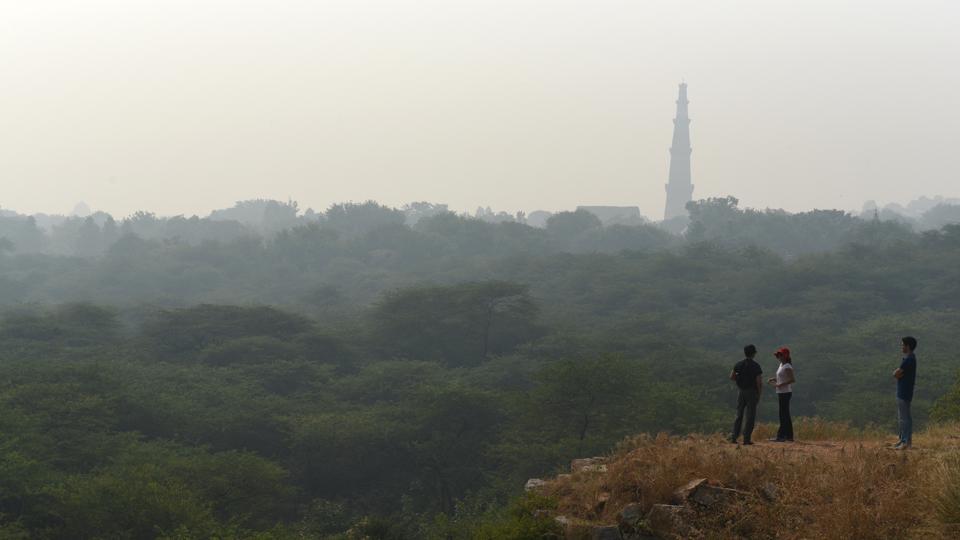
While on one hand very dense forest cover has declined from 1.77 sq km to 1.69 sq km, moderate dense forest cover has gone down from 5.83 sq km to 5.47 sq km between 2015 and 2017. Open forest which usually reflects plantation and afforestation drives have also dropped from 9.65 sq km to 9.25 sq km.
New Delhi is followed by central Delhi, which has lost around 0.20 sq km of forest and west Delhi which lost around 0.02 sq km of forest.
The FSI has divided Delhi into nine districts of which south Delhi has the maximum forest cover of 83.35 sq km followed by southwest Delhi which accounts for nearly 51.1 sq km of forest.
“Most of the biodiversity parks, including the Neela Hauz and Tilpat Valley along with some of the forests such as the Asola Bhatti Wildlife Sanctuary are located in south Delhi,” said Padmavati Dwivedi, a tree activist, who led the first tree census of Delhi a few years ago.
On the other hand northwest Delhi has the least tree cover among all the districts which covers just around 3.99% of its geographical area. It is followed by west Delhi and east Delhi which have around 5.27% and 5.78% of their area covered by forests.
“Afforestation drives are undertaken regularly. The saplings are too small to be counted as forests. We would be able to see the results only after five to 10 years,” said Ishwar Singh, additional principal chief conservator of forest of Delhi.
The report, which also accounts for water bodies inside forests, claims that such water sources inside Delhi’s wooded areas have increased between 2005 and 2015. While there were around 3.77 sq km of water bodies in 2005, it has gone up to 4.32 sq km in 2015.
“Groundwater is depleting. But forests are powerful ground water rechargers. The biodiversity parks of Delhi are actually helping to recharge the local groundwater,” said CR Babu, ecologist.
Stay updated with all top Cities including, Bengaluru, Delhi, Mumbai and more across India. Stay informed on the latest happenings in World News along with Delhi Election 2025 and Delhi Election Result 2025 Live, New Delhi Election Result Live, Kalkaji Election Result Live at Hindustan Times.


