
 E-Paper



Pollution in Delhi likely to spike by November end; task force wants ban on construction
The Supreme Court-appointed EPCA had banned construction activities in Delhi-NCR and industrial activities in Mundka between November 1 and November 12, when the pollution had spiked to severe category.


Strong winds since Wednesday night may have helped the air quality improve significantly in the national capital, but pollution levels are expected to spike again by the last week of November, government agencies have warned.
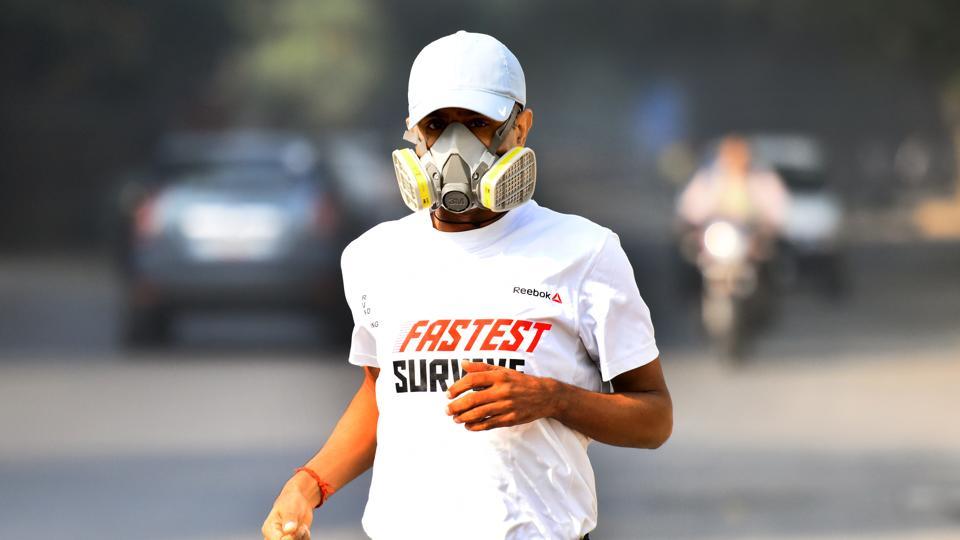
As a combat measure, a government task force on pollution has recommended a ban on industrial and construction activities in Delhi’s ‘pollution hotspots’ Wazirpur, Mundaka, Narela, Bawana and Anand Vihar, among others, if pollution breaches the severe level.
The Supreme Court-appointed body Environment Pollution (Prevention and Control) Authority (EPCA) will take a final call.
“We have been informed that there could be another spike in pollution in the last week of November. Air quality could deteriorate between November 26 and 29 because the ventilation index could drop,” Sunita Narain, member of EPCA, said.
Delhi needs a minimum wind speed of 10km/hour and a ventilation index of 6,000sqm/sec for dispersing the local pollutants. The ventilation index determines how fast pollutants can disperse.
When asked whether the EPCA would consider rolling out the odd-even plan, a road rationing scheme, or ban private vehicles if the air quality enters the severe zone, Bhure Lal, EPCA chairman, said, “We have not received any such recommendation from the Central Pollution Control Board (CPCB). Decisions will be taken depending on the situation.”
Scientists from the Delhi environment department said the spike is expected mainly because of adverse weather conditions.
“According to forecasts, the wind speed and ventilation index are expected to drop by November-end. This could push up pollution levels in Delhi as pollutants emitted by local sources such as vehicles, industries and construction activities won’t get dispersed. They would start accumulating over Delhi,” a scientist from the Delhi environment department said.
“The task force, headed by the CPCB, has recommended that industrial and construction activities be banned in pollution hotspots, when pollution enters the severe category,” a senior CPCB official said.
EPCA had banned construction activities in Delhi-NCR and industrial activities in Mundka between November 1 and November 12, when the pollution had spiked to severe category. The condition worsened particularly during the post-Diwali period. Entry of trucks was also banned between November 8 and 12.
The SC-appointed body had even warned of putting a ban on private vehicles or roll out the odd-even scheme if the pollution worsened.
On Thursday, Delhi saw a substantial improvement in air quality. After hovering in the ‘very poor’ category for four days, pollution levels dropped to the ‘poor’ category. The Air Quality Index (AQI), as recorded by the CPCB, was 273 on Thursday. On Wednesday it was 373.
On a scale of 0 – 500, an AQI value between 201 and 300 is considered poor, while a value between 301 and 400 is considered very poor.

Stay updated with all top Cities including, Bengaluru, Delhi, Mumbai and more across India. Stay informed on the latest happenings in World News along with Delhi Election 2025 and Delhi Election Result 2025 Live, New Delhi Election Result Live, Kalkaji Election Result Live at Hindustan Times.


