
 E-Paper



Publish, not perish: Kitabwalas from Lahore showed Delhi the way
Several renown publishers came to Delhi after Partition and started their businesses from Nai Sadak and Kashmere Gate.


Today, Delhi is the largest centre of publishing books in India. But until 1947, it housed only a handful of distribution centres selling mainly religious books.
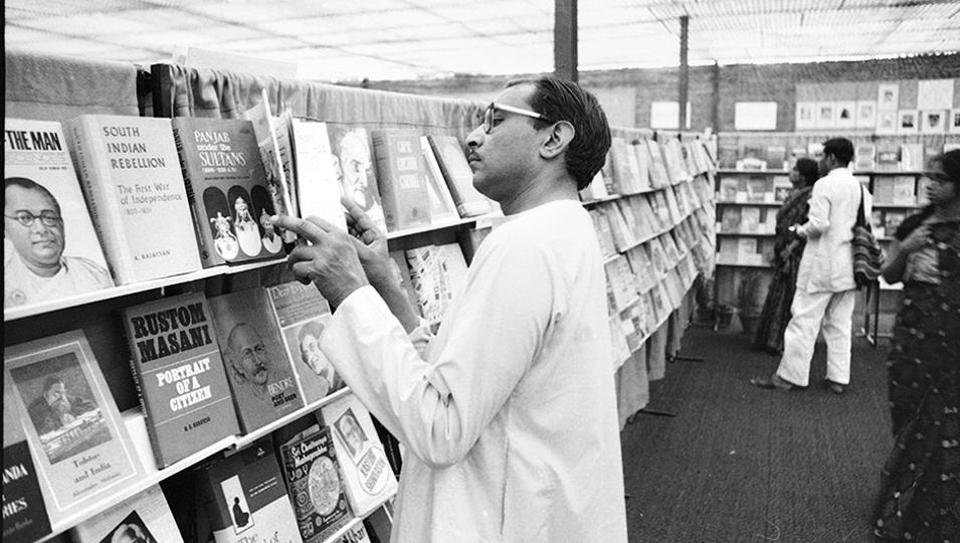
It was the refugees who established the books trade in the capital. The famous ones from Lahore — Atma Ram, Gurdas Kapoor, Uttar Chand, Rajpal and Sons — reached Delhi after Partition and started their businesses from Nai Sarak and Kashmere Gate.
Amar Varma’s family ran a book-selling business in Multan. Before leaving for Delhi, his father met someone who promised to transport their books to Delhi at Rs 10 a carton. “We sent 50 boxes to India. Much to our surprise, they got delivered,” said Varma.
Struggling to make ends meet, the Varmas wanted to sell this stock at the book market in Old Delhi’s Nai Sarak. “But for them, this was raddi (wastepaper). They wouldn’t even pay for the binding, which they said had no value. That was a shocker. So we decided to open our own bookshop,” recalled Varma, 82. In 1948, his father set up a 10x5 feet shop in Dariba Kalan called the Punjabi Pustak Bhandar.
By 1955, the Varmas had got into publishing, opening Star Publications, with low-priced paperbacks. They published Sahir Ludhianavi, Shakeel Badayuni, Firaq Gorkhpuri, Dutt Bharati, and sold the books for Rs 1 each.
Read: Curzon has left the building
By the 1960s, Delhi’s book market had a global imprint. In 1962, the US Library of Congress, the biggest library in the world, had opened an office in the city. “They wanted Punjabi and Urdu books from us,” said Varma. In 1972, the National Book Trust launched its first World Book Fair and by the late 1970s, foreign publishers had realised that India had a big market for English books and printing was also cheap. Many big publishers from the UK and USA arrived in Delhi.
Many publishers and distributors slowly gravitated to Ansari Road, Daryaganj. The number of book fairs increased, new libraries opened, and universities started buying locally. Publishers from India were participating in Frankfurt and London book fairs. With Delhi leading the way, India soon became the third largest publishing hub for English books after the United States and the United Kingdom.
Stay updated with all top Cities including, Bengaluru, Delhi, Mumbai and more across India. Stay informed on the latest happenings in World News along with Delhi Election 2025 and Delhi Election Result 2025 Live, New Delhi Election Result Live, Kalkaji Election Result Live at Hindustan Times.


