E-Paper



We will take fight against crackers to logical conclusion: father of infant petitioner
The order helped bring down the use of crackers in the city this Diwali to some extent. But they feel the journey has not ended yet and there is more to achieve.

 Prefer HTon Google


The fathers of the three infant petitioners, who approached the Supreme Court of India in 2015 against the use of fireworks that pollute the air, are happy with the court’s decision to ban the sale of crackers in Delhi-NCR.
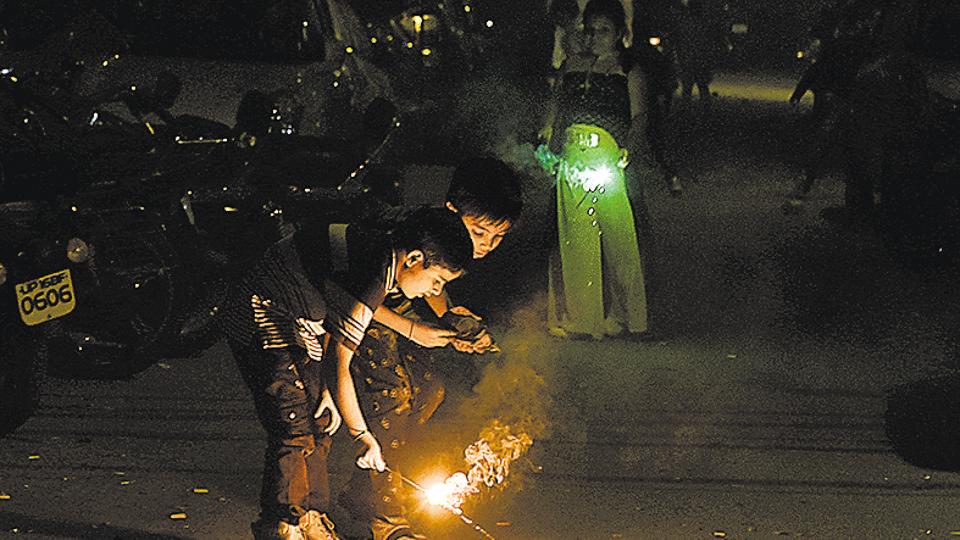
The order helped bring down the use of crackers in the city this Diwali to some extent. But they feel the journey has not ended yet and there is more to achieve.
“Though we are happy we managed to achieve something, it is still not the destination for us,” says Amit Bhandari, father of 20-month-old Aarav, who was one of the three infant petitioners.
“Though this Diwali was somewhat better than the previous one, we still have to strive for a much better Delhi,” Bhandari told HT from Jodhpur, Rajasthan.
One of the reasons why Bhandari would move out of Delhi around Diwali was the high pollution levels.
It’s not that I have not burst a single cracker in my life but a few years ago, I realised Delhi as we knew it is a thing of past and it’s the people who are to be blamed,” he said.
Bhandari came to Delhi about 14 years ago.
“My children have had been having cough and cold every other month and their doctor blamed it on pollution. I remember my friends from Mumbai would gush about Delhi’s green cover; now all they talk about is Delhi’s pollution. They avoid coming to Delhi around Diwali,” he says.
“Since we have spoilt Delhi’s air, it’s we who need to make it better, and this court case is a step in that direction as it’s not about just these three kids but deals with a larger issue at hand,” he says.
Apart from Aarav, the other petitioners were Zoya Bhasin (29 months), and Arjun Gopal (18months).
Bhandari feels the people of Delhi need to make an effort to improve Delhi’s air.
“We have to stop looking at courts and it is the people who will have to act sensibly. It is a continuous endeavour and we will pursue this case and take it to its logical conclusion,” he says.