
 E-Paper



Delhi pollution worse during winter, says new study
As the cold weather sets in, a quantitative analysis on particulate matter in Delhi has highlighted that residents are exposed to significantly higher levels of air pollutants in the Indian capital during winter than in summer, researchers from US, UK and India say.


As the cold weather sets in, a quantitative analysis on particulate matter (PM) in Delhi has highlighted that residents are exposed to significantly higher levels of air pollutants in the Indian capital during winter than in summer, researchers from US, UK and India say.
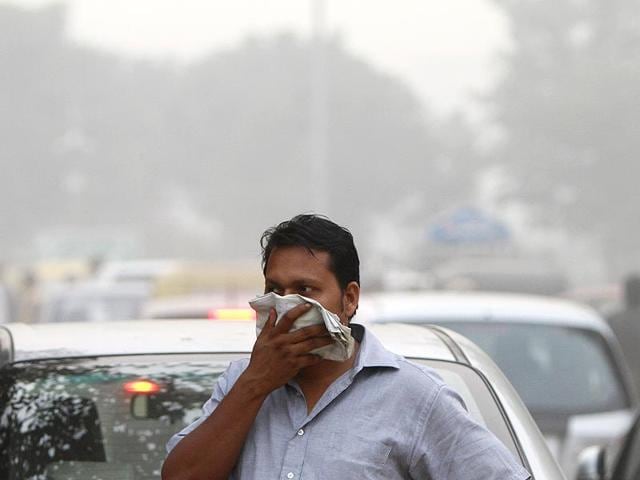
A University of Birmingham release on Tuesday said that air pollution continued to be one of the key global environmental challenges and is widespread in India, with Delhi, most notably, experiencing major air quality problems.
The largest public health impact from air pollution is due to exposure to particulate matter – very fine dust floating in the air. These dust particles are so small that they can get in to the lungs, potentially causing series health problems.
Researchers from the University of Birmingham, the Indian Institute of Technology Delhi (IIT Delhi), the Central Road Research Institute (India) and the Desert Research Institute (USA) have been collaborating to provide key scientific evidence in this area.
The aim of their study is to analyse the composition of particulate matter and to understand its sources in Delhi, which will assist in the development of targeted policy instruments to control air pollution, the release added.
Air samples were collected in June 2013 (summer) and December 2013-January 2014 (winter) adjacent to a heavy traffic site on Mathura Road, Delhi. The site is also influenced by industrial emissions from the Okhla Industrial Area and biomass emanations from nearby dwellings.
The researchers found that average 12 hour PM2.5 concentrations in winter were significantly higher than the 24 hour National Ambient Air Quality Standard in India (60 µg/m3). PM2.5 are fine particles, less than 2.5 micrometres in diameter.
Normally, these smaller particles can penetrate in to the respiratory system and cause negative health effects. In fact, a majority of the overall particles were found to be in the small size range, which can easily be inhaled and cause irreversible damage.
Several harmful components, including lead, zinc and polycyclic aromatic hydrocarbons were found to be present in very high concentrations in winter. These particles are associated with respiratory diseases such as asthma and bronchitis, and they can also cause inflammation and exacerbate cardiovascular diseases.
The quantitative analysis shows that sources for particulate matter include soil, road dust and tailpipe emissions from vehicles, as well as wood, coal and waste burning. Road dust and soil levels in the air increase in summer when temperatures are high and rainfall is low.
Roy M. Harrison from the School of Geography, Earth and Environmental Sciences at the University of Birmingham, said: “Exposure to particulate matter has negative consequences for human health but cost-effective abatement measures depend upon a quantitative knowledge of the contributions of different sources in the atmosphere. This work contributes to the body of knowledge which underpins policy development”.

Stay updated with all top Cities including, Bengaluru, Delhi, Mumbai and more across India. Stay informed on the latest happenings in World News along with Delhi Election 2025 and Delhi Election Result 2025 Live, New Delhi Election Result Live, Kalkaji Election Result Live at Hindustan Times.


