
 E-Paper



Babasaheb in our times
Everyone wants a share of his legacy, but how much of his liberal vision guides their politics?

 Prefer HTon Google


Everybody claims to love Babasaheb. Across the country and across ideologies, political parties are competing to celebrate Ambedkar Jayanti on April 14. In Uttar Pradesh (UP), where assembly elections are due next year, political parties are holding public events to remember Ambedkar on his 135th birth anniversary. Recently, UP’s BJP government proposed a ₹403-crore Dr BR Ambedkar Murti Vikas Yojana to beautify, develop, and maintain Ambedkar statues in all 403 assembly constituencies in the state, while the Samajwadi Party set up a Ambedkar Vahini as part of its Pichhda Dalit Alpsankhyak (backward-scheduled caste-minority) outreach. The Ambedkarite parties in the country are falling behind in optics in celebrating the legacy of the architect of the Constitution. It could well be that each political party/ideology has constructed its own version of Ambedkar to further its own goals.
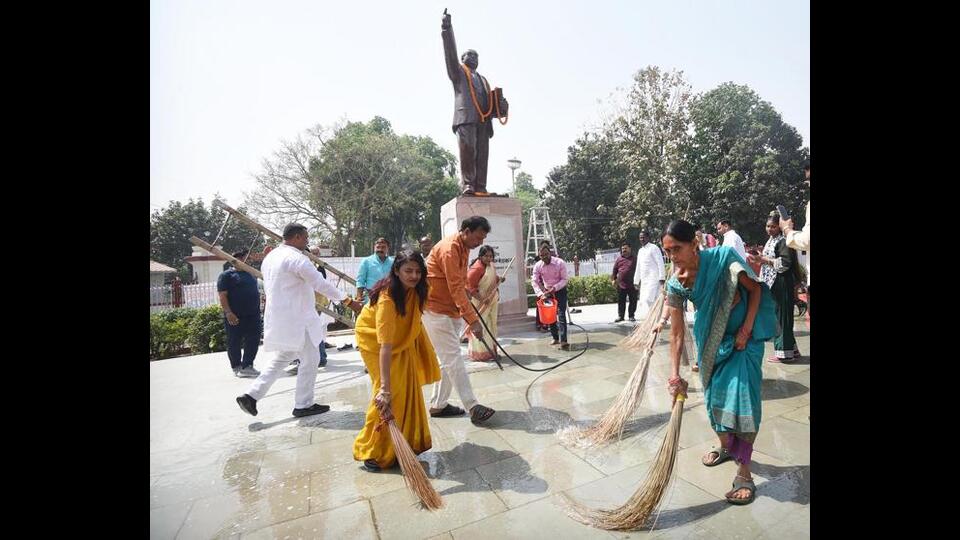
But how much of Ambedkar have we imbibed? Is he just a symbol to woo a particular section of the electorate? How far have his ideals, criticism of the caste order, and call for building a liberal society based on values of liberty, equality, and fraternity seeped down to the public? Consider the recent incident in Kerala, where a medical student allegedly committed suicide due to caste abuse. Ten years ago, Hyderabad Central University student Rohit Vemula’s suicide sparked massive outrage and mobilisation across the country. Political parties promised legislative action to fireproof campuses from caste discrimination. The Karnataka Rohith Vemula (Prevention of Exclusion or Injustice) (Right to Education and Dignity) Act 2026, is in the works, and similar steps are afoot in Telangana. But caste atrocities continue unabated despite many legislative measures, judicial interventions, and Dalits acquiring political agency and political parties acknowledging their electoral clout. These incidents — defiling of Ambedkar statues to assault, rape, and murder of Dalits — happen far too frequently to be dismissed as one-offs: Deep down, they reflect a reluctance to embrace an order premised on constitutional freedoms.
Instead, a spectacle of symbolism, centred around empty eulogisation of Ambedkar, is standing in for a more radical, emancipatory vision of politics. In his last speech to the Constituent Assembly of India, Ambedkar warned that “bhakti or hero-worship (in politics) is a sure road to degradation and to eventual dictatorship”. His warning went unheeded as politics has been captured by leadership cults and dynasties. Ambedkar Jayanti should be an occasion to reflect on how much of Ambedkar’s democratic vision is now ingrained in the nation’s social and political ethos.


