
 E-Paper



Don’t politicise state border rows
Only a negotiated de-escalation of the Maharashtra-Karnataka border fight can preserve the unique social fabric of the region

 Prefer HTon Google


A dispute over the border between two Indian states that has spanned more than five decades has flared up in recent weeks. At the heart of the row between Maharashtra and Karnataka lies the contentious issues of regions along the interstate border — for example, the town of Belagavi, which lies in Karnataka but has a significant segment of Marathi-speaking people and strong cultural and linguistic ties with Maharashtra. Over the last two months, the two states — now ruled by the Bharatiya Janata Party — have bickered over laying claim to chunks of each other’s territory. A temporary agreement was brokered by Union home minister Amit Shah two weeks ago where he announced that a committee of six members, three ministers each from the two states, will be formed to discuss a way to resolve the issue and that the states will hold their fire until the Supreme Court, which is hearing the case, reaches a decision. Still, tension continues to simmer at the border, with attempts by protesters from Maharashtra to enter Karnataka blocked by the police and massive demonstrations planned around Belagavi.
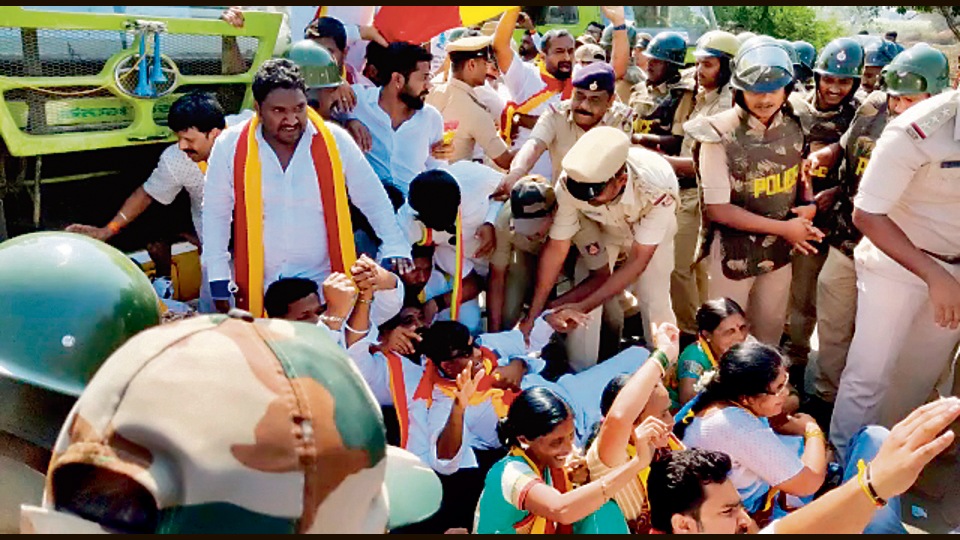
Language is an integral part of both individual and collective identities. It has the power to mobilise people, which is why the formation of linguistic states in 1956 was presaged by protests. But this legitimate pride and emotional connection with one’s language should not tip over into parochialism, especially fuelled by politics. India’s interstate borders were not envisaged as hard frontiers, with their permeability helping uphold the region’s social fabric and the country’s unity. A particular spot may geographically fall in one province but have social, kinship and cultural ties with another state next to it. Border areas with myriad influences are meant to be a melting pot of cultures, tongues and customs. It is where people transition easily from one language to the other and feel rooted in all the traditions associated with the place. To try to straitjacket this unique patchwork of culture is antithetical to the ideas espoused in the Constitution. Such attempts to homogenise culture are also often made at the behest of politics. Karnataka has elections in 2023 and Maharashtra the following year; therefore, keeping emotional issues on the boil helps. But it could irreparably damage the social fabric and atmosphere of these places. A negotiated de-escalation is the only way forward while looking beyond political expediency.


